6. Paul Auster:
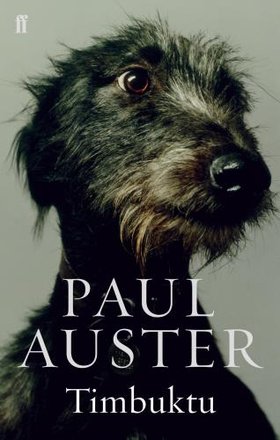
Timbuktu
written: 1999
(183 pages)
read in October 2013
verdict: *** LIKE
Between May and October we put the surprise book project on hold. I had broken my foot, which hurt like hell, and so we felt more like slouching on the sofa, re-watching the entire Charmed and Dr House series on DVD. But in October we started anew, and we've discovered many wonderful books so far.
Our next choice was Timbuktu. An interesting title, but the author, Paul Auster (1947), is an American writer and so, surprisingly, the story is set in Baltimore at the end of the 20th century. So this was not as exotic a location as we've had in some other books, but it was a very good read again.
The entire story is written from the point of view of a dog called Mr Bones, so that was novel and interesting. From the start, we suspected that the homeless owner of Mr Bones would not survive the book, so the entire atmosphere was kinda gloomy throughout the book. Not our usual feel-good book, but we persisted.

In a sort of inner monologue, Mr Bones lets us know his philosophical thoughts about his eventful life with various human companions. First, he lives in the household of the excentric Willy Christmas and finally hits the streets with him, sharing his life of poverty, freedom and mental delusion, then he finds a more comfortable home with a rich family, but in the end, he chooses his freedom over the restrictions of comfort and care.
The book explores some existential questions, the meaning of life, friendship, materialism and, ultimately, death. The ending was a bitter-sweet hymn of autonomy and free will, very uplifting, but we couldn't read the last pages without tears in our eyes. It was an emotional rollercoaster throughout. The book was good but not the best we have read so far. Towards the middle of the book, it had some lengths and the philosophical ramblings were not always easy to read aloud. Nevertheless, it is a book with many thought-provoking ideas, and well worth reading and discussing.
In short: original point-of-view, well-developped ideas about life, freedom, autonomy and responsibility, has some lengths, but – it's a LIKE.
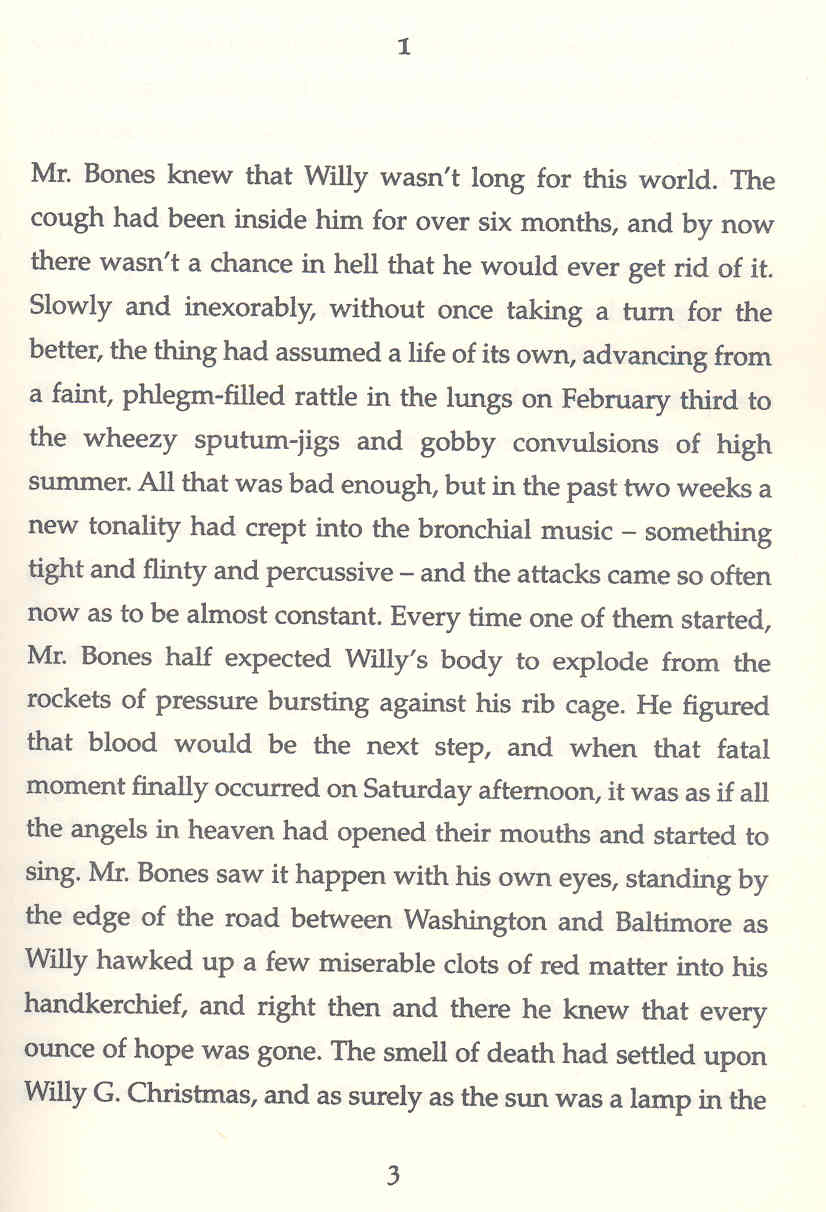
Excerpt: