12. Jorge Luis Borges:
The Book of Sand
written: 1975
original title: El libro de arena (spanish)
(185 pages)
read in December 2013
verdict: ** OK
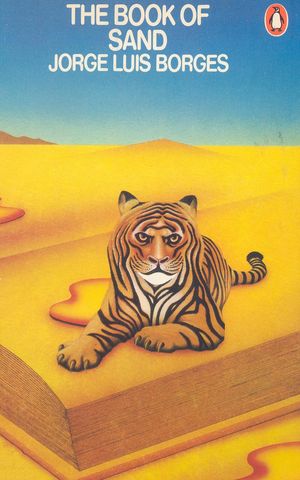
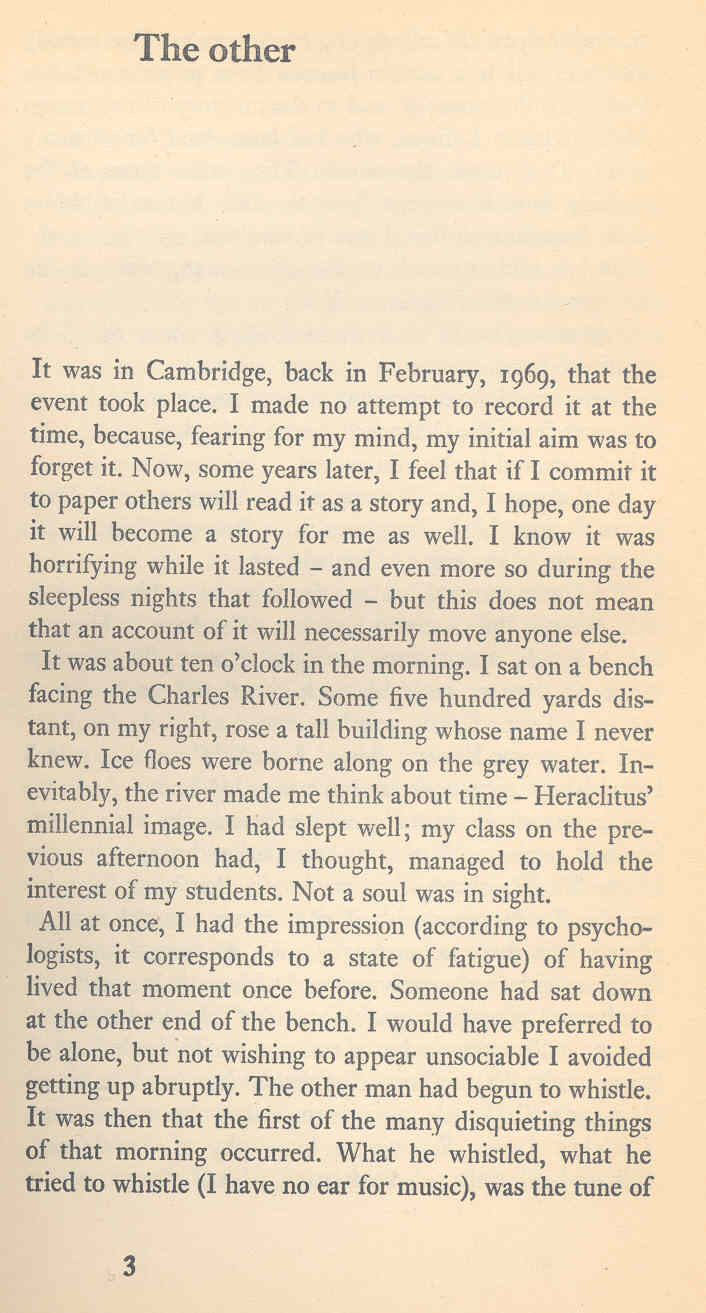
Our next book was an English translation of El libro de arena, a compilation of 13 short stories by Argentine writer Jorge Luis Borges (1899-1986). This was our second short story compilation, after Scholem Alejchem's Geschichten aus Anatevka, and since we had liked that one a lot, we were having high hopes for this book as well. The book also offered, in the part The Gold of the Tigers, a selection of 35 of Borges' later poems, so we figured this would be a good opportunity to find out whether we enjoyed reading poetry aloud, as we had never done that before.
We imagined Borges to be a writer of short stories with a supernatural edge to them, not unlike Lovecraft, but we found out that this was not really the case, at least not for this selection. Maybe his earlier work was more uncanny, but here we were a bit disappointed in the lack of suspense. Almost all of the stories started out promising enough, but apart from only a few, they got lost along the way in seemingly endless ramblings of the author's inner monologues and usually ended not in the hoped-for surprise twist, but just sort of fizzled out, so we felt kind of let down. The much-praised The congress falls into this category. From this collection, we probably liked best The disk, Undr, The bribe and the eponymous The Book of Sand. They were not the hoped-for Lovecraftian-style horror-stories, but made us think and talk for a long time. His best stories and poems are certainly very philosophical and thought-provoking.
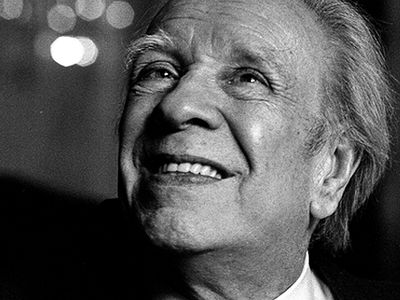
There are several recurring themes in the book. Old age and mortality is an obvious one. The way he treats the subject is, in our opinion, quite repetitive, when it could have been seen from many different angles. Another topic is his blindness, and here too, some poems offer a very personal and touching view, but after a while, it becomes, sadly, tedious. Then there's his interest in Old English literature. As graduates of Old and Middle English, we found we enjoyed references to the Battle of Brunanburgh and Scyld Scefing, but all in all, the treatment of it was very personal and emotional, and therefore quite hermetic to the reader. The overall feeling was: this was a great idea, this could have been so good. But it just wasn't.
In style, the poems were very varied. Most lacked metre and rhyme, they were often just an enumeration of random objects or thoughts. Maybe this is simply not "our thing", but we had the distinct feeling that many texts were unfinished, or rather quickly brought to paper. One interesting poem was a tanka, a Japanese genre with which we had not been familiar before, similar to a haiku. It's always good to learn new things while reading, so we enjoyed that a lot.
Maybe we do the author injustice and we should have read his earlier work first, but based on this selection of short stories and poems, we can, sadly, only give an OK.
Excerpt: