



Week 6 - Kyrgyzstan
Day 37 - Issyk Kul and Tian Shan
Wednesday, 16 September 2026
Start: Chon-Sary-Oy (KY) 9:00
Arrival: Bishkek (KY) 17:20
Total: 255 km
I awoke in the middle of the night. A distant lament. I sat up and listened. The Muslim call to prayer. The first we had heard on this trip, and we had been in Muslim-majority areas for almost a month now. I turned around and fell asleep again. Way too early to get up. Shortly after, a rap on the door. The mother, come to collect the money? Sonia had heard nothing, so I ignored it too.
At nine o'clock, we were ready to depart. Neither the mother nor the girl were anywhere to be seen, and I didn't want to call Big Jack at five in the morning in Germany. So I stood helpless in the backyard, 3050 som in my hand. Who to give them too? A middle aged man appeared from the vegetable garden. I hesitantly handed him the money. He nodded a thank-you and wished us a good trip. Who was he? The father? Another guest, happy to be handed money? I decided not to worry about it anymore and we drove off, in search of food.
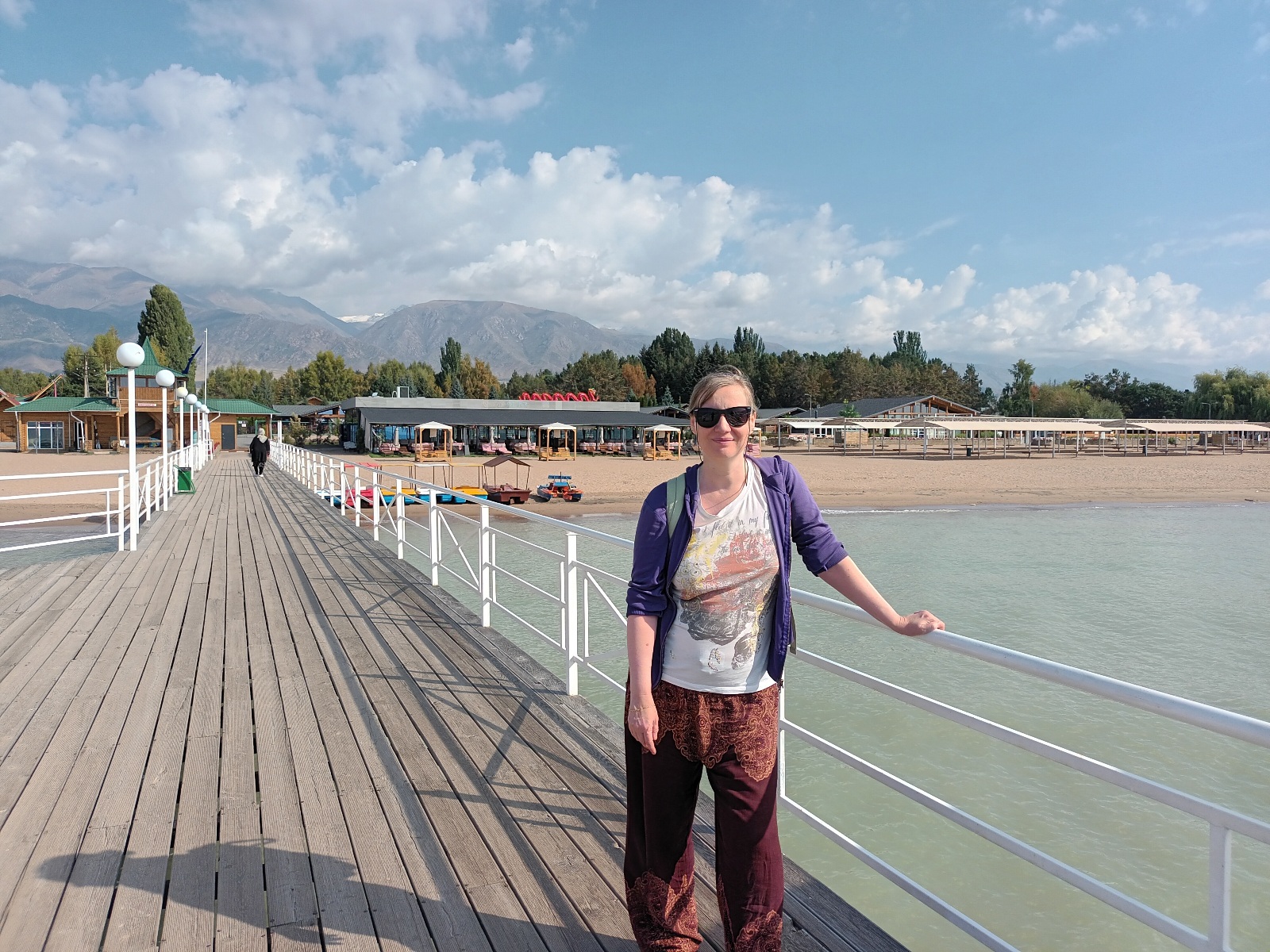
Yesterday evening, we had noticed a brand-new stylish apartment complex just down an unfinished gravel road: Raduga Resort. Google Maps promised a café in there. We drove up and I asked the two guardians whether non-residents could have breakfast here. He looked at me nonplussed. "Everything is closed", he said. "Maybe somewhere nearby?", I insisted. The guards discussed the question in Kyrgyz. "Sushi Restoran", was the answer, "at the beach". A sushi joint was the only place to offer breakfast in this town?
We walked down to the beach. Every stall was boarded up, trash and renovation material stacked high in the containers. At nine in the morning, the sun shone brilliantly in the sky, I sweated in already 26 degrees heat and Issyk Kul was closed for the season. We met several people coming from the luxury apartment resort, ready for a beach day. The money the dibblers of this world could be making here! I was tempted to invest in a year-round soft-ice stall for this place. As it was, we stumbled around like the tourists in that old Loriot sketch: "It was fun! We'll come back next year, maybe then we'll find the beach!" Well, we found the beach alright, but nothing to eat. A tragedy in three acts:
Act 1: In which we found the sushi restaurant, they offered breakfast, but only had half the things on the menu and a straightforward omelet with tomatoes and coffee was ordered.
Act 2: In which coffee in dirty cups arrived, 40 minutes passed and no omelet appeared, the only guests (us) waited and all the waitresses lounged about on their phones.
Act 3: In which we lost patience, demanded to pay for the coffee, were lied to that it cost the full 520 som, started complaining loudly in pidgin Russian and were offered the coffee for free by the manager. Lights out.
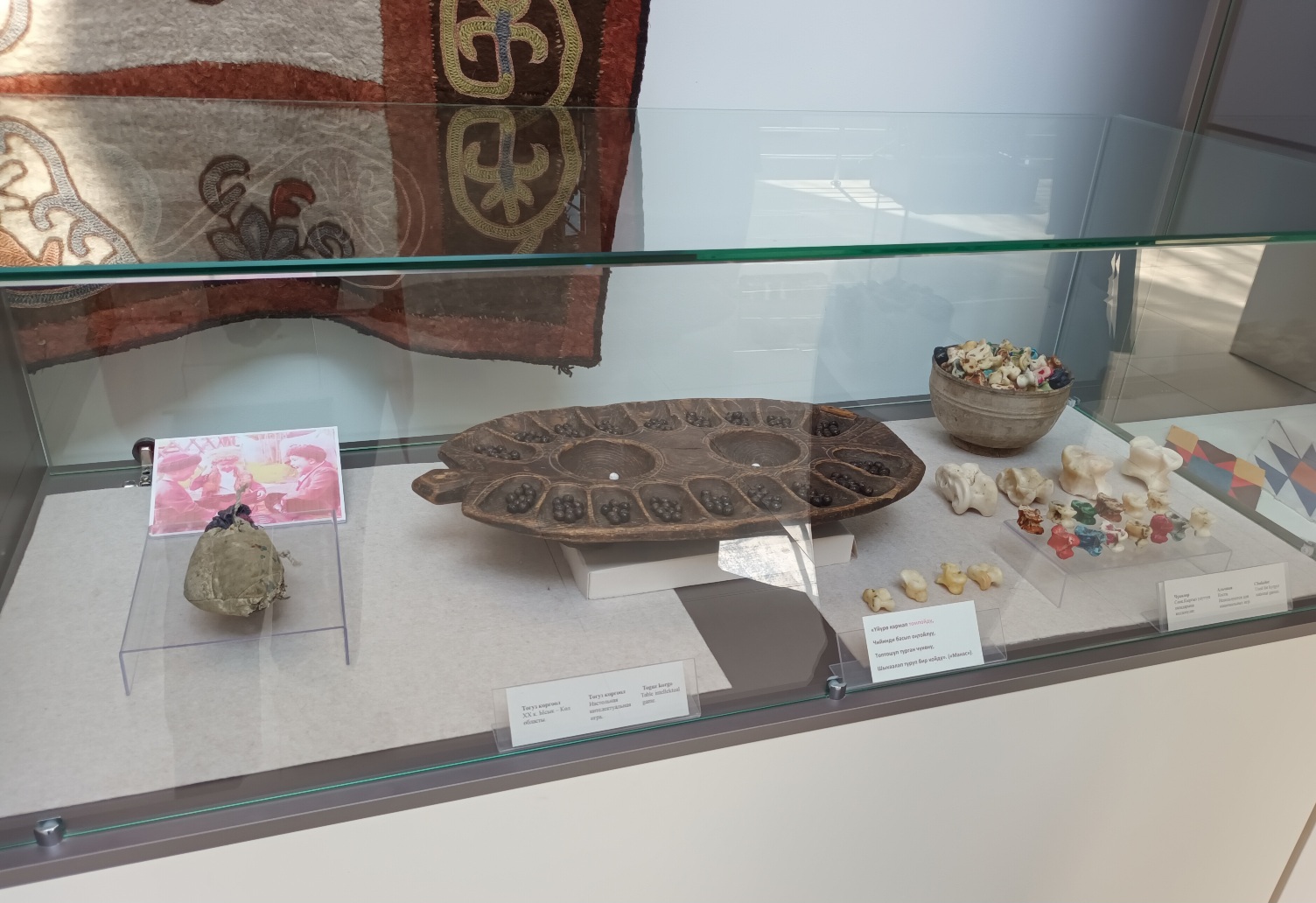
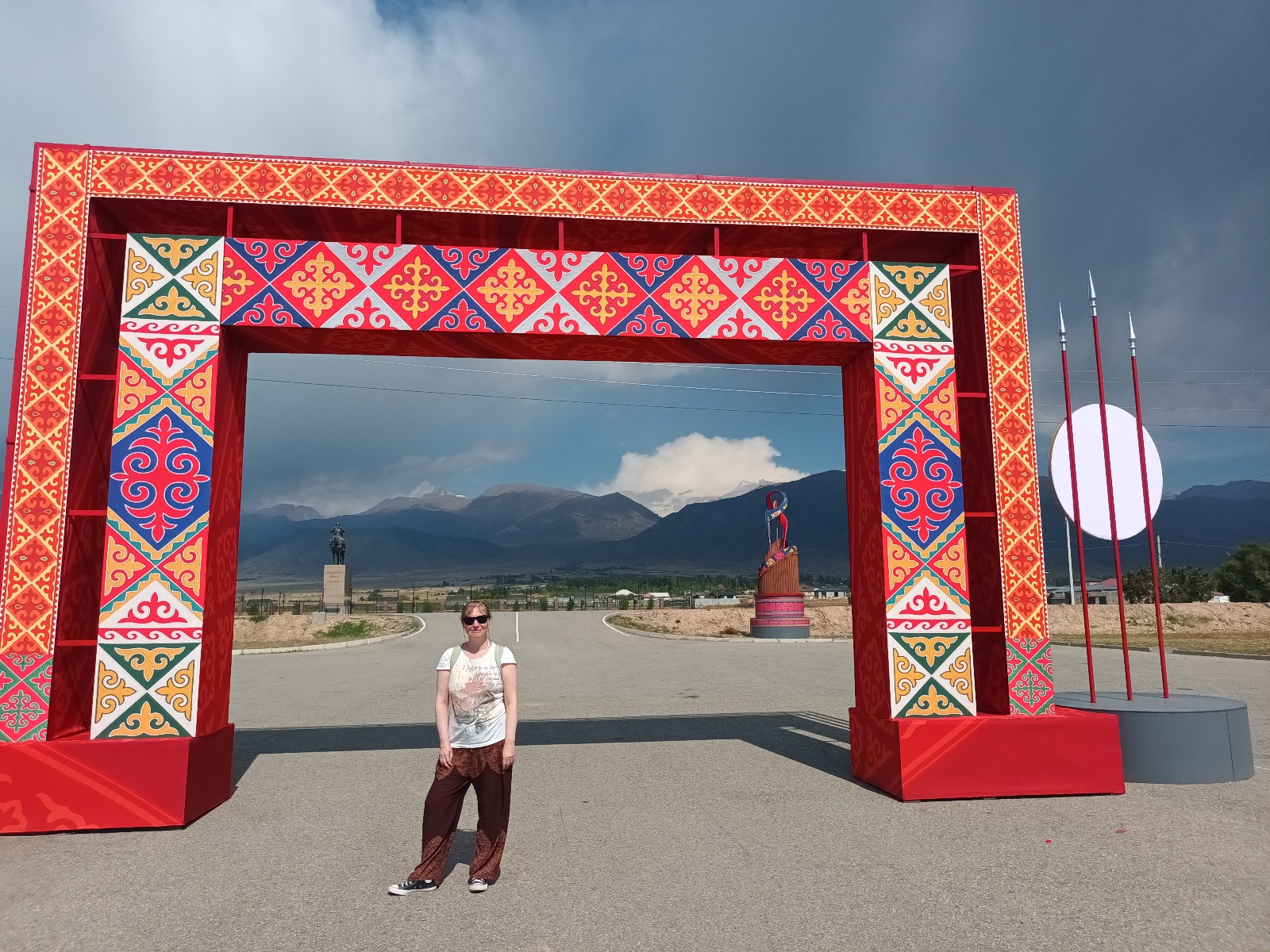
Next stop: the Nomad Museum on the main thoroughfare. I'd seen its cool entrance gate (photo above) yesterday evening and thought, erroneously, that it was a museum on the Nomad Games. I would have loved to learn more about men throwing rotting carcasses about. Disappointingly, it only showed the lifestyle, craftsmanship, religion and fashion of Turkic nomad tribes. Actually, it was an interesting little museum, with such fascinating tidbits like this game of Toguz korgool, an "intellectual table game". What might its rules be? I later looked it up on Wikipedia, so no need to detail it here (spoiler: I actually didn't get them, so I'll leave it to the reader to figure it out).
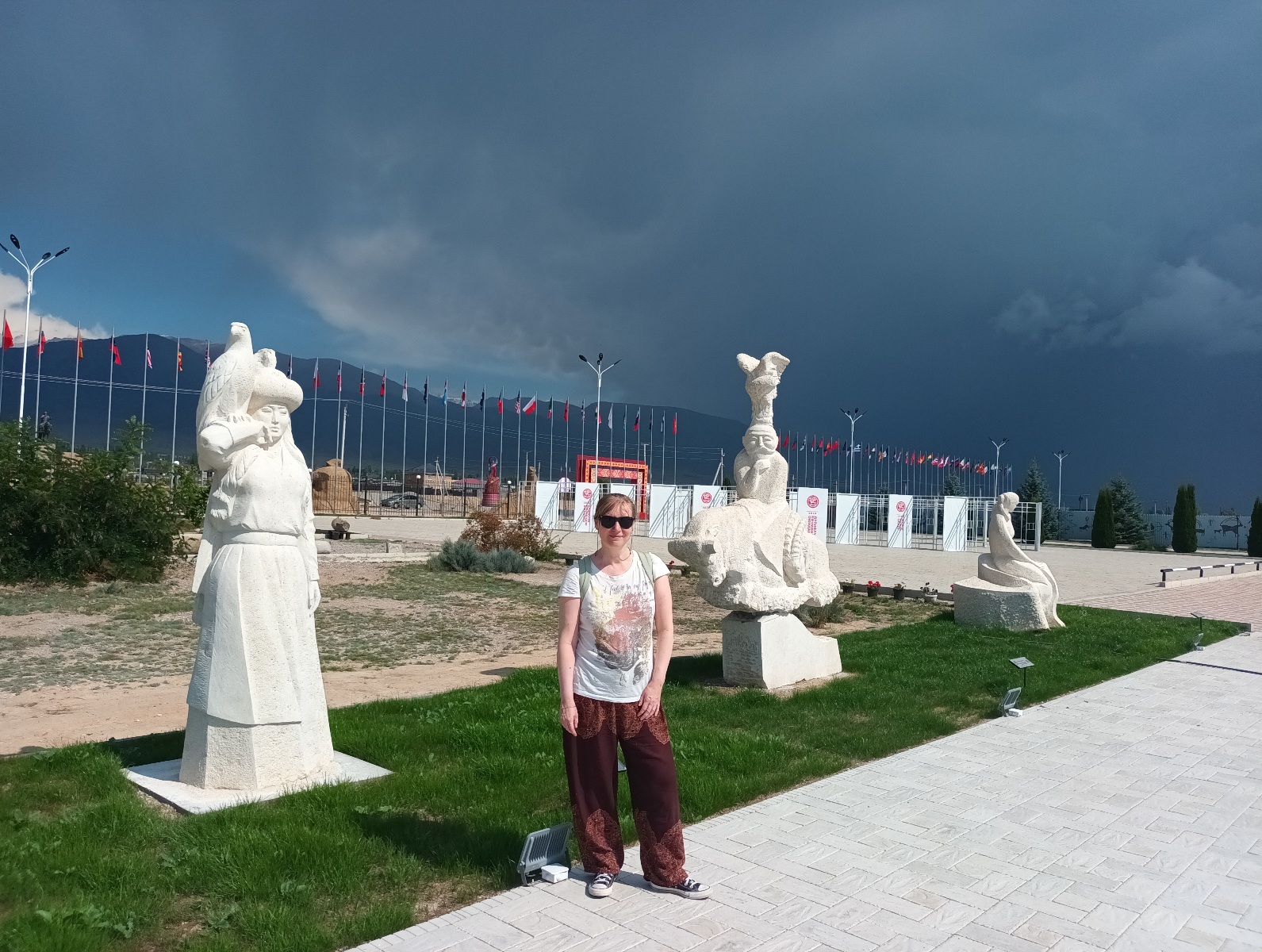
When we left the museum, the clouds above the eastern mountains had taken on a threatening steel blue hue. A flash of lightning lit up the sky. Shortly after, the rumble of thunder. Storm on Issyk Kul! Sounds like the title to a famous painting. We cut our walk through the statue procession lane short and headed for the car. They had announced severe thunderstorms starting around noon. Meaning in 20 minutes. We made a runner for the car. The lake and mountains looked actually grand in this weather, I much preferred it to the glaring sun. When we stopped twenty minutes later to take a
last look at Issyk Kul, the sky looked much brighter. False alarm, I guess.
Driving past miles of unfinished holiday ressorts, we noticed that no crews were actually working on any of the construction sites. Suddenly this felt less like the next big thing and more like a financial bubble ready to burst. Most billboards announced luxury apartment resorts like the Raduga, but without even a café open outside of the short summer season, who would want to live here? A beach holiday without cocktails, ice creams, romantic dinners, cute little shops and music bars? I don't know about the taste of Kyrgyz people rich enough to contemplate a holiday home, but my guess is, they will prefer an all-inclusive in Batumi, Trabzon or Sochi. I know I would.
Through the mountains
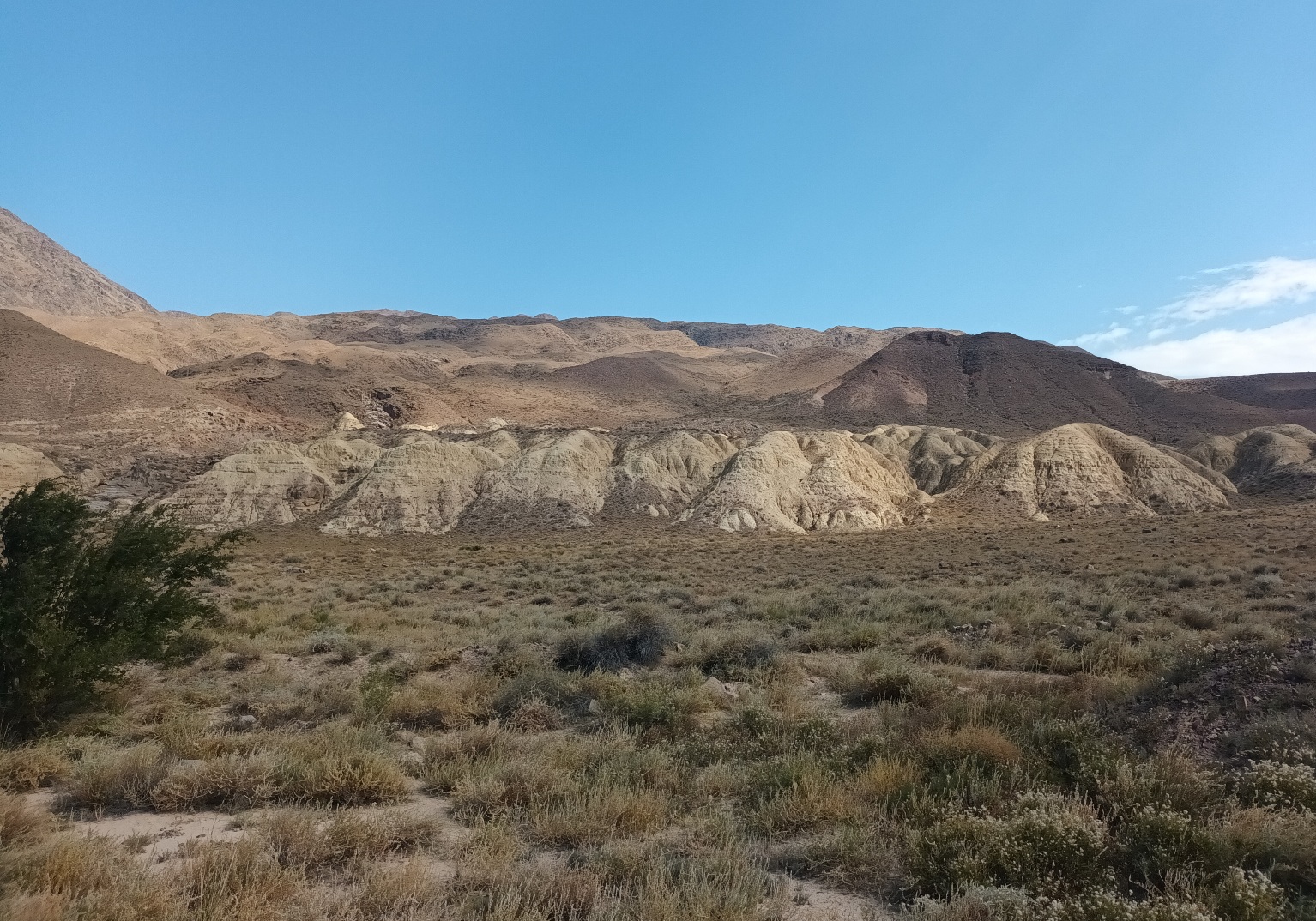
The drive through the mountains back to Bishkek was as awesome as the day before. We sped along the winding highway, when Sonia suddenly pointed at the hills nearby: "They look like Sun Wukong's prison!" Indeed, with a bit of imagination, the soft sandstone washed down by countless rivulets looked like the knuckles on the hand of a giant celestial being. In the Chinese novel Journey to the West, the Monkey King Sun Wukong is imprisoned for hundreds of years when a god's fingers come down around him. The novel is set in Western China / Eastern Kyrgyzstan, so the author might have been inspired by rock formations such as these. How ingenious of my sis to have made the connection!
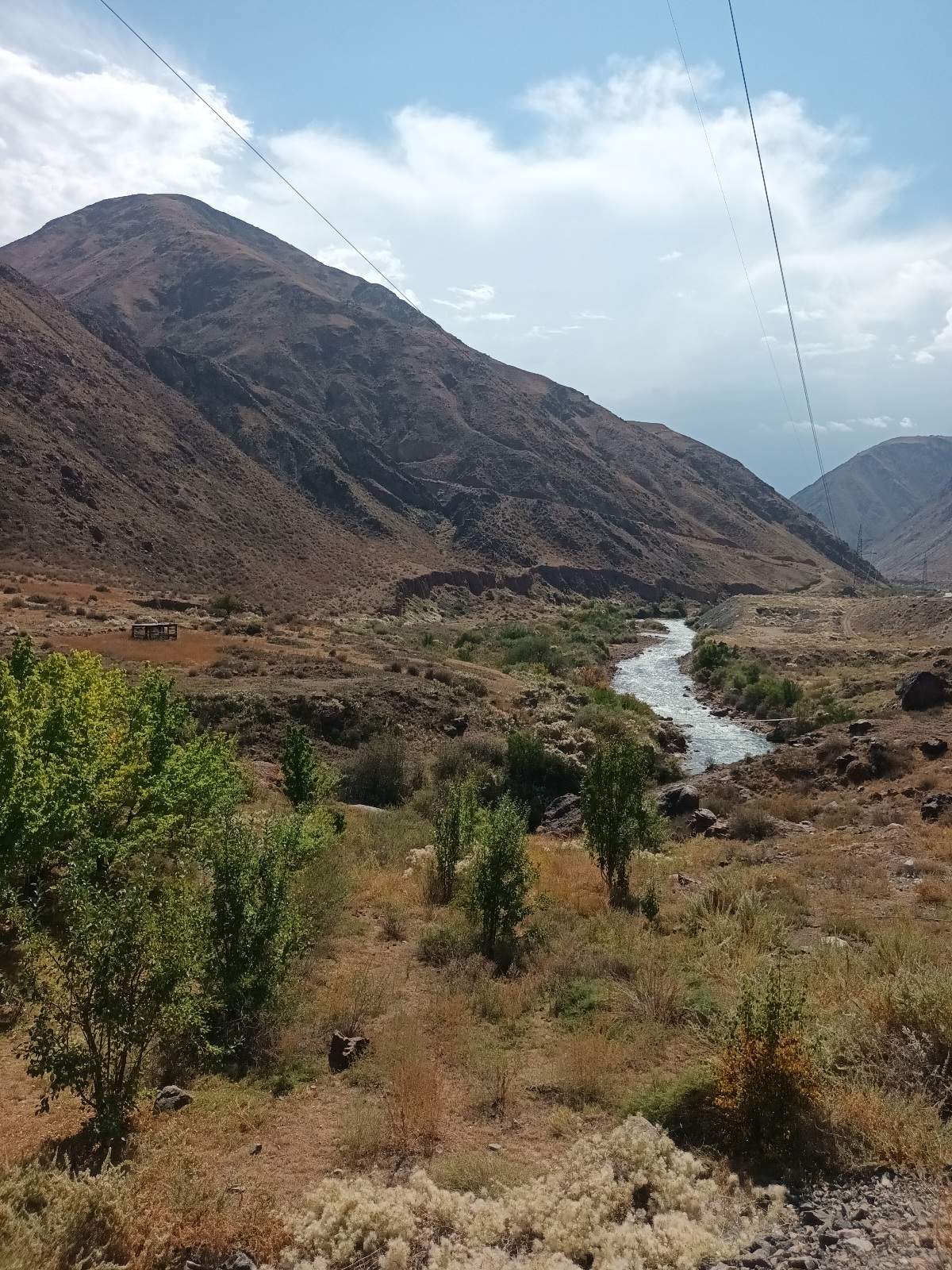
We made several stops within the mountains. Sonia found a romantic mountain river. Such a scenic spot! And she managed to take a picture that actually does the beauty of the place justice.
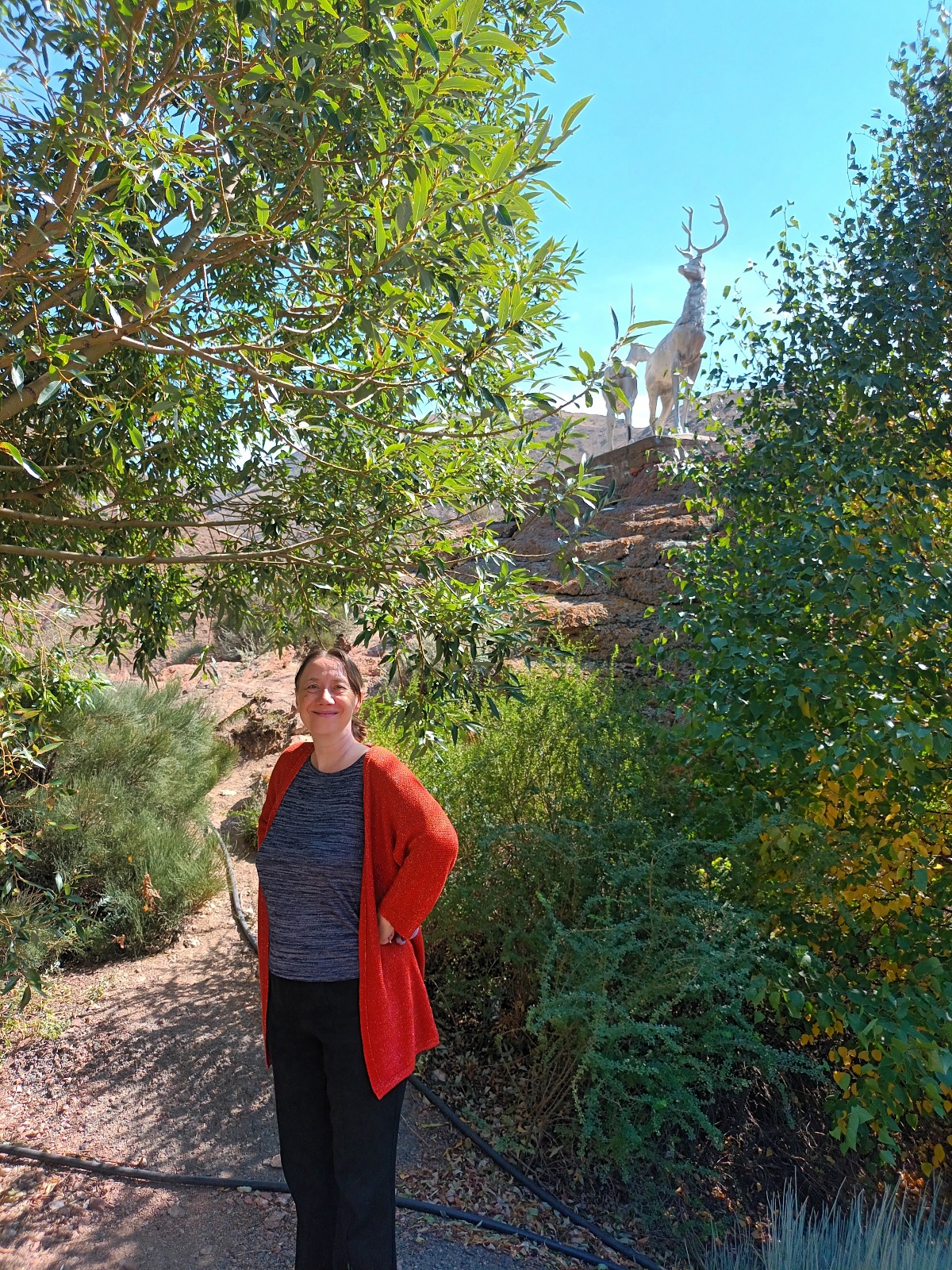
Right above the gorge with the river, a deer statue stands high above the precipice. We had seen it from the road, but it was not so easy to spot from the parking space. But after a short hike up a dusty path, we found both the deer and some shade. Success!
The national animal of Kyrgyzstan is the snow leopard. Apparently it still roams the mountains of Central Asia in declining numbers and I have no desire to encounter them in real life, but when we saw a statue of it further up the road, it was a welcome excuse for yet another short hike.
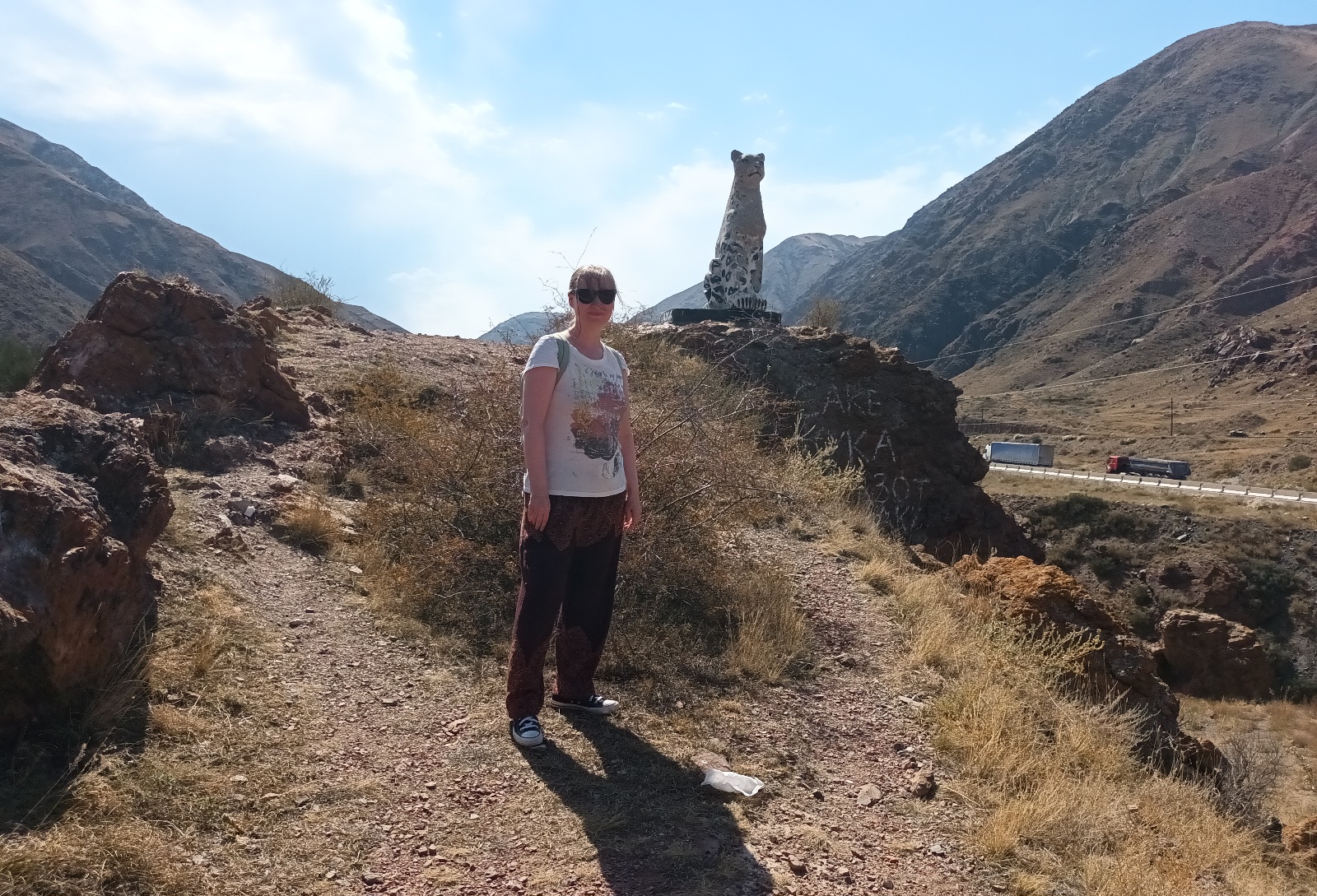
Just a few metres off the road, you are surrounded by
magnificent solitude. I love such spots: close enough to civilisation to feel safe, far enough to enjoy some peace and quiet. I'm a big fan of mini hikes.
These mini hikes were the reason why the drive between Issyk Kul and the outskirts of Bishkek - a mere distance of about 200 km, all highway - took us a good five hours.
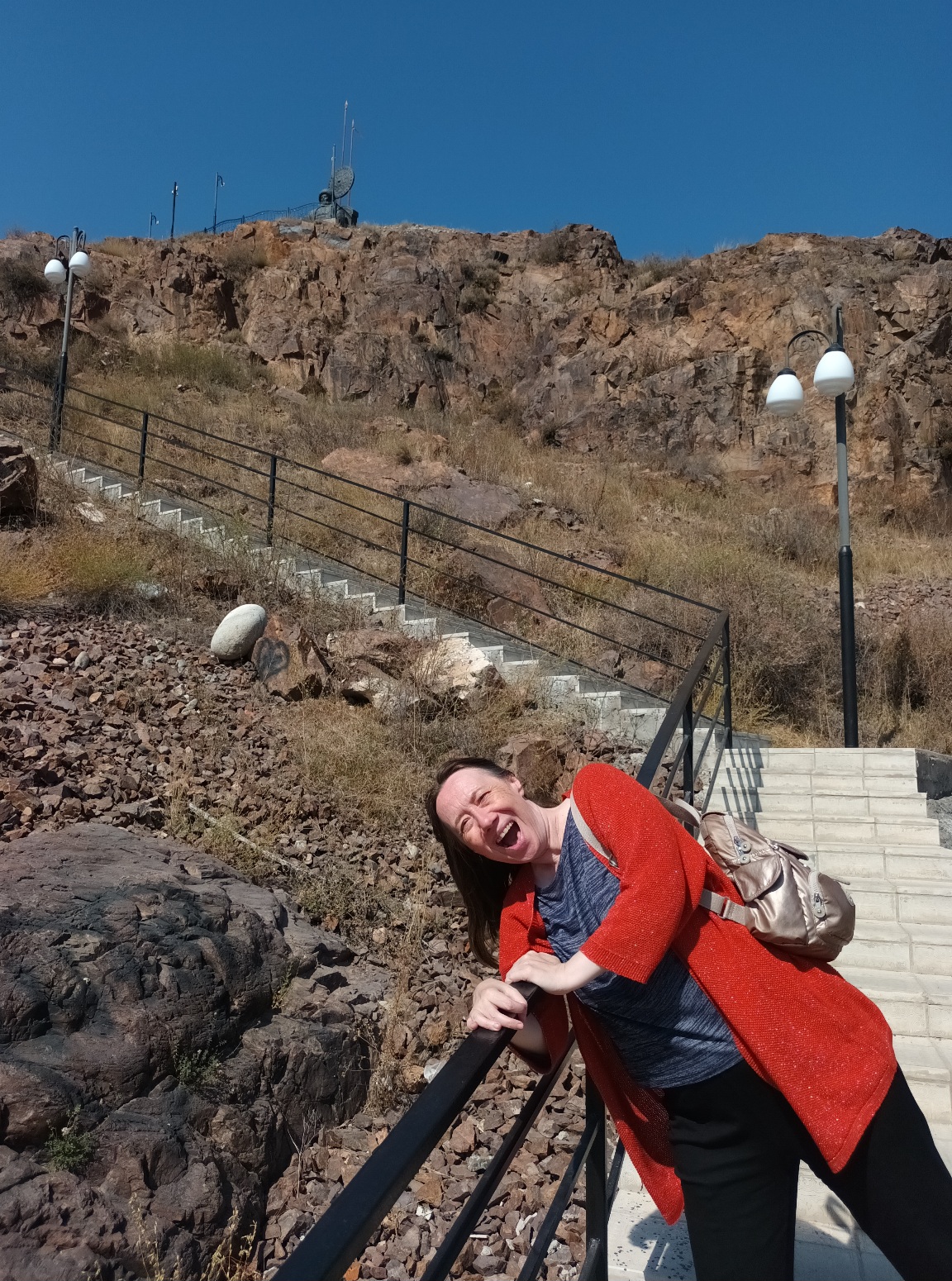
Leaving the winding mountain roads behind, we arrived on a windswept plain. At a rest stop, a lonely high rock towered above the clouds of dust and smoke, its top crowned by the huge metal statue of a baatyr - a warrior hero - on his throne. Who was he? To find out, we had to brave more than a few steps.
As you can see, I was in rather a silly mood. Still, it really was windy on those steps. And yet we conquered them and finally found ourselves face to face (or rather face looking up to feet) with the great warrior. We noted down his name and later on looked him up on Wikipedia.
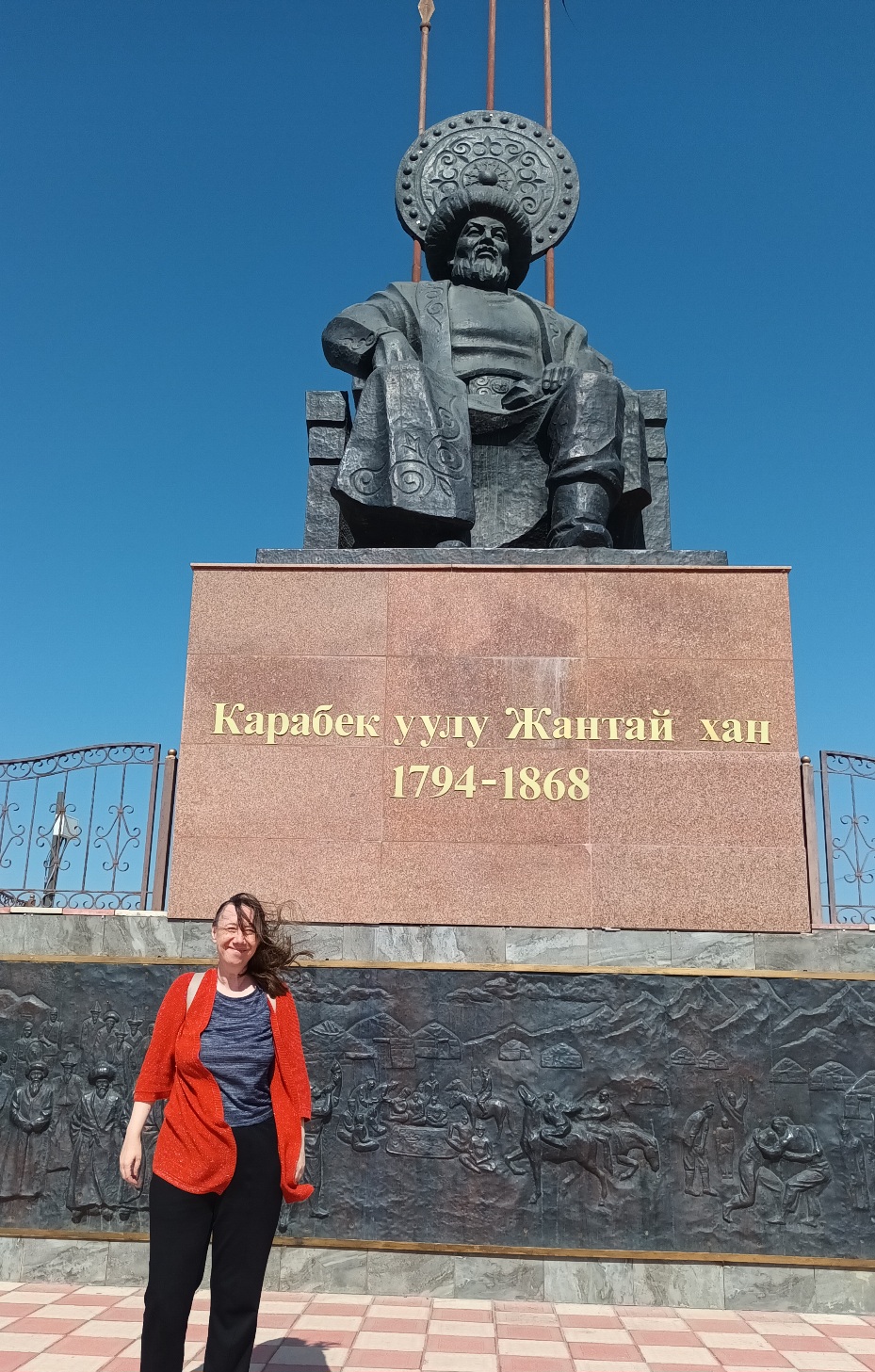
A member of the great council of the Kara Kyrgyz Khanate, khan Karabek uulu Zhantay took an active part in the foundation of the Kyrgyz nation state in the mid 19th century. A Central Asian Emmanuel Servais, so to speak. Love the turban.
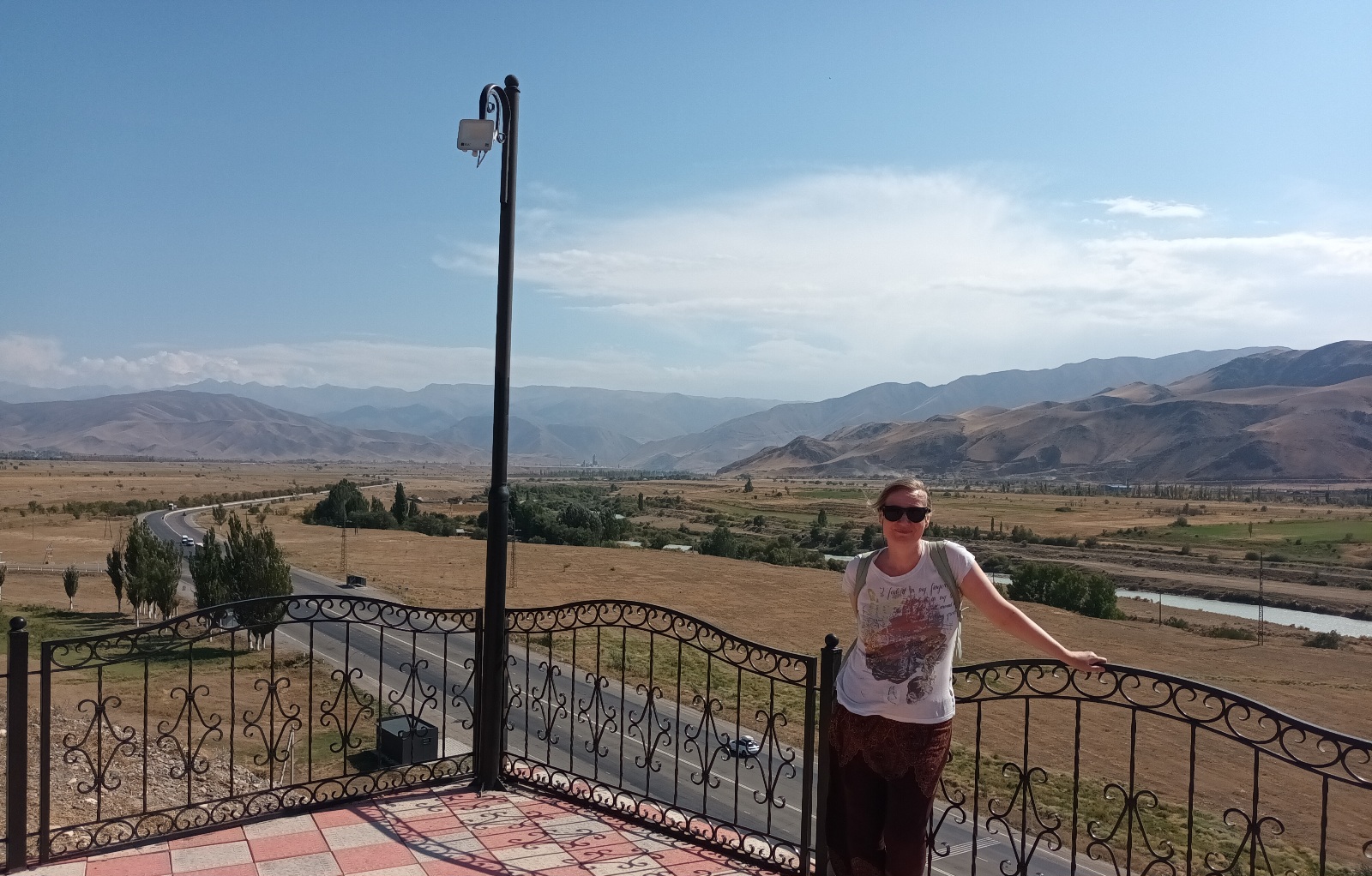
The viewing platform afforded an amazing view over the plain. Only an hour ago, we had been inside the mountains to the left, now we would be heading back into the traffic chaos that was the capital of the Republic of Kyrgyzstan.
We left the highway early and took a parallel route through a series of small villages. Many people moved by cargo tricycles here. In Kyrgyzstan, it's called a muravey. They transport all sorts of stuff with it, fruit, metal or even people, mostly piled as high as gravitationally possible. We saw a particularly old tricycle with two middle aged women in the back, bravely holding on. The grandfather was in the front seat and floored it. We passed the vehicle. It wasn't a grandfather at all! An ancient tiny grandma, headscarf fastened against the wind, was manning the wheel like a pro.
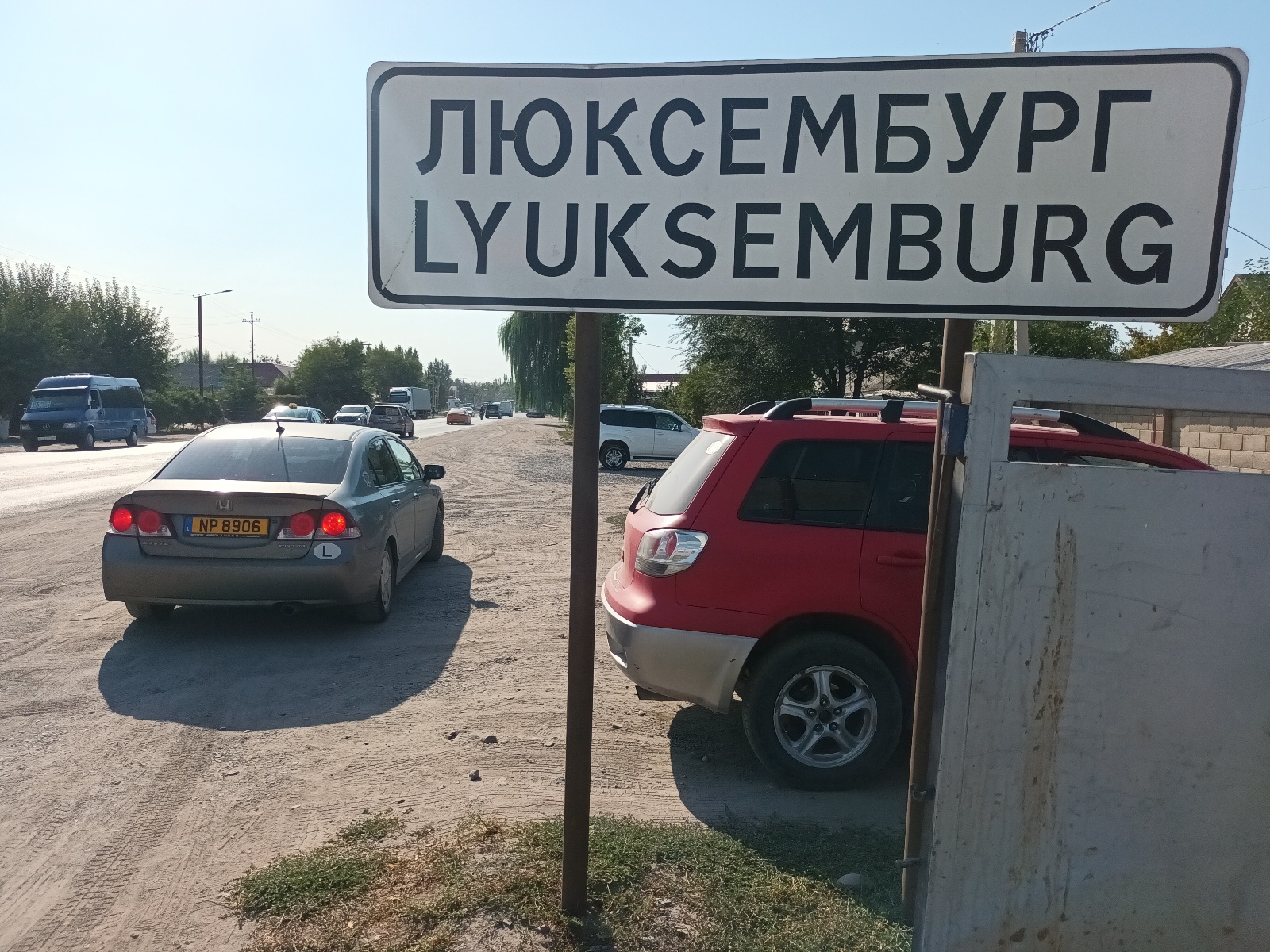
Soon we reached the reason why we had left the highway so soon: a village named after a famous German communist. Naturally, that German communist was named after a tiny European country, so it was only normal that we claimed the place as ours: I give you, a Luxembourgish car parked next to the welcome sign to Kyrgyz Luxembourg.
It couldn't be helped, I had to brave the evening rush hour of Bishkek once again. The city planners had decided that Bishkek was too small to need a subway. Luxembourg city planners had decided the same thing. Both times, the daily traffic gridlock proves them dead wrong. I was getting the hang of things though. The first time in a new city, you don't know yet how drivers here react, what a honk or blink means, how fast traffic lights change colour, how reckless pedestrians are and so on. Once you get the hang of that, nothing stands in the way of merry line weaving. Zhibek Zholy Avenue was as gridlocked and chaotic as ever, but traffic on the main boulevard going south was moving faster. Unfortunately, it was infested with their psychopathic green busses (probably the city planners "better" alternative to the rejected subway) that push into your line not caring whether you can get out of the way or not. A quick pedal push and I just squeezed through two cars at a chokepoint. Looking back, I saw the girl that had been driving to the left of me getting out of her car. A bus had stopped too. Collision. I felt sorry for her. Damn buses. Public transport? Public nuisance, more like. As they don't own the bus, they don't have to deal with the fallout of their actions.
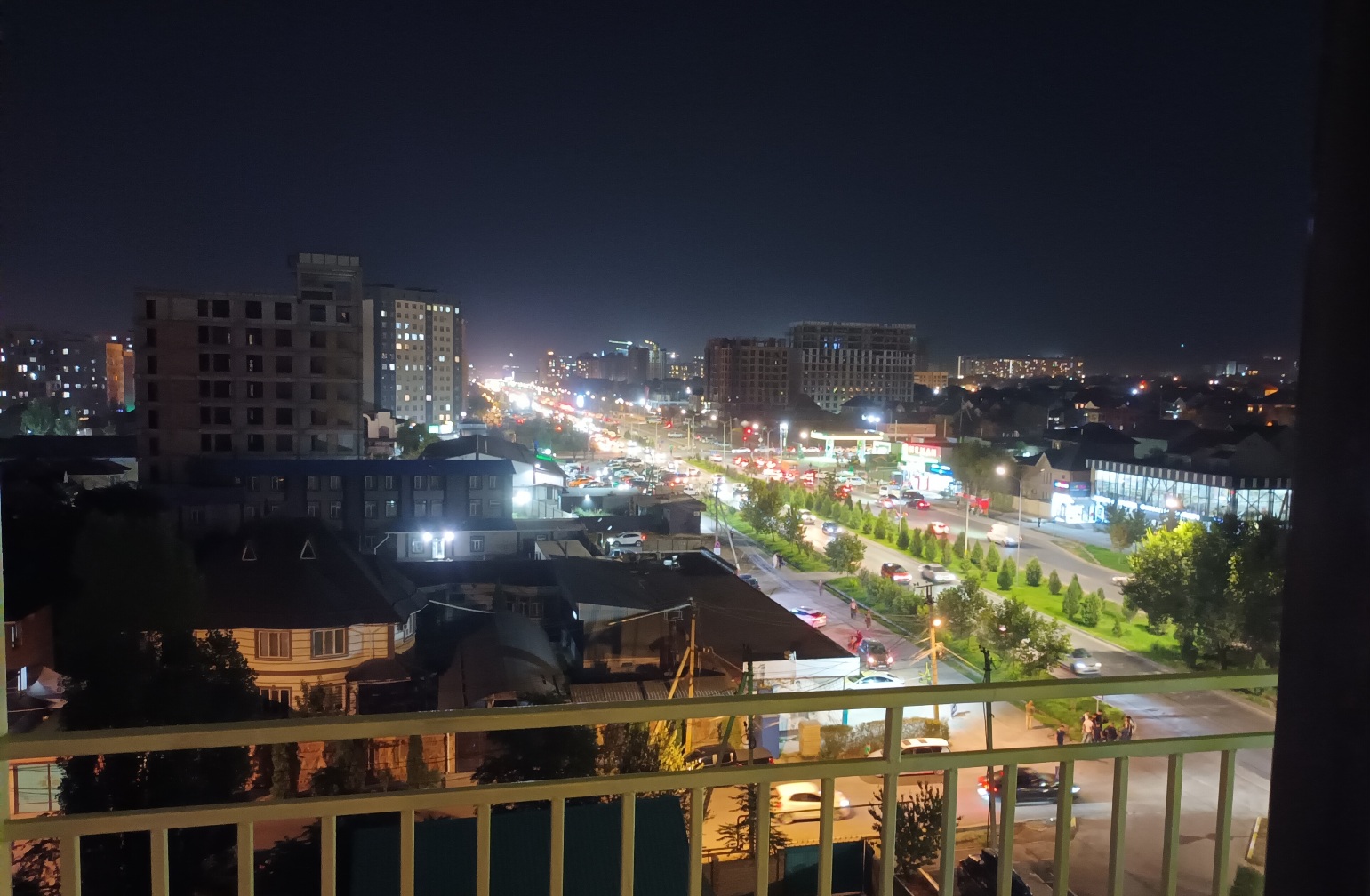
Without a wrong turn, we arrived safe and sound in our Garden hotel for the next two nights. A big comfy 4-star hotel room, with towels and a solidly-anchored toilet. I rushed into the shower, eager to soap off the dust and grime and smell of smoke and grease off of me. What a bliss!
Freshly scrubbed, we headed for the restaurant. Apart from a very boisterous group of Americans, we were the only guests. A throng of young waiters lazed in the background, on their phones. We decided on a dish, plus two backup dishes in case they were out of our first choice. I couldn't stomach any more sickly sweet "lemonades", didn't want to fall back on Coke, had no desire for any of their myriad of alcoholic drinks and knew they would not "have" the freshly squeezed juices promised on the menu. So water would have to do for tonight.
In Russia and Central Asia, there are buzzers on the table to call our waiter. That way, they only have to look up from their phones if someone calls. Worked like a charm all the way down to Almaty and made both parties happy. Not so in Kyrgyzstan. After three buzzes and a questioning look, a waiter finally arrived. They had our first choice! No fresh juice though, of course. We ordered and the lights, AC and music went out. After about a minute, they came back on. Five minutes later, same thing. "Do you think it's safe to be in an elevator when there's a power cut?" Sonia asked. Probably not. Our room was on the last floor. Ah well, we'd wing it.
The fried rice was greasy but good, if a bit salty. Sadly, they didn't have the promised chocolate cake for dessert. No matter, we had food in our bellies. On our floor, the fire door stood wide open, probably to let in the cool evening breeze. We stepped out. Birds'-eye view on Bishkek. Beautiful. And we had a room with air conditioning and a large comfy bed! What more could a girl ask for. The chocolate cake would have been nice though.