



Week 6 - Kyrgyzstan
Day 41 - Osh
Sunday, 20 September 2026
Start: Jalal Abad (KY) 10:45
Arrival: Osh (KY) 14:00
Total: 98 km
Our last day in Kyrgyzstan! Today, I took the stairs to the breakfast room a lot faster than yesterday. Feeling much better. Before leaving, we had to clean our windows yet again. It's unbelievable, the dust that accumulates on your car in just 24 hours in this country. Another driver watched us, then came over with his towel and cleaned the front window for us. I must admit he did a faster and better job than us.
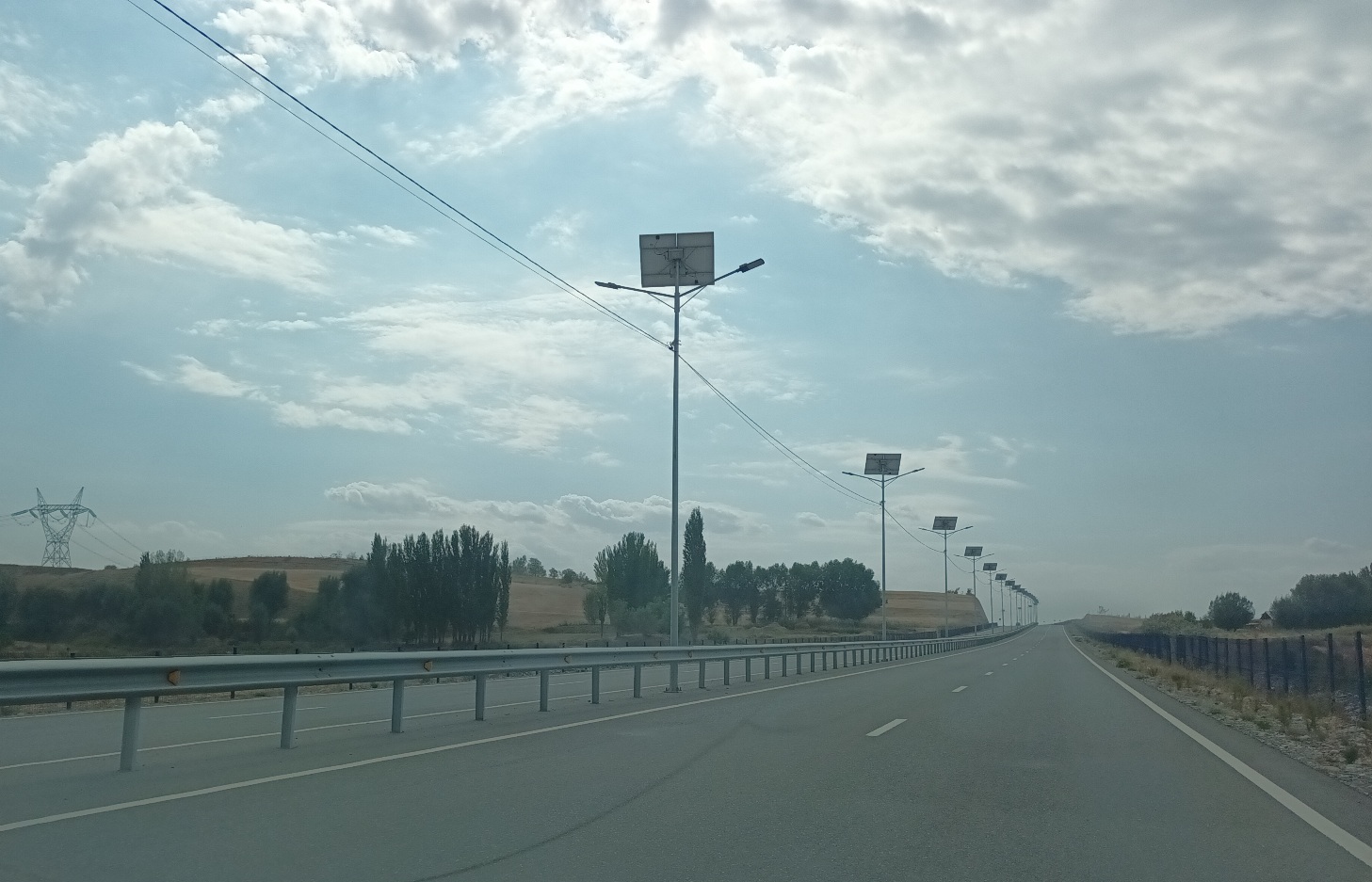
Outside Jalal Abad, we were surprised to head back into the mountains. We thought it would be Fergana Valley all the way to Tajikistan now! But the moonscape lasted for barely half an hour, then we were back into a green valley. "This almost looks like Tuscany", I enthused. Well, if you ignore the grey roadside and the eerie yellow mountains in the distance. The picture doesn't really do it justice.
A short section of paid highway leads over the Kara Darya, which forms a large riverbed in this area. Luckily the tollbooth was manned and we paid the 200 som in cash. We somehow need to get rid of our local currency.
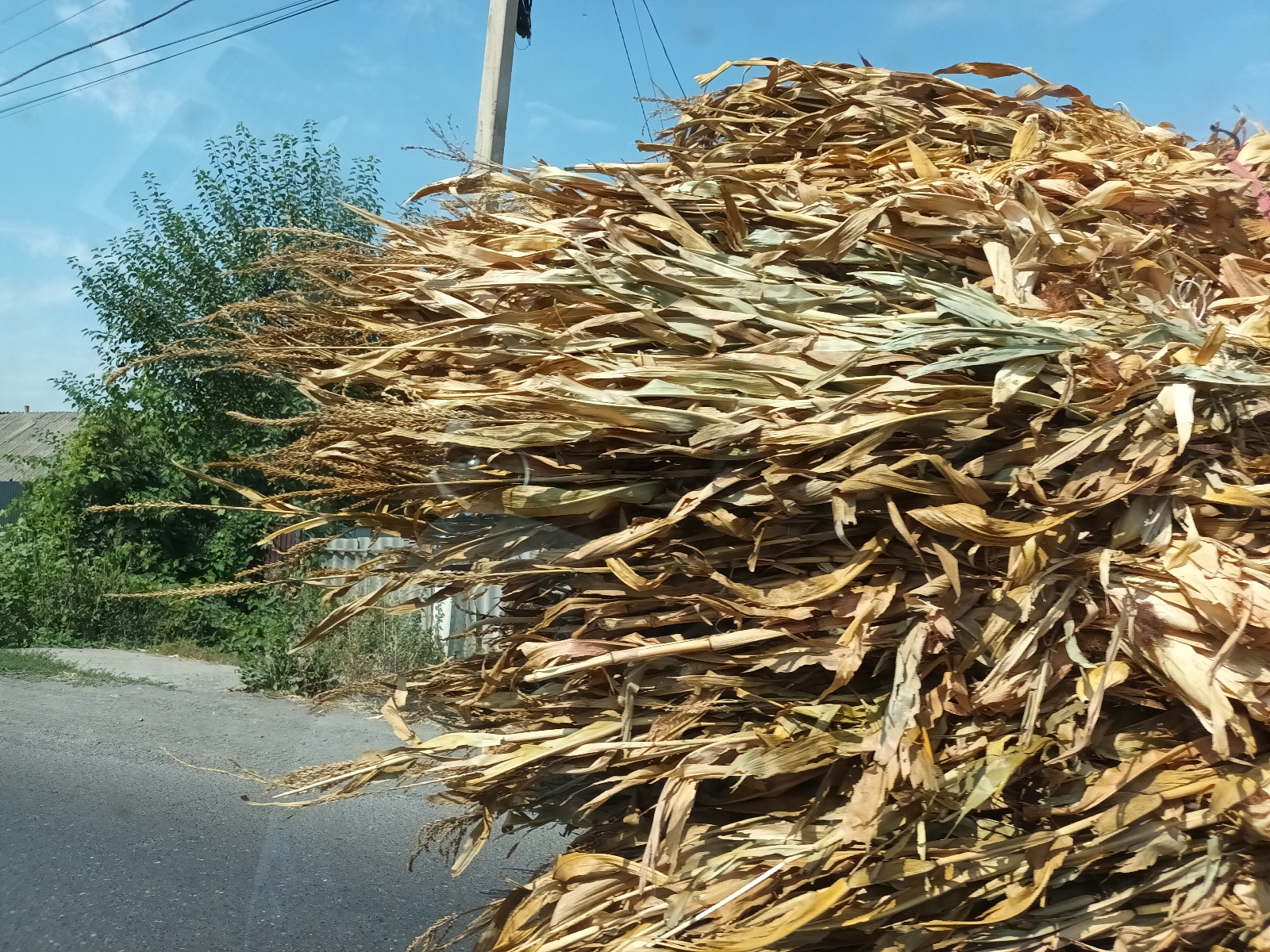
The last stretch of road towards Osh was a dusty, hot nightmare of endless gridlocked villages. We saw old men with traditional high hats, women in either long Arabic garbs, traditional Turkic headscarves or tight T-shirts. I even spotted a man in a Beijing bikini! Well, it was hot. A tiny tricycle was piled up high with maize. He took up more space than a truck with his load! "Take a pic!" I urged, but of course we had passed him before Sonia got a good shot. Honorable mention for the effort though.
So many people were just standing or squatting along the road, doing nothing much, other than staring at their phones. Why were they outside, in this merciless heat? Some - a girl in hijab, a boy in school uniform, a babushka, young men and old - were hitchhiking. I'd read that this was a normal way of transport here, a sort of impromptu Uber. Maybe. We've seen so many hitchhikers these last days, but they all looked frustrated and no one ever stopped for them as far as we could see.
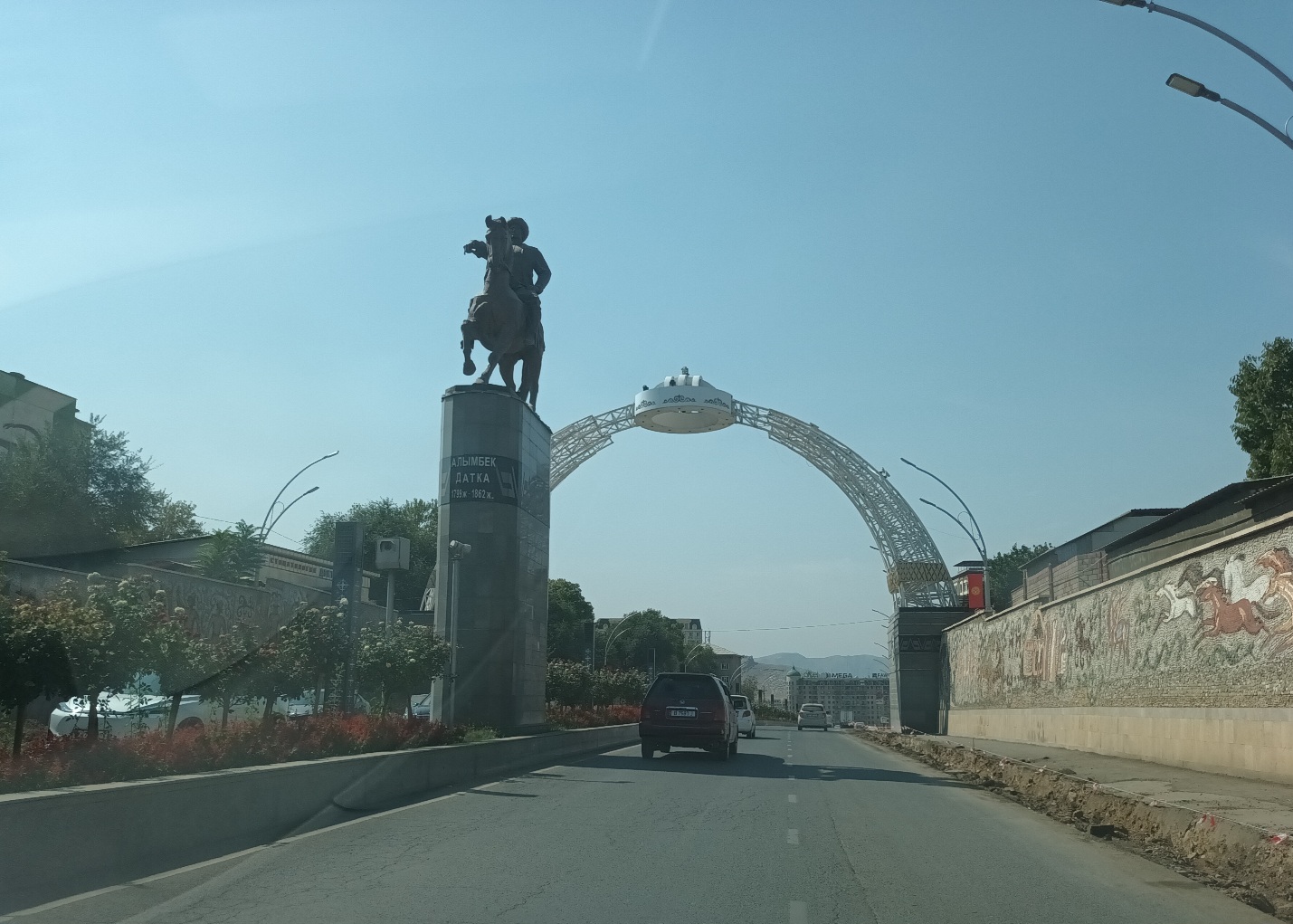
Sonia rolled down the window. "I need fresh air", she moaned. A car sped by on the gravel sideway, leaving a cloud of grey dust in its wake. She rolled the window up again. We inched towards Osh. After an eternity, we reached a policeman waving us forward. Why was he standing there? Forward was the only way to go here. After we'd passed the overeager man of the law, the traffic jam miraculously dissipated. In no time, we reached the entrance to Osh, complete with the obligatory rider's statue. Alymbek Datka. Ah, the husband of Kurmanjan. We'd learnt about her in the Nomad Museum on Issyk Kul. The queen of the Alai Kyrgyz, the most influential woman in the area in the mid 19th century.
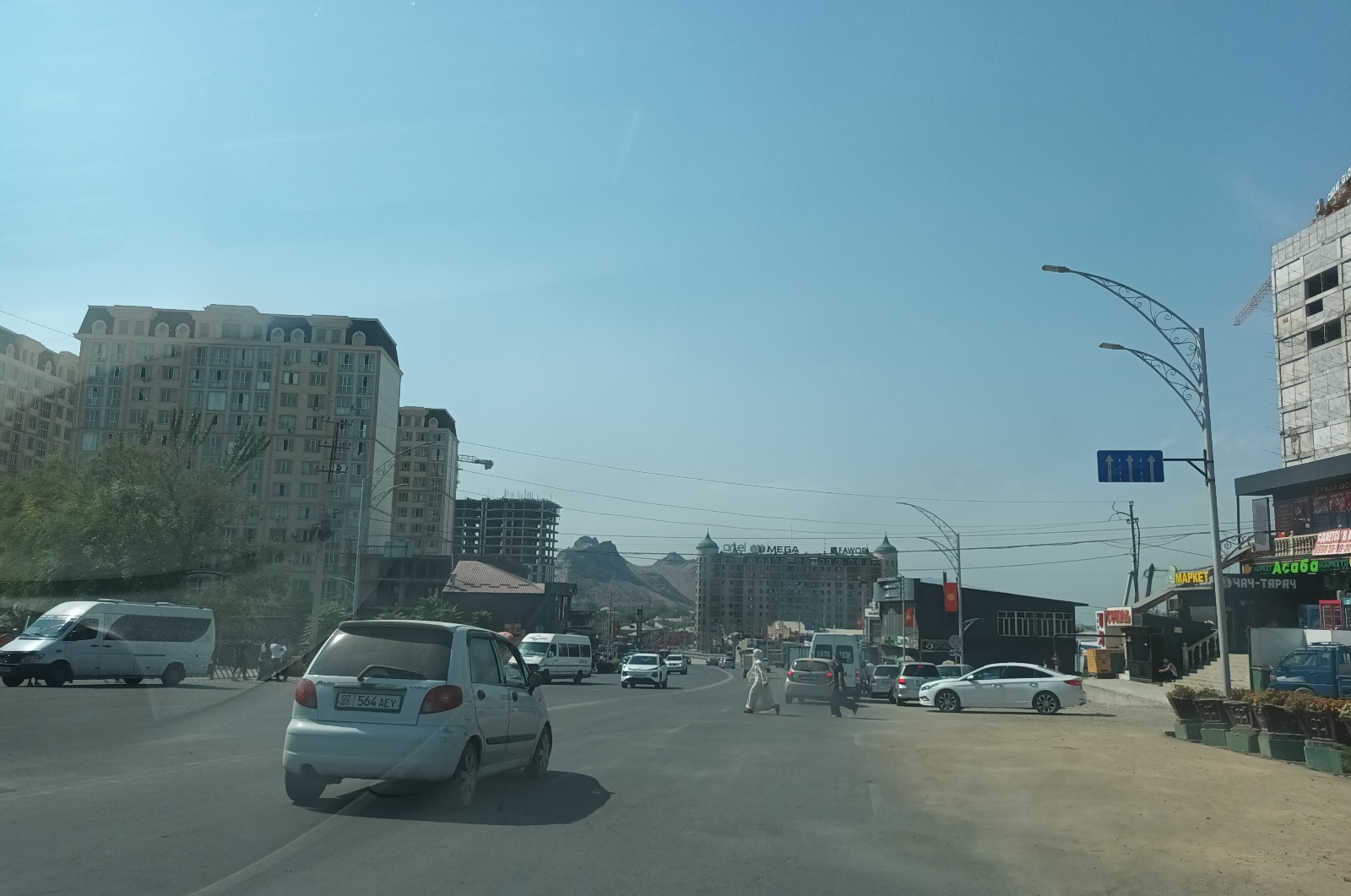
The main tourist highlight in Osh is their sacred mountain Sulaiman Too. It's a UNESCO World Heritage site. Towering right in the centre of the city, this mountain has been revered for thousands of years. Its rocks and sources are said to heal ailments (slide down a rock - no more back pain; put your hand down a hole - cured of rheumatism). We didn't put the claims to the test, so, who knows, they might be true.
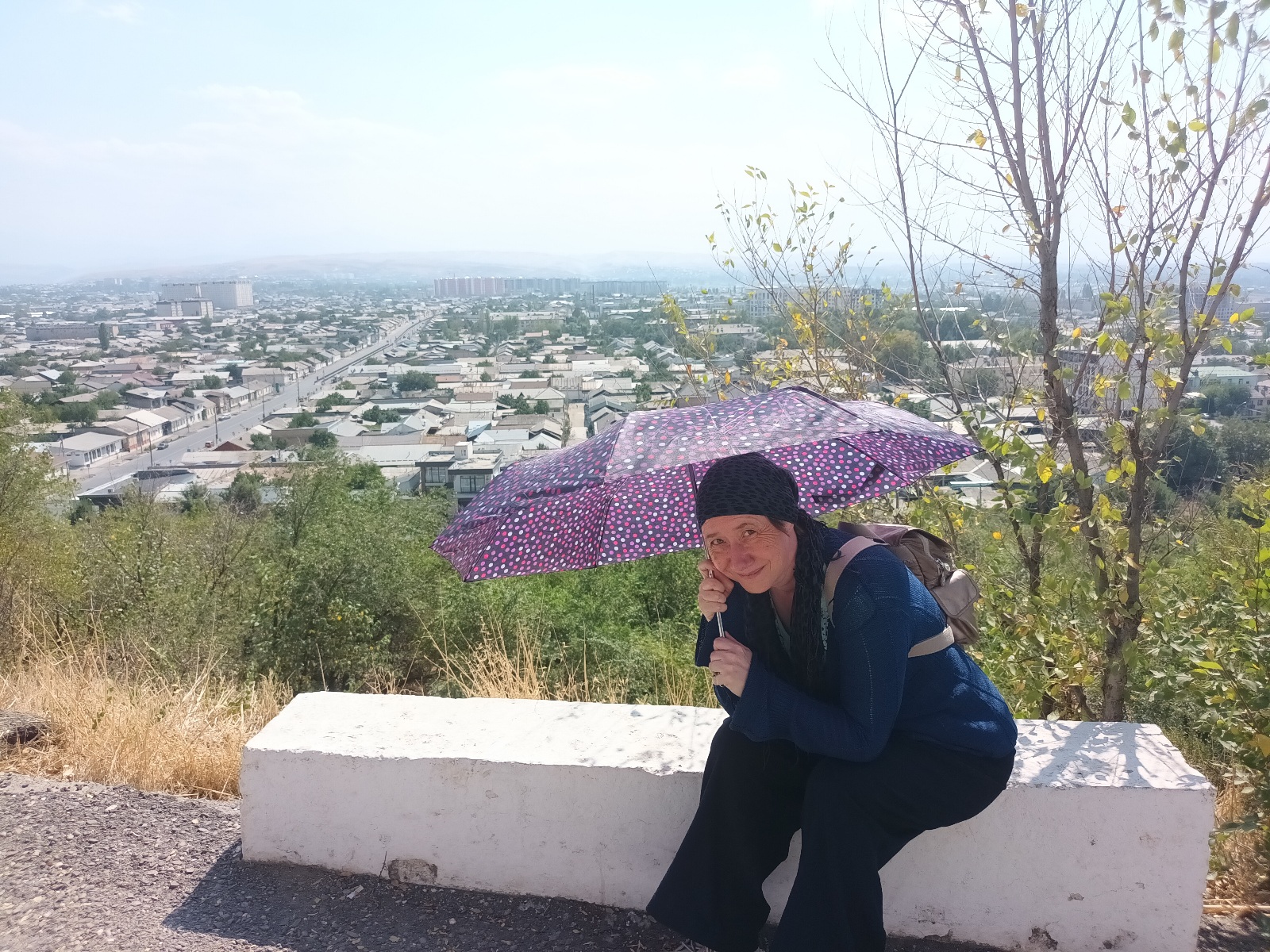
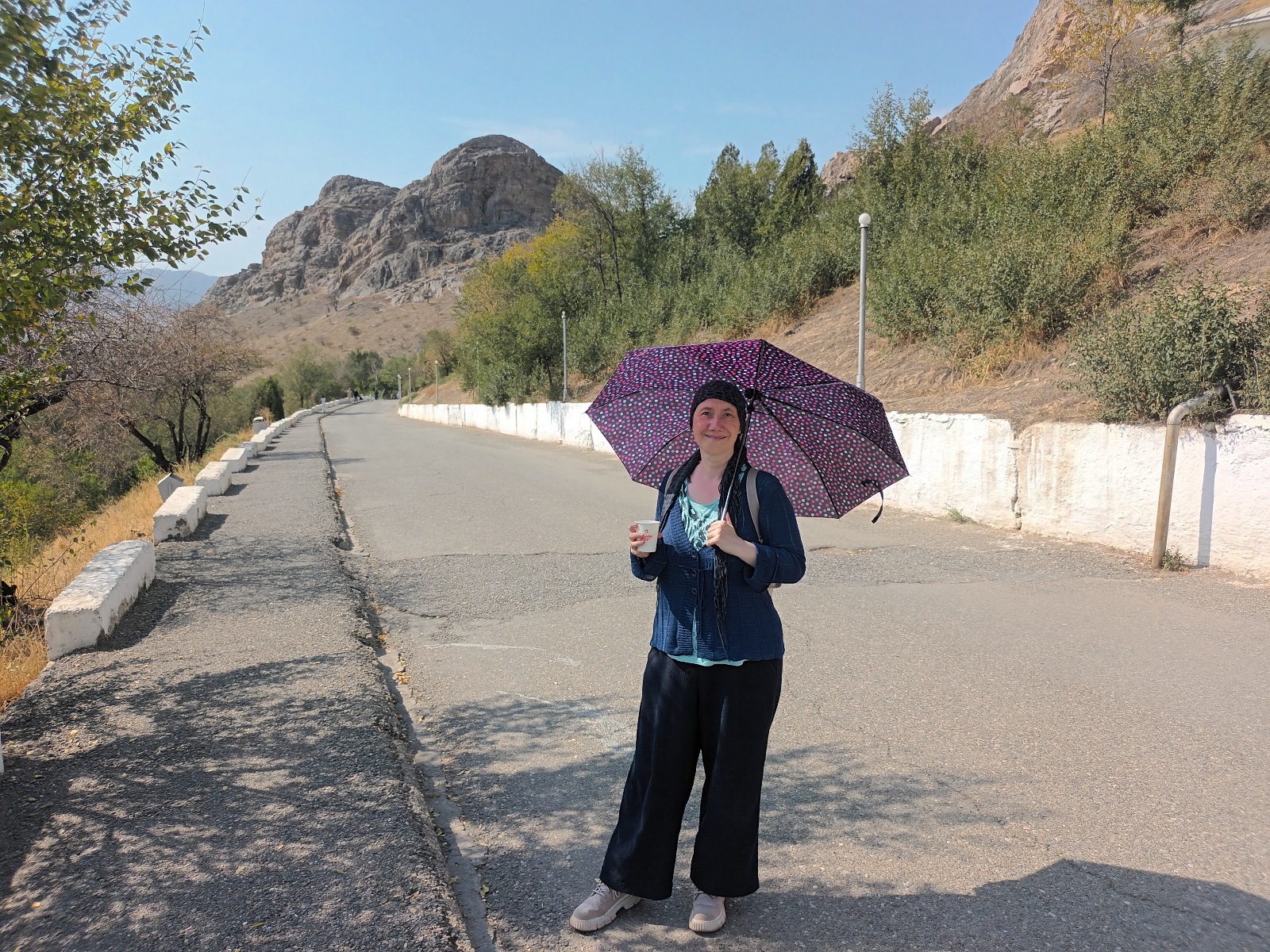
At two in the afternoon, we parked the car at the foot of the mountain, hid behind our umbrellas and steeled ourselves for the steep 450-metre ascent. Only to be stopped by a ticket booth. We paid 70 som each (a bit less than 1 euro) and slowly made our way over the tarmacked road. After five minutes, I needed a rest. Sit. Breathe. Drink water. Don't die. It was well over 30 degrees and we were climbing a mountain. Some people you just can't help.
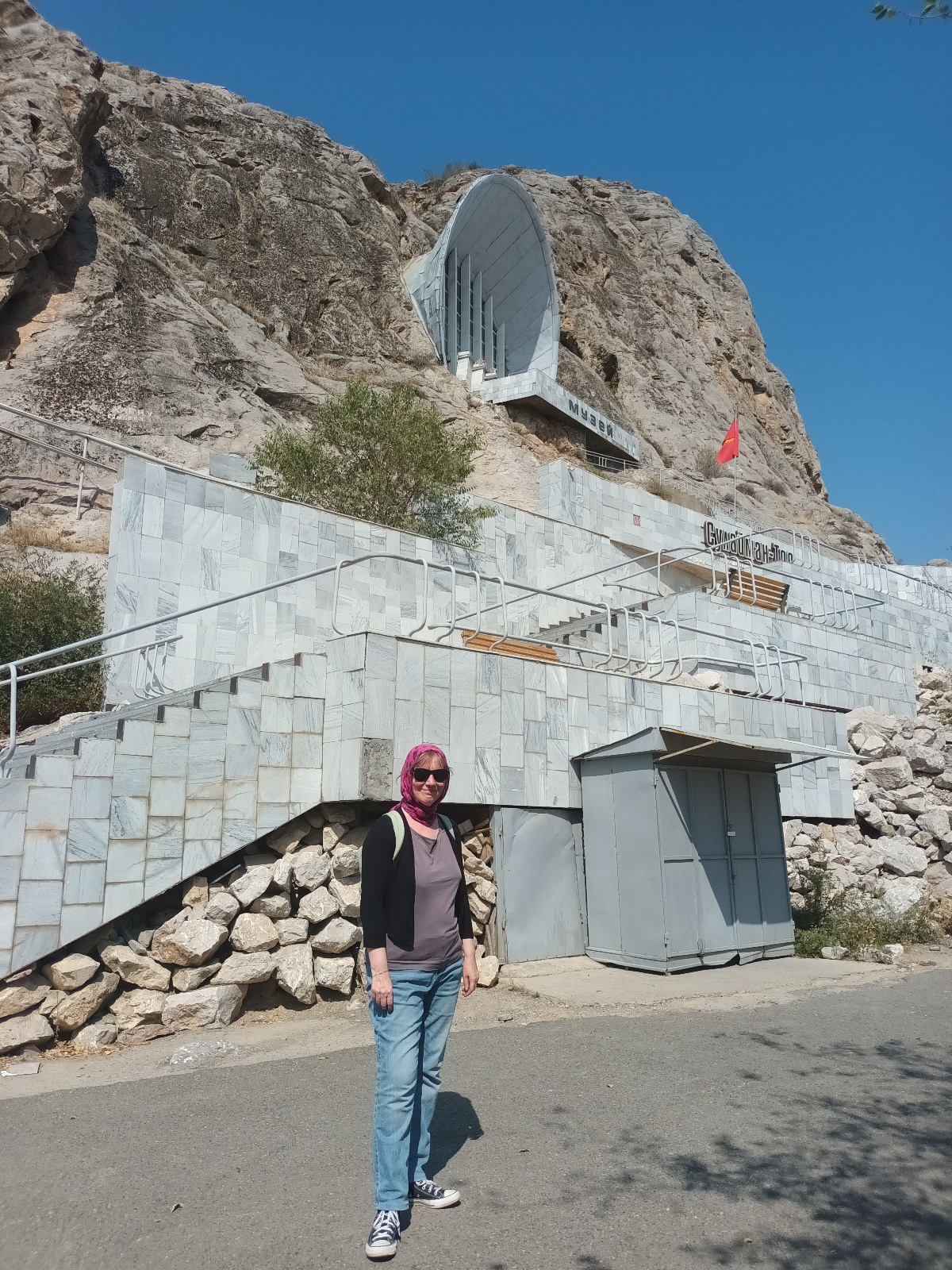
Three Americans came down the mountain. We had pegged them down as US citizens before they'd said a single word. "Is it still far up to the museum entrance?" I asked, in what must have been a pitiful voice. "Just pace yourself", the man advised. Was that a yes? It sounded like it. "Inside the mountain it'll be nice and cool", the woman added reassuringly. Translation: it's still a long way, but if you ever make it, there's hope. We plodded on. There it was - the museum. A mere flight of steps between us and salvation!
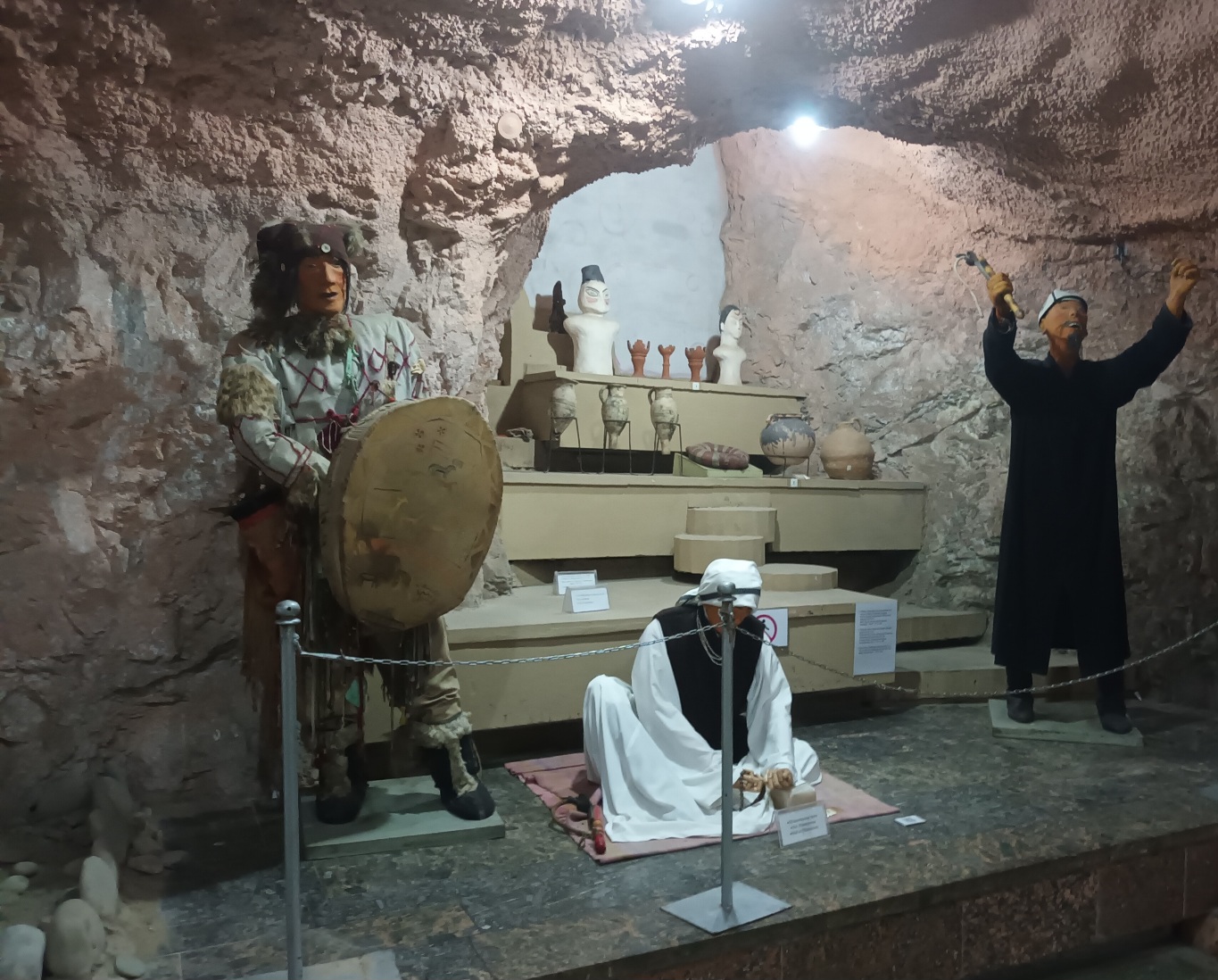
At the entrance to the cave, another ticket booth. We'd only paid to set foot on the mountain, the museum cost extra. So another 140 som changed hands - yay, slowly but surely we were getting rid of our som! - and we were allowed into the cool interior. I understand that so many nations held this mountain sacred: in this dry heat, it's a boon to breathe the cold saturated air inside.
Several niches explained major religions of this area: Zoroastrianisms, Shamanism, among others. Statues made the explanatory texts in Kyrgyz, Russian and often also English come to life.
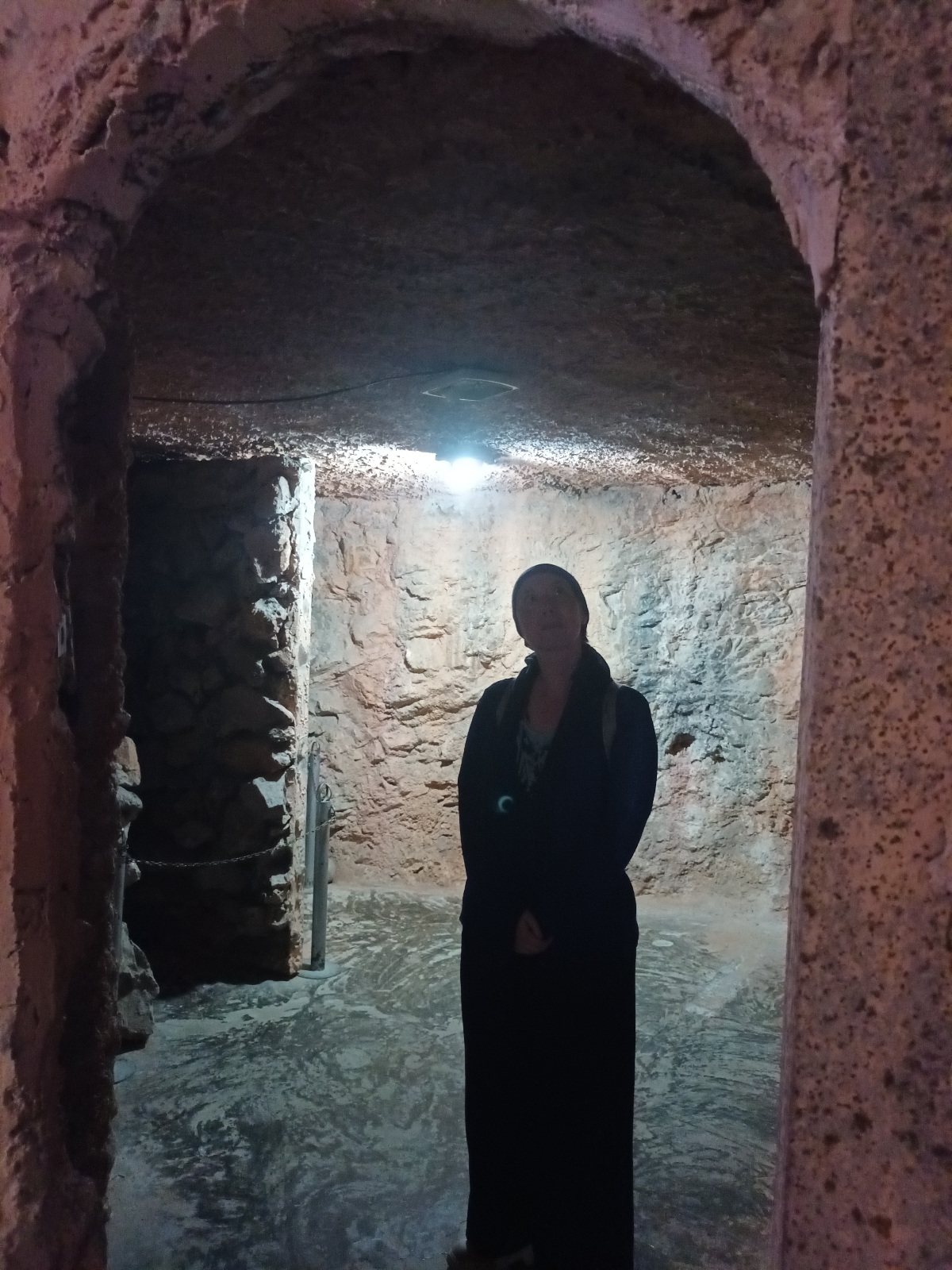
I stepped into a Chiltenkana. The panel explained that people afflicted by depression or who simply wanted to meditate and retreat from the world for a while entered this niche and fasted here for 40 days in solitude and quiet contemplation. I can see this working. In 40 days, one can do a lot of thinking, planning, strategizing. And if you're tired of life, the world might seem more palatable after a month-long seclusion. A quarantine for the soul.
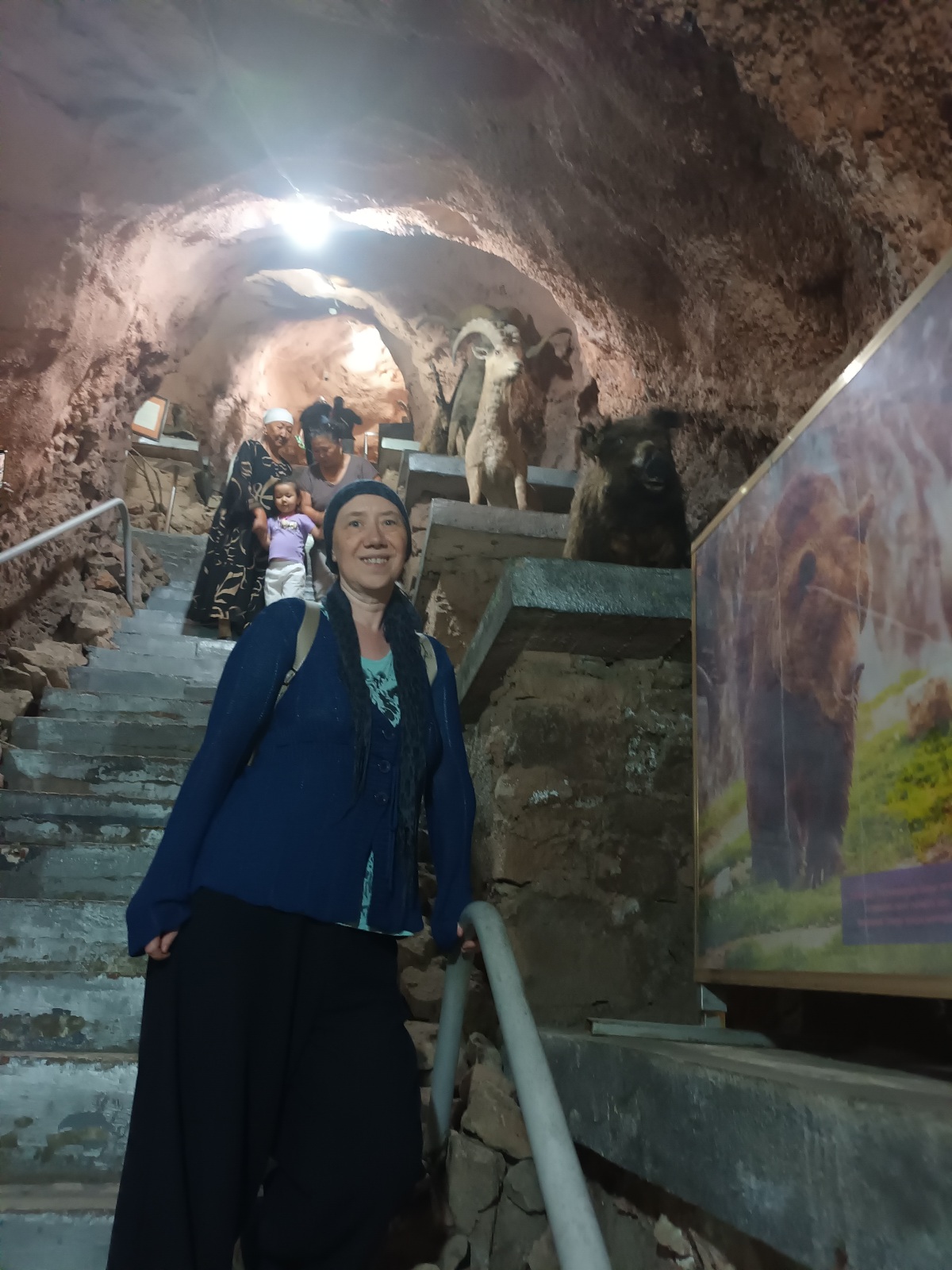
From the chiltenkana back into the bustle of the museum. There were yet more stairs to climb - a mountain as high as the Moscow subway was deep, and no escalators to come to your aid. Families taking pictures caused a welcome traffic jam. I paused to catch my breath. "Tizhelo?" asked a Kirgiz mother. I laughed and nodded. Oh yes, the ascent was hard on me.
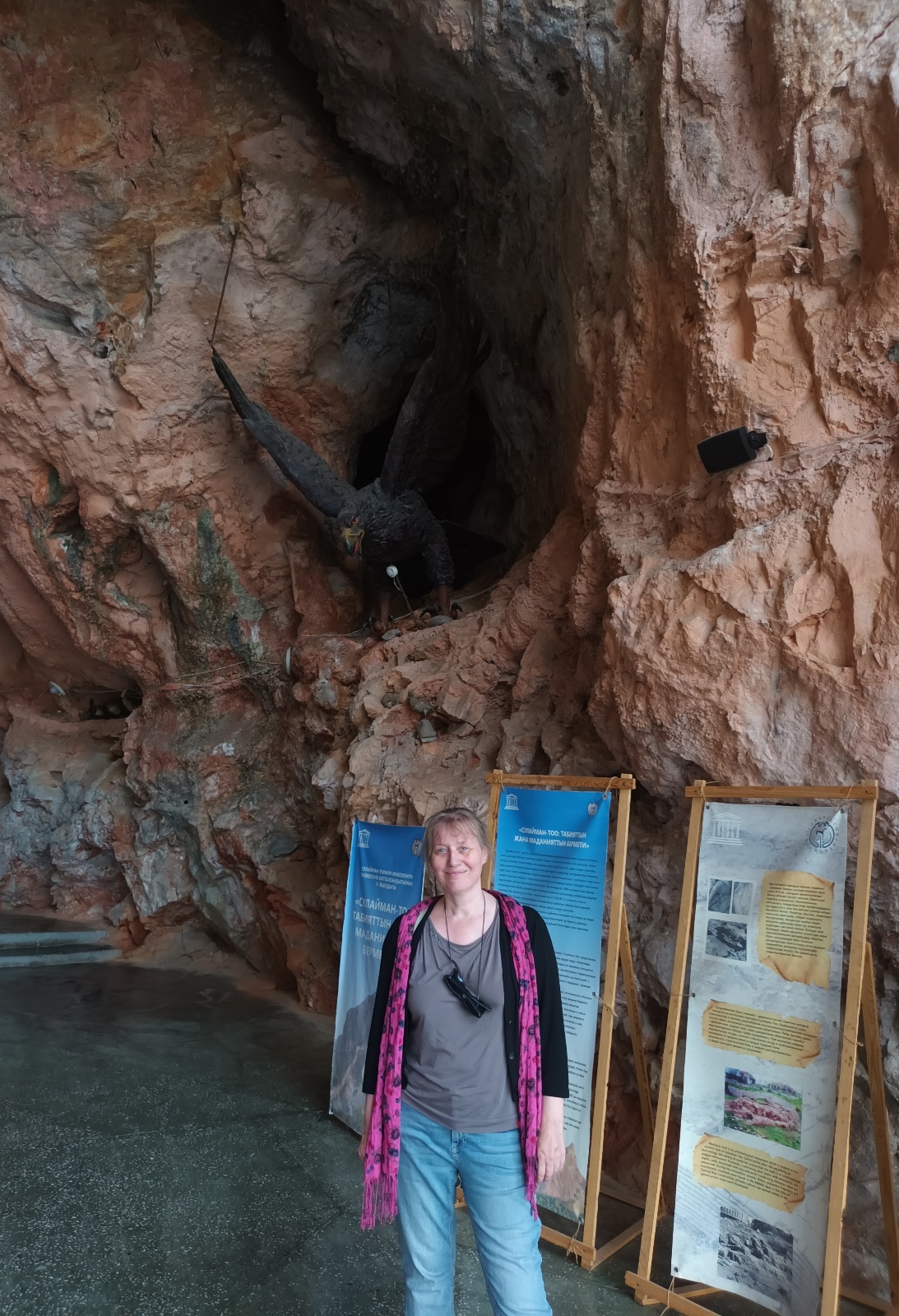
At least we reached the topmost cave. More explanatory panels about other interesting sites on the mountain - a mausoleum, the afore-mentioned healing rocks and a prehistoric settlement which we'd seen on the way up and which was closed off. Sonia pointed to the large eagle on the ceiling. It looked like a griffon, right out of a Sindbad story of our childhood!
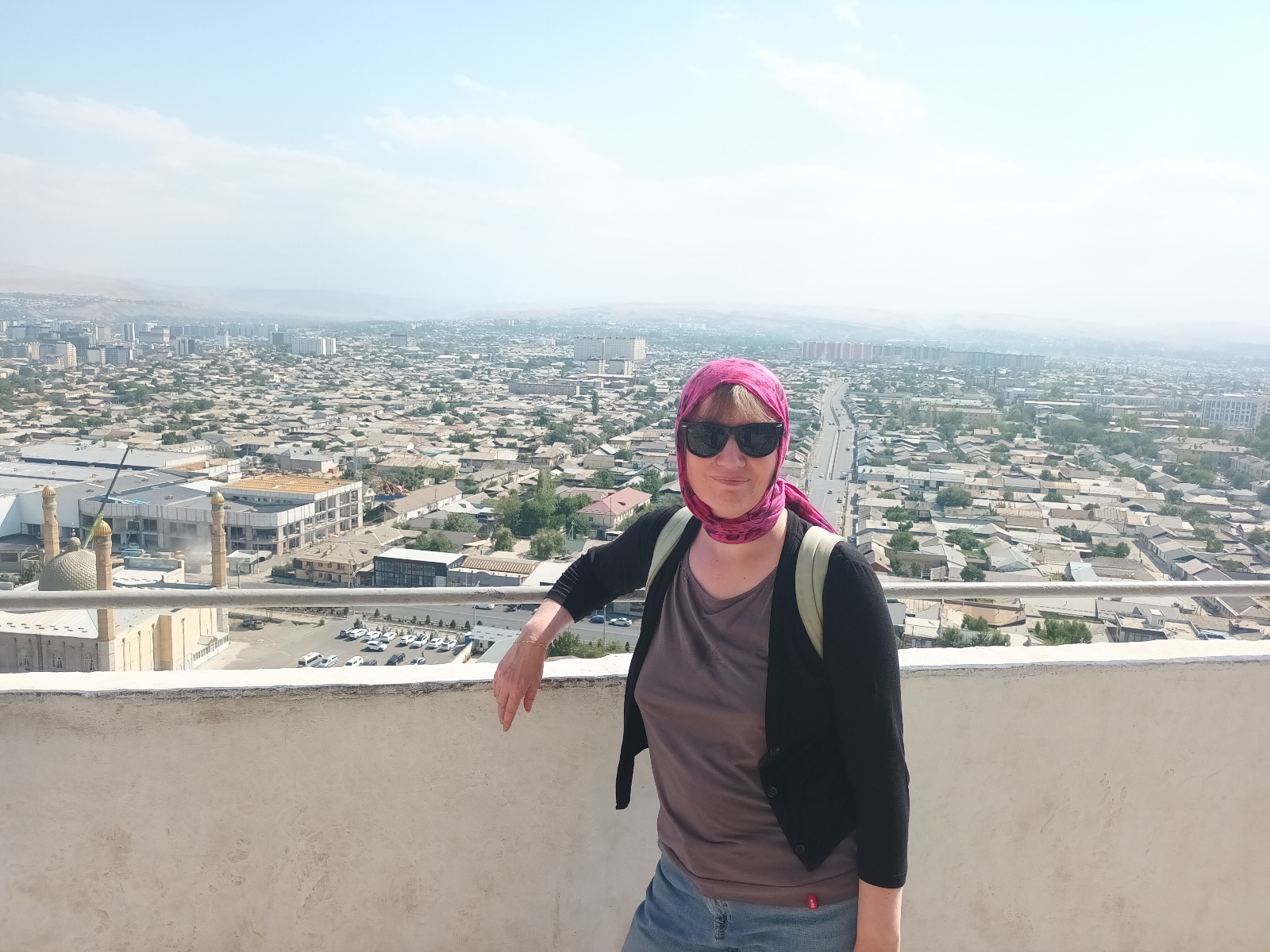
This topmost cave led out onto a panorama platform with an amazing view over the city. The bustling southern Kyrgyz metropolis, home to almost half a million people, looked almost deserted from up here. But I'd driven through it and knew that nothing could be further from the truth.
From the viewing platform, a metal stairway led back to the entrance. What goes up, must come down. In this case, unfortunately, through the sun. My knee was not happy about these shenanigans. Maybe they had a rock up here where you could bang your leg against and heal your meniscus? Might be worth a try. In the end, once we'd made it back to the cave entrance, all desire to explore more mountain sites had left me.
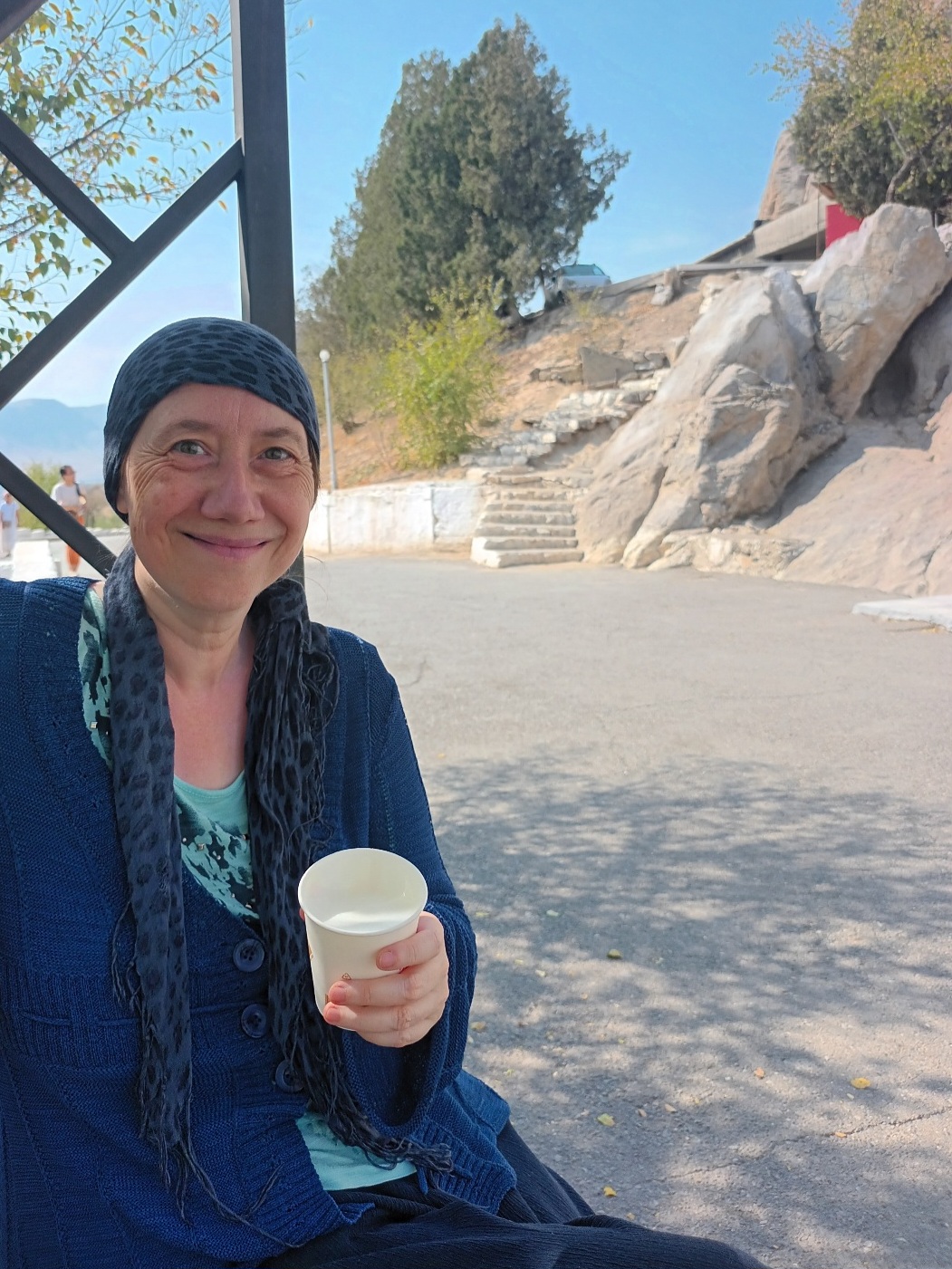
I made a beeline for a bench in the shade, and the kvas stand next to it. They were out of kvas (being out of advertised stuff is a national sport in Kyrgyzstan, it seems), so I tried the other drink on offer: chalap. It cost 25 som and the girl refused the 50 som I wanted her to have. Spending money is really not easy! The chalap was actually quite good. A sort of salty, carbonated yoghurt. Electrolytes. My life spirits were restored, one tiny sip at a time.
The hotel we'd booked was only 2 km from the mountain. We found it easily enough. But where was the promised parking? A study in rocky unevenness, with cars piled pêle-mêle upon each other? I steered the car into a shady spot and Sonia strolled to the hotel to inquire. Five minutes later she was back. They had private parking, we had just missed the entrance, 50 metres up the road. No problem. I brought the car back onto the street. "I can't make a left here", I said, seeing the cars speeding past. But a careful U-turn further up the street would be easy enough. I pushed the gas pedal down, fought my way into the passing lane and peered ahead. No oncoming traffic. I swiftly veered into a gravelly side street and swung the car around. Still no oncoming traffic. Easy peasy. Then I noticed that the street actually only had three "lanes": two heading in one direction and a parking "lane", which I had mistaken for the oncoming lane. I was in the process of becoming a ghost driver! Quick stop, backing up into the sidestreet, don't run the back tyre into the open canal, back onto the main street, round the block, found the parking entrance, squeezed in, done.
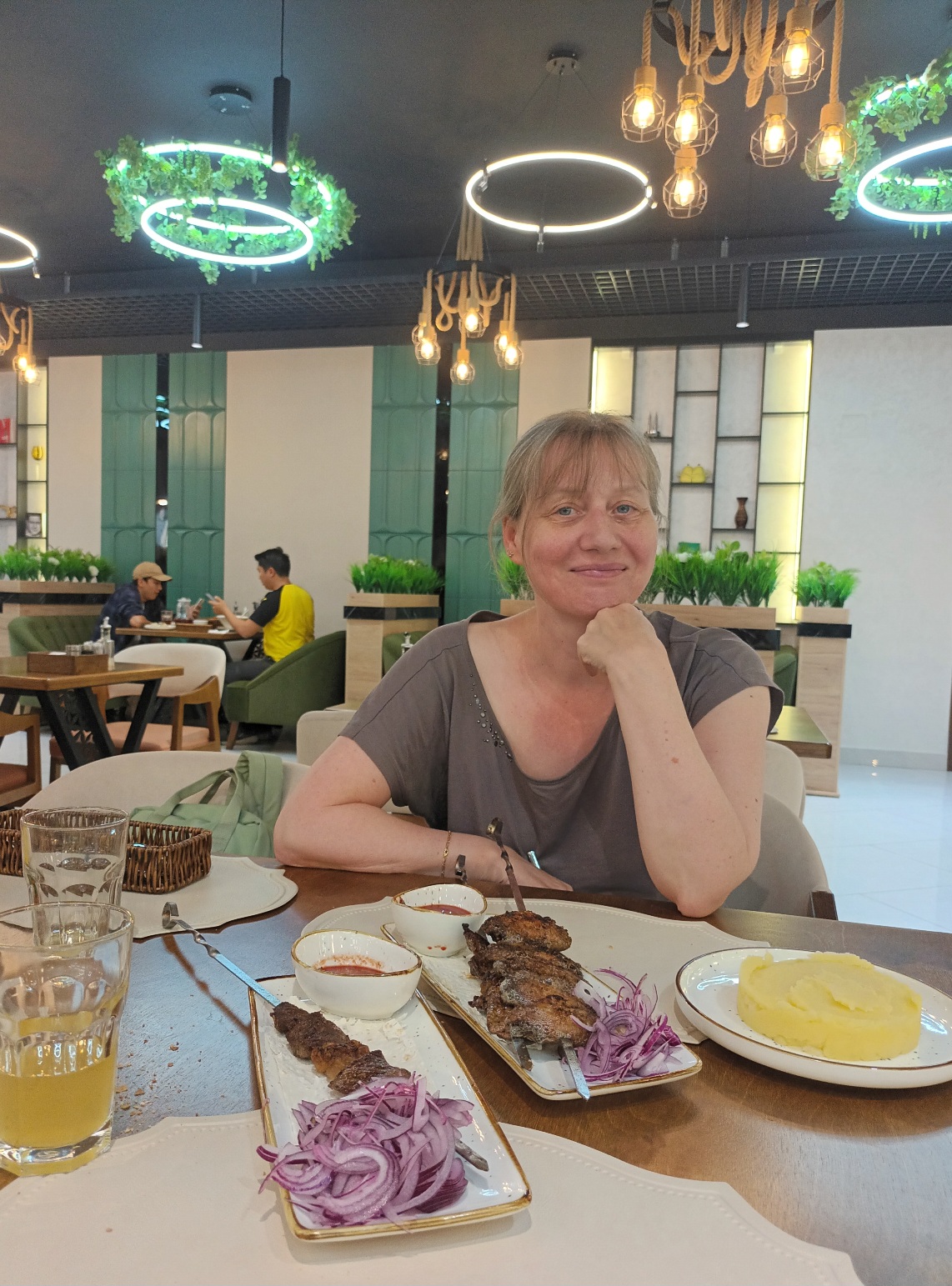
While I played possum on the hotel bed, Sonia, sprightly as ever, waltzed down to a nearby lavka to organize a beverage. "I found us a shashlik place for tonight", she announced at her return, pouring a glass of heavenly cold J7 pineapple juice for me, "the girl working there has even been to Luxembourg." I gulped down the entire glass, then a second one, while my sister explained: "The girl worked in Frankfurt. She speaks German well. The place looks really nice too."
And so it did. From the outside, it seemed an ordinary lavka, a mere hole-in-the-wall, but in the back, there was an entire restaurant and, yes, they had amazing shashlik! Not in the pic, but definitely in our stomachs, was a huge round nan, soft on the inside, not dry and stale like the one we'd had on Lake Issyk Kul. A perfect ending to our stay in this country.