



Week 7 - Uzbekistan
Day 46 - Tashkent
Friday, 25 September 2026
Start: Tashkent Ring Road (UZ) 12:00
Arrival: Tashkent City (UZ) 12:30
Total: 12 km
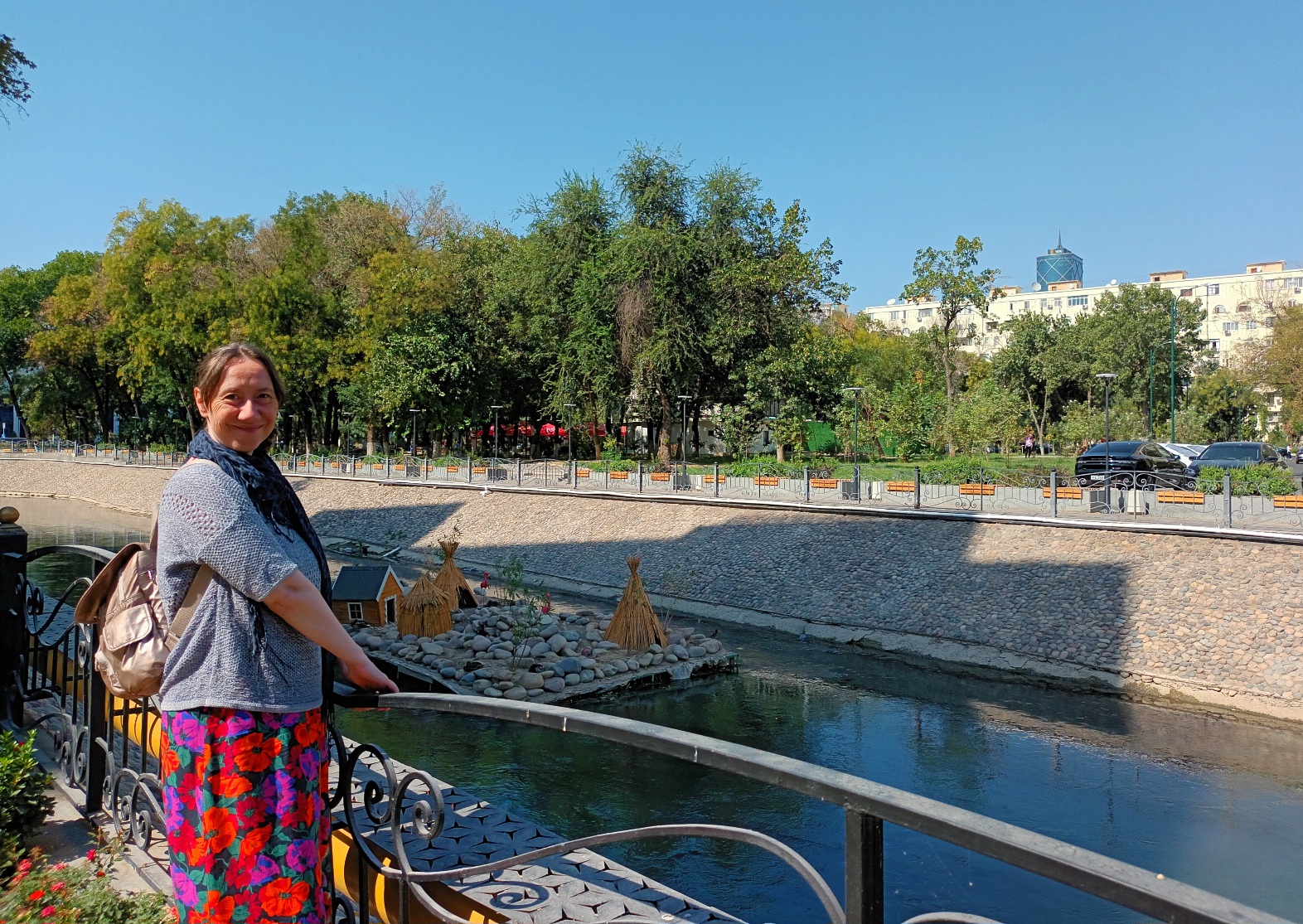
And they did! At noon, we drove from our hotel on the Western ring road to the airport in the East. We were three hours early for check-in, but reception promised to get our room ready as fast as possible. Meanwhile, we sat in the beautiful quiet lobbi bari, had an espresso, a fresh juice with complimentary croissants and updated my blog.
Everything about the hotel and its surroundings was excellent. Stuff simply worked, no gaudy bling, instead modern functionality and efficiency. We loved it.
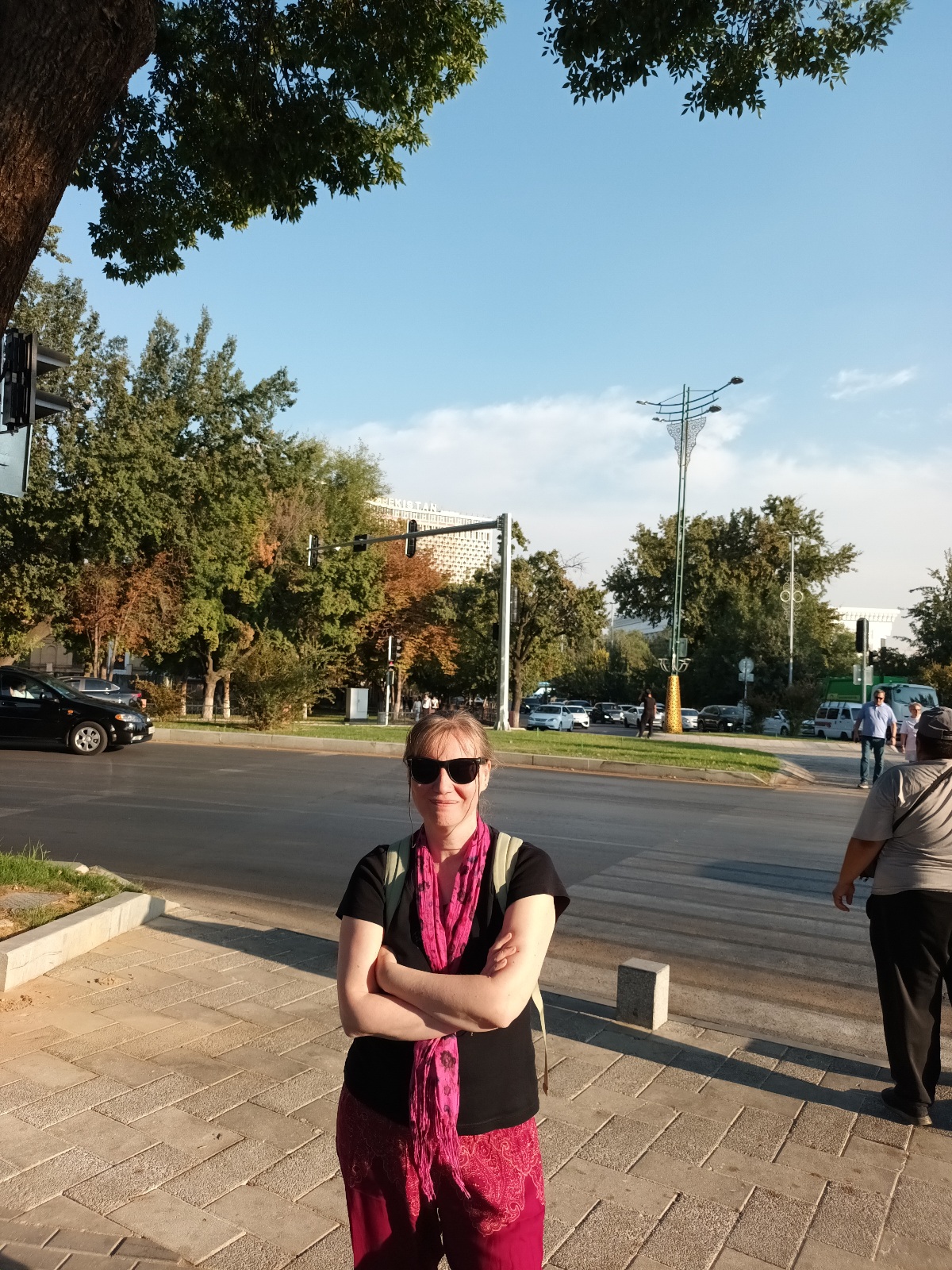
In the afternoon, we set out to explore the modern centre of Tashkent. In Uzbek, it's called Toshkent, just like Kokand is spelled Qo'qon. To my ears, this sounds very Persian, pronouncing the "a" like an English "aw". Chic, a bit French, quoi. I like it. What I liked less was the driving style of our cabbie. Telegram-scrolling while driving, talking on the phone, sudden unexplained door openings, unnecessary erratic line changes, and especially the constant mini jerks forward, even when waiting at a red light. Just why? After the 20-minute ride into the centre, I was as tight as a violin string. "Do I brake like that?" I asked my sister, wondering whether passengers feel things differently from drivers. "Definitely not", Sonia reassured me, "you drive smoothly, he's just a jerk." Reassured, my body relaxed back into ukulele-mode.
Museum of the Timurids
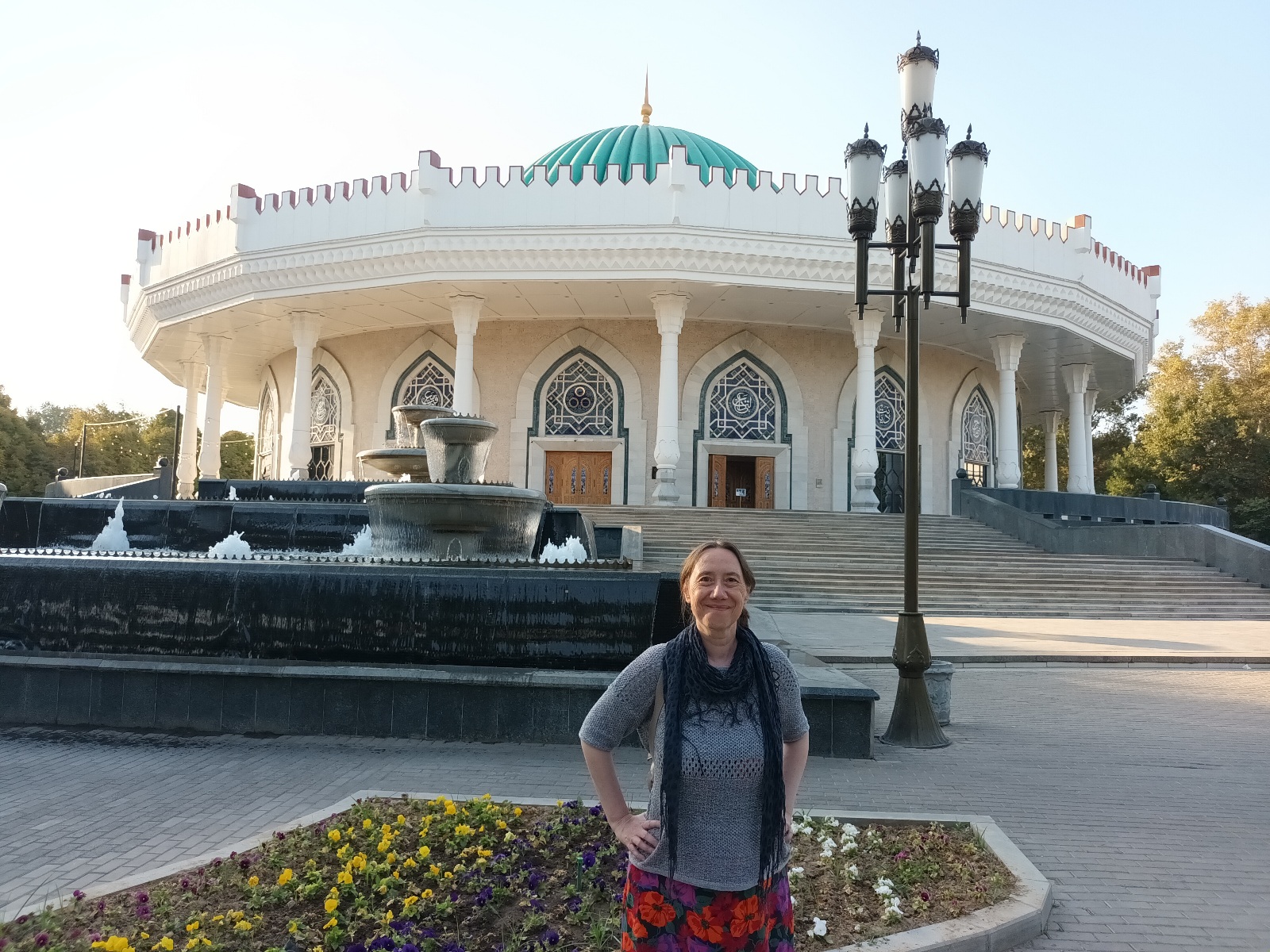
We looked around the square. A circular building crowned by a turquoise dome. This must be the Museum of the Timurids, the one thing we wanted to visit today. We climbed the steps to the front door, where a large sign greeted us: "Entrance down right". Hm. Why not put this sign at the foot of the staircase? We went back down and finally found the ticket counter in the basement. A woman sat there, playing on her phone. We waited politely. She must have seen us. No one is that absorbed in their game. Finally, Sonia tapped loudly on the glass window. With a long-suffering sigh, the woman looked up. "Two?" We nodded. She sold us two tickets and, before she could turn her attention back to her phone, two more tourists had arrived. Now she looked distinctly annoyed. We left her to her trials and tribulations, and climbed the interior staircase to the main hall.
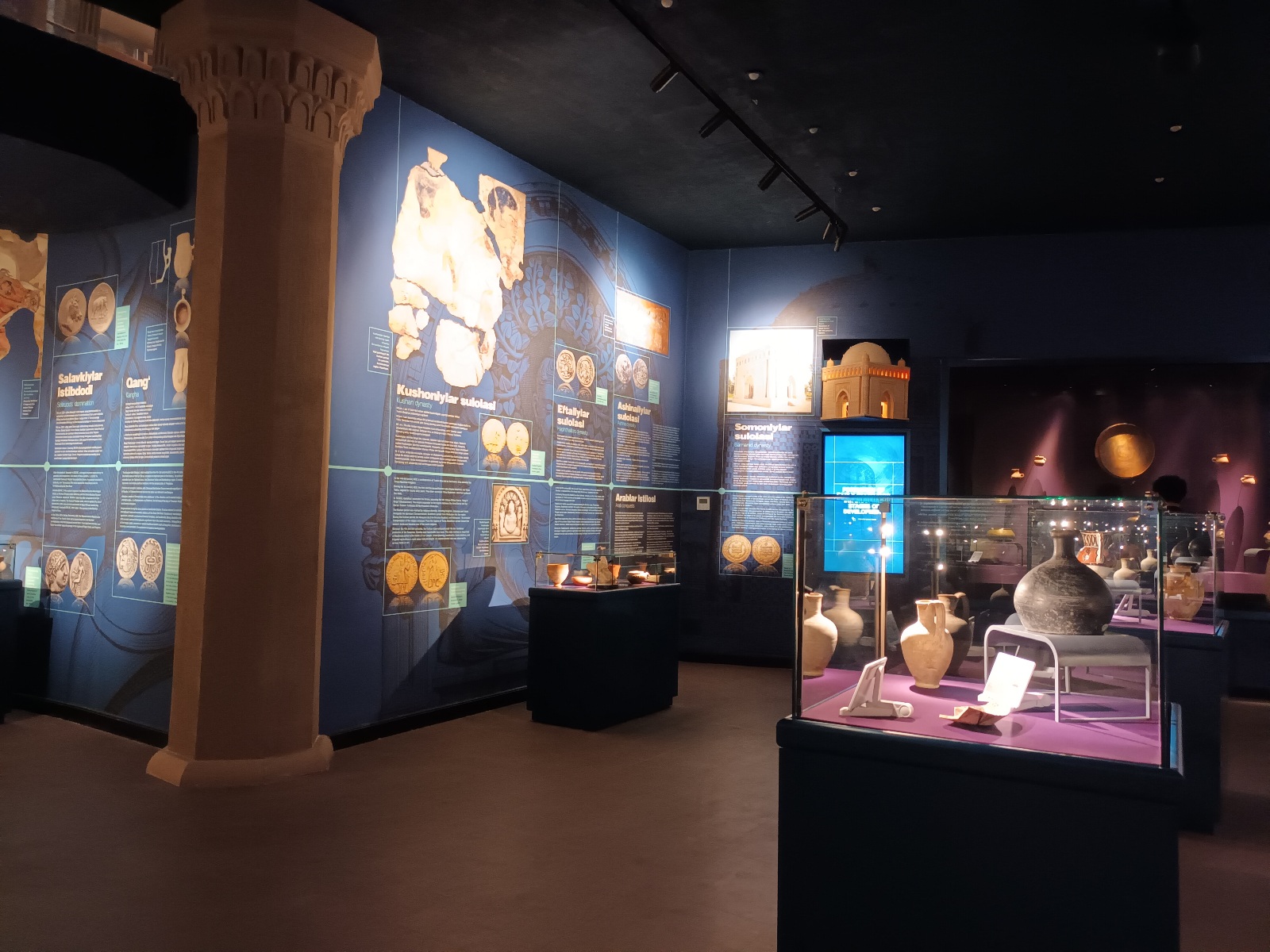
And what a hall it was! A huge dome arching over a vast circular room painted with allegorical scenes. A place like a house of worship and reading the information panels, that's exactly what this was. An ode to the last of the great steppe conquerors, Amir Timur, and his descendants, the Timurids, who went on to rule vast swathes of Central Asia for four centuries.
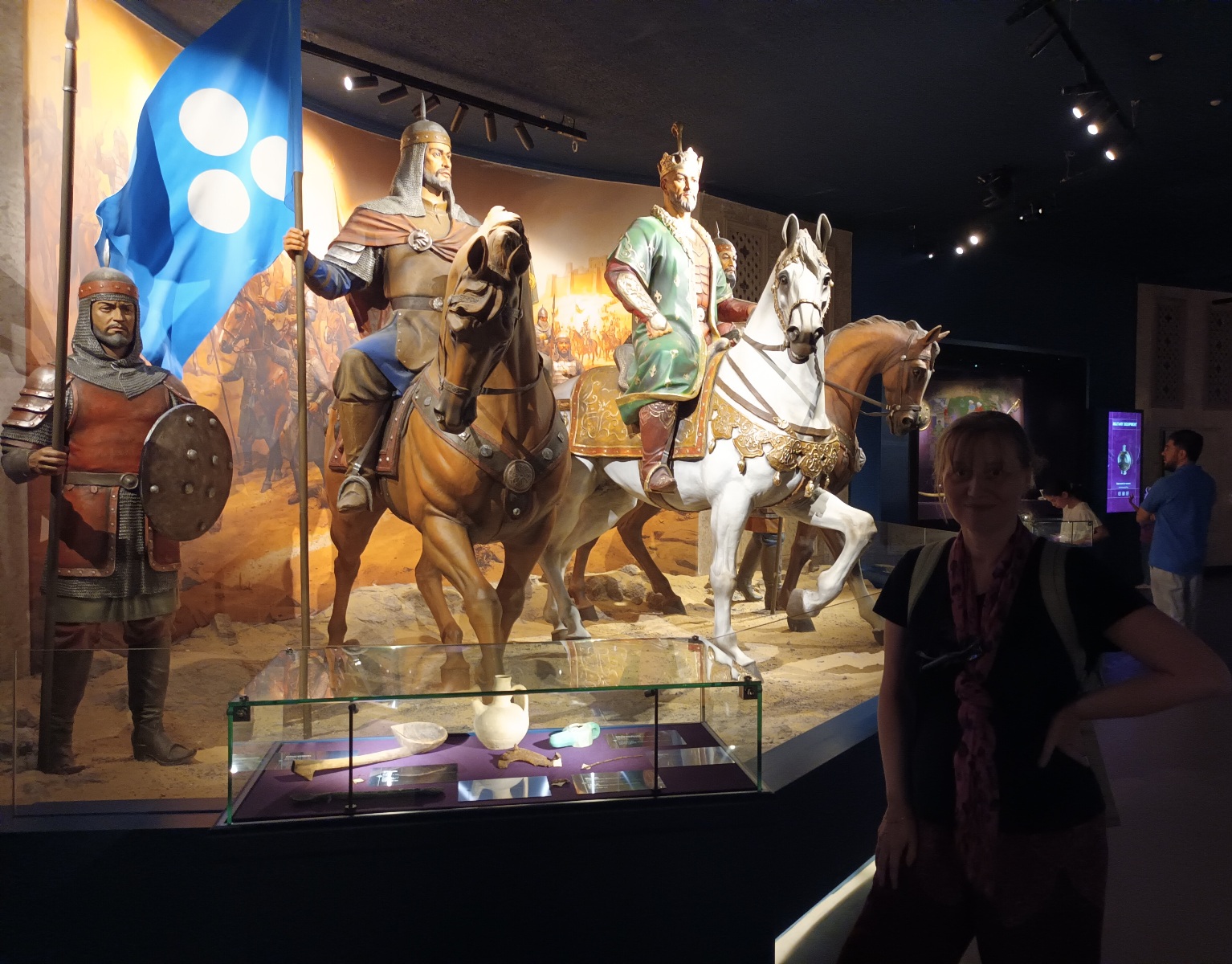
Around the central hall, two expansive exhibition rooms in the form of an annulus guided the visitor through the culture and history of the great Central Asian empires, the life and thoughts of Amir Timur and the accomplishments of his descendants. The style was generous, opulent. Huge panels with one map or picture and a few explanatory sentences. High display cases containing a single noteworthy exhibit. Statues making a long-gone era come to life. Short quotations, illustrating the conqueror's philosophy. The eye had time to rest, the mind time to reflect on an object or idea. The museum is similar to the Museum of Islamic Art in Doha, or maybe the Book of Kells Museum in Dublin. I like that style.
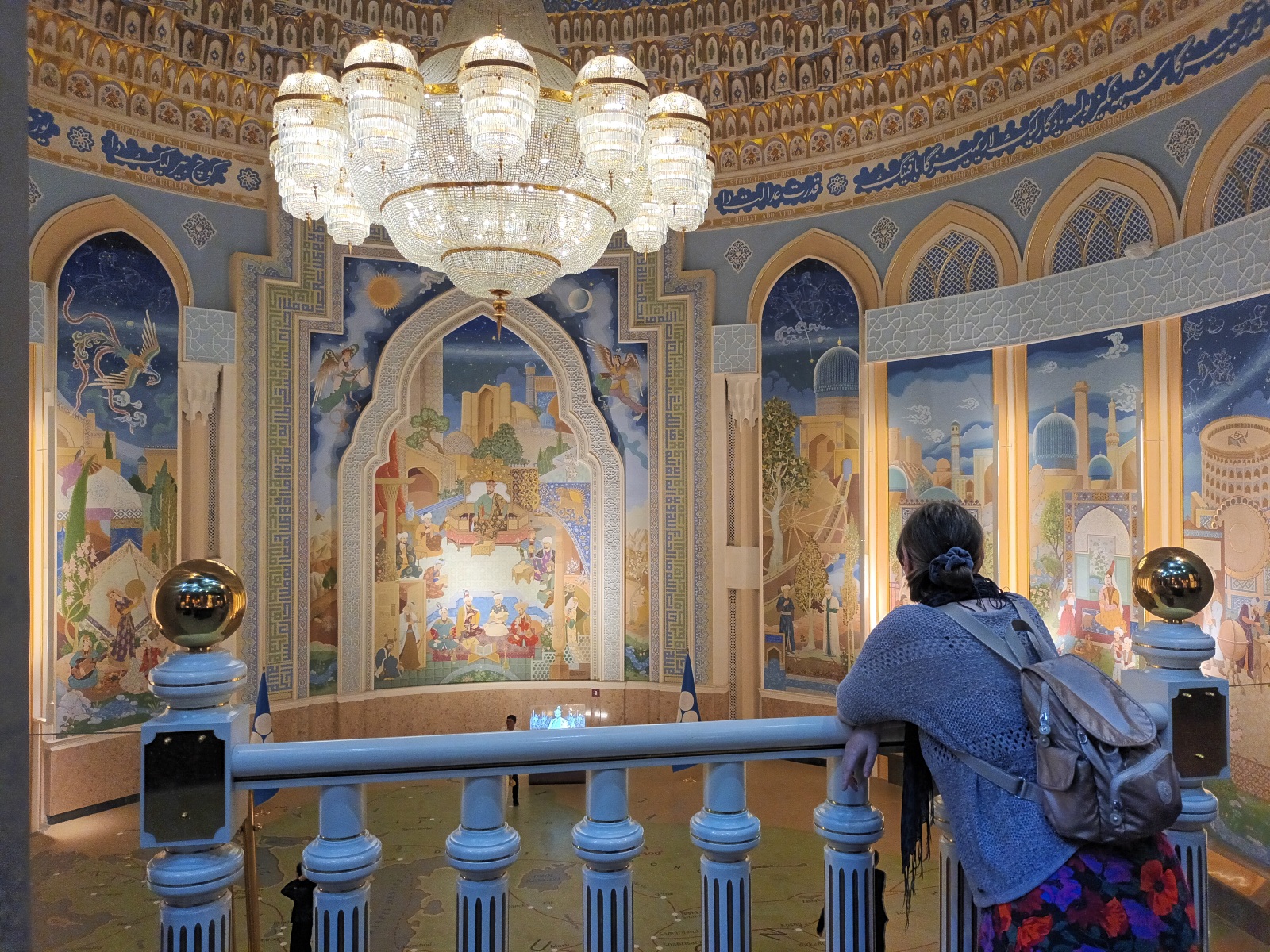
Amir Timur was a ruthless conqueror, but also, once he had united his realm and eliminated all dissent, a great patron of the arts and sciences. Of Turkic descent, he and his progeny brought about a renaissance of Persian thought and culture. In English, he is often called Tamerlane, from a nickname his enemies gave him: Timur-e lang, meaning Timur the Lame.
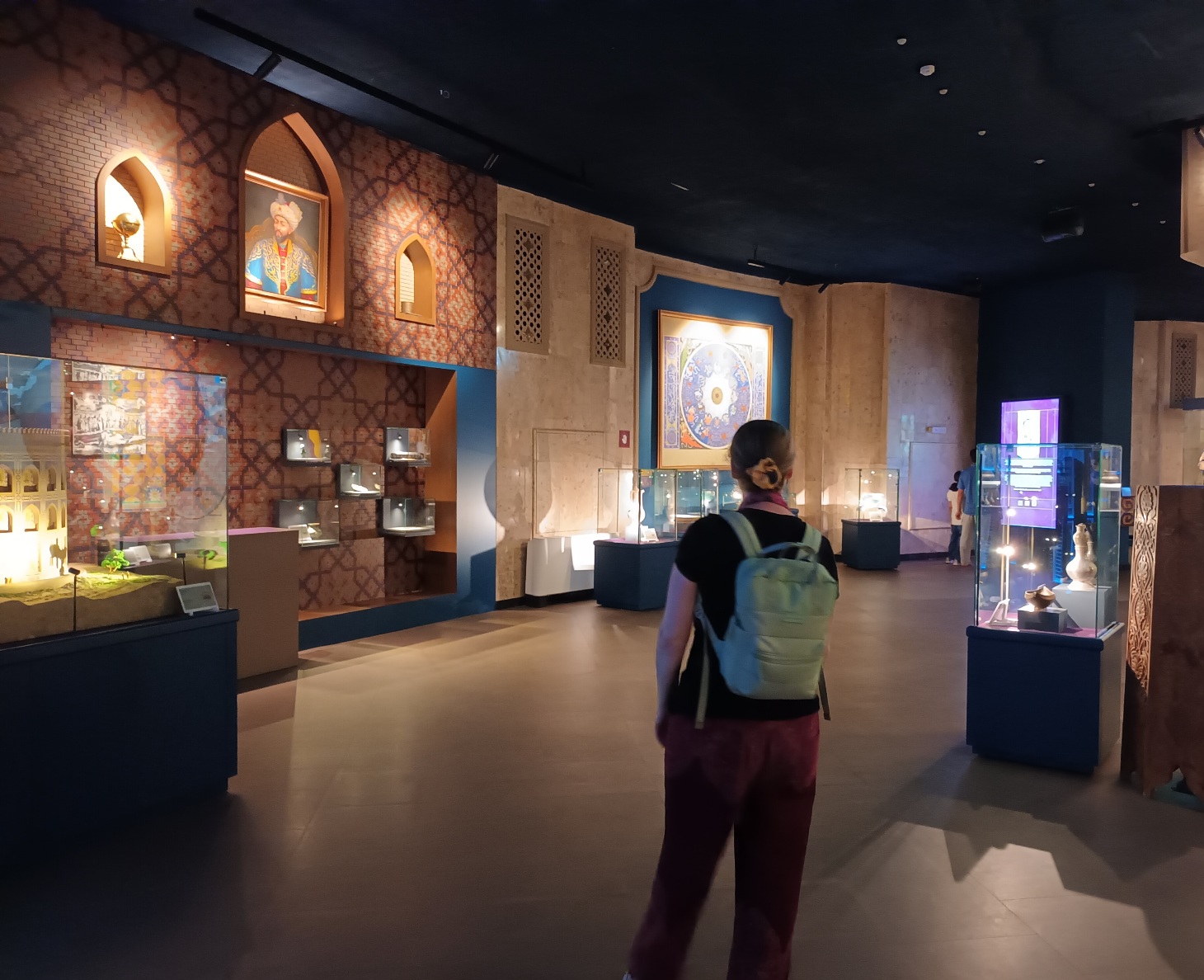
There were replicas of the most famous architectural highlights built under Timurid reign: the Gur-e Amir mausoleum and the Ulugh Beg Observatory, both in Samarkand. Even the Taj Mahal was built by a descendant of the great conqueror.
Now that we knew all there was to know about the Timurids, we turned our minds to a more mundane quest: we had not yet bought a sim card for Uzbekistan. At the border, I simply had not had the energy to tackle that question. Unfortunately, we did not see any small phone shops in this area of Tashkent. They must be there, but how to find them?
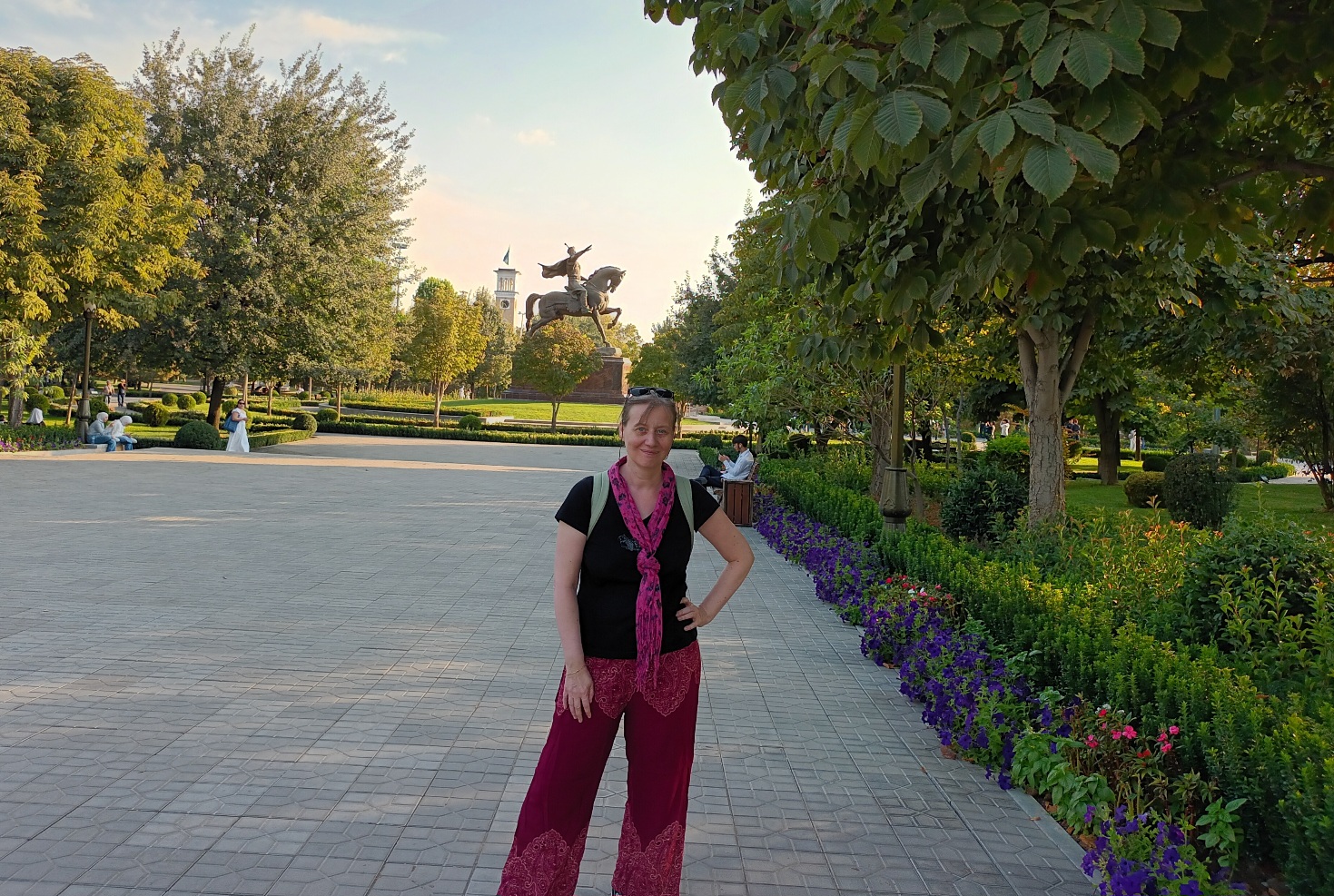
We strolled through a park in the direction of nothing in particular. In the centre of the park, a big statue of a guy on a horse. Amir Timur. Him again! Of course we had to take a pic.
Meanwhile, Sonia had located a Beeline on her map. That's Uzbekistan's Tango or Telecom. They were sure to sell sim cards. The office was not too far to walk, so we made a beeline for the Beeline.
Beeline
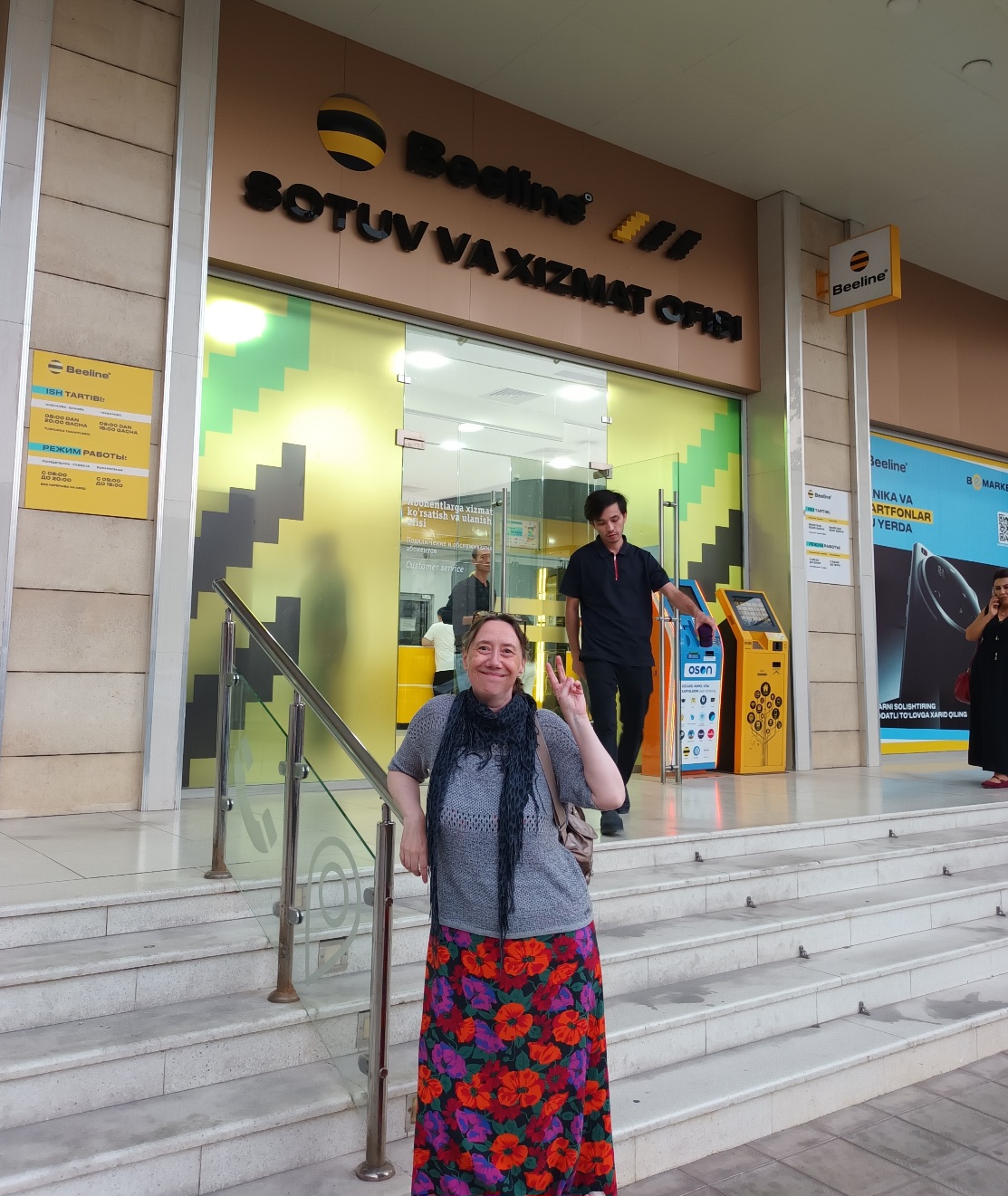
We found it right away, stepped inside, took a ticket and noted the number: 26 customers in front of us. And only four counters open. We settled down for a long wait.
After a while, we took turns waiting inside while the other took a stroll. Then we both went outside for some fresh air. Then we took a video of the street we were in. The numbers moved at a glacial pace. Continents changed their positions at a faster rate. Solar systems were born and expired, before our number ever appeared on the Beeline ticker. I'm slightly exaggerating, of course, but not by much. After an hour or so, it was our turn. "I would like a sim card for one month. The smallest possible." I handed my passport to the girl. She typed my data into her computer, 70,000 som changed hands and I was connected to the world again! 50 GB for barely 5 euro!
'Nuff seen for one day. We used our newly-found connectedness to call a ride and 20 minutes later sat down in the hotel restaurant. It had an Arabian theme. I ordered fish'n chips, Sonia had a pasta and we both shared a Zaatar bread. Global village. Gotta love it.
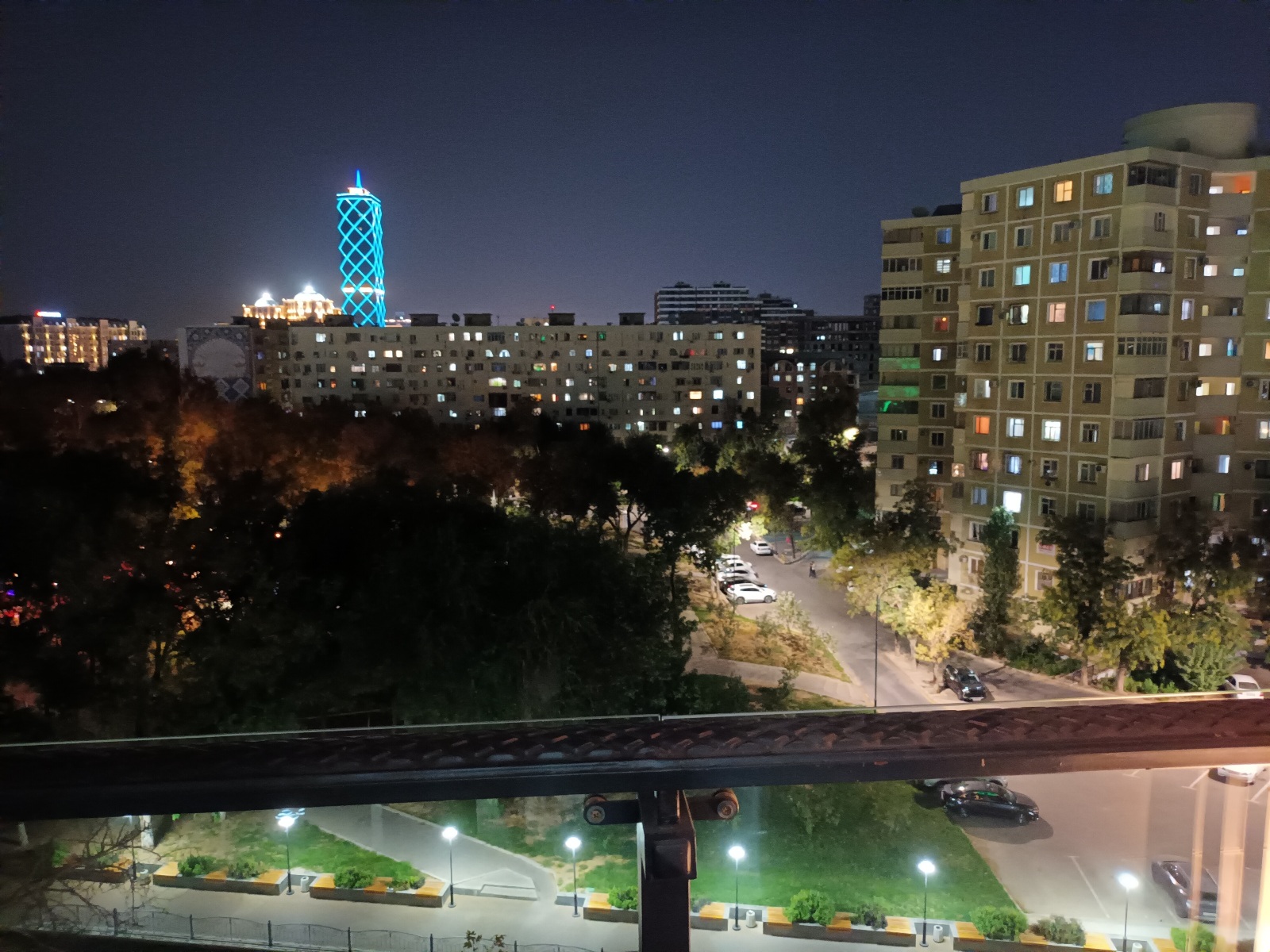
And last but not least, we enjoyed the wonderful view of illuminated Tashkent by night from our hotel room window, though we would not step out onto our tiny balcony high up on the seventh floor.