



Week 9 - Tajikistan and back into Kazakhstan
Day 62 - Old Sauran and Kyzylorda
Sunday, 11 October 2026
Start: Shymkent (KZ) 10:00
Arrival: Kyzylorda (KZ) 17:10
Total: 464 km
This was one of the best days! Everything was perfect. First, the M32 heading north was really good. Yes, there were stretches where the right lane had a ridge along the middle, but traffic was sparse enough to drive mostly in the left lane.
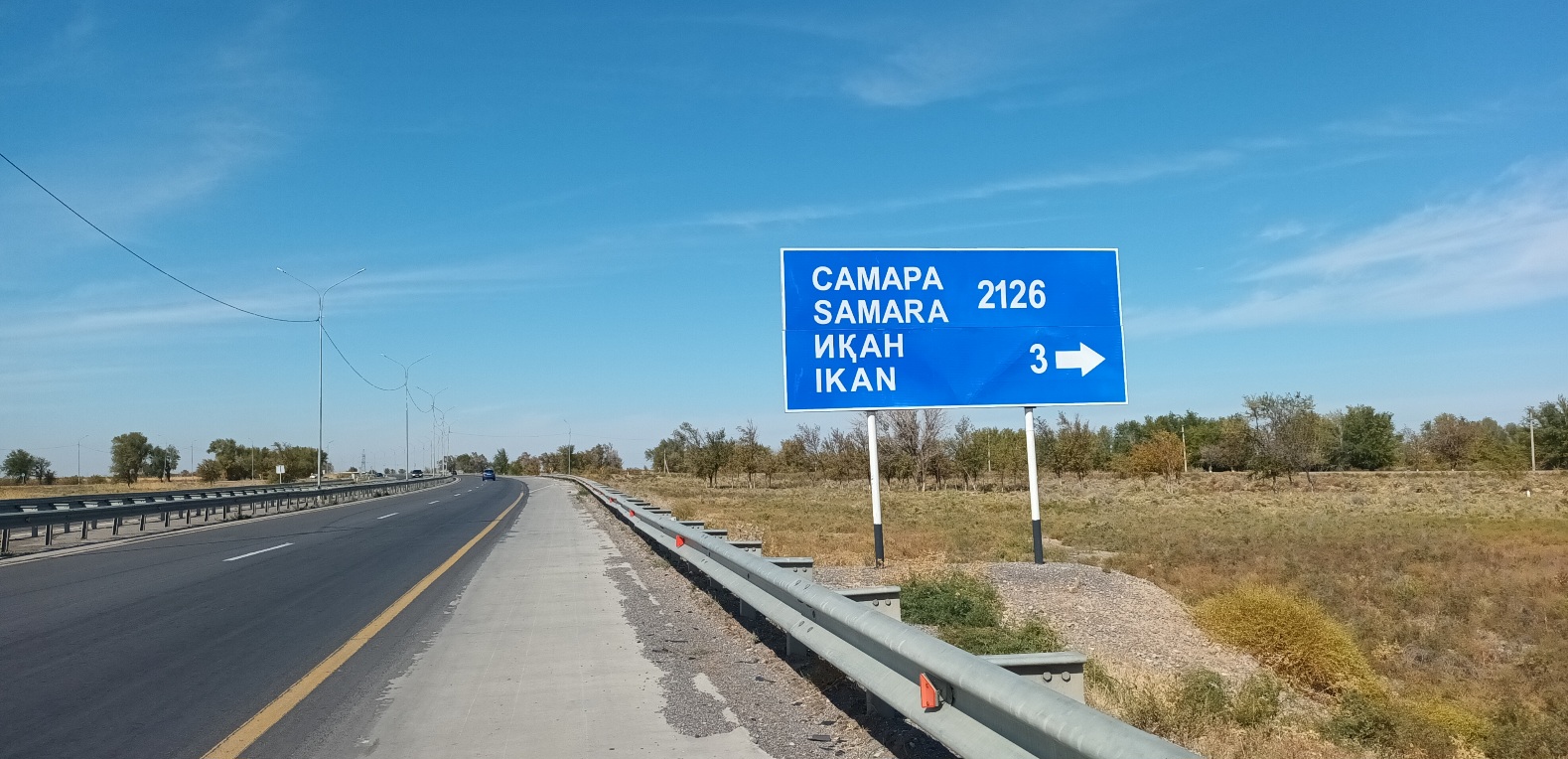
The speed limit was 120 km/h, except for the pedestrian and road crossings every ten kilometres or so, where speed cameras made sure the drivers slowed down. We made rapid progress. At regular intervals, distance signs tell you how far it is to the next towns and to the endpoint of the highway you are on. As it happens, the endpoint of the M32 is in Samara, Russia. We were over the moon to see a city on the Volga on a highway sign in southern Kazakhstan. Samara is only 350 kilometres south of Kazan. Almost full circle!
Although I definitely want to visit Samara one day, we won't be going this far north again this time. In a few days, we'll be heading southwest instead.
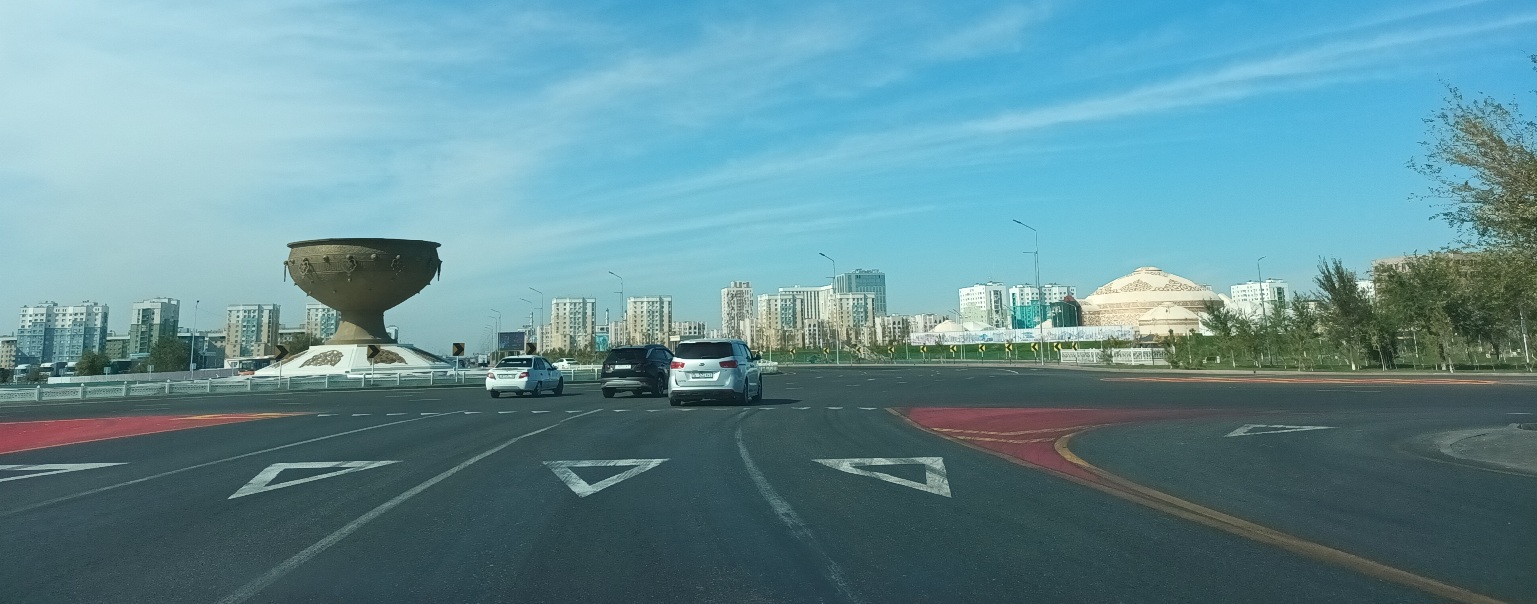
In the early afternoon, we crossed through Turkestan, another old city on the Silk Road. We even saw some camels grazing along the road. The first roundabout into town sported a huge grail-like cup. The streets and apartment buildings looked even more "Russian" to us than the ones in Shymkent. We stopped at a gas station to buy some drinks, everything was modern, clean and working flawlessly. Yes, I need to say it again: everything just felt so normal. We were in a great mood, cruising down the highway and singing along to our favourite songs. A picture-perfect road trip.
Old Sauran
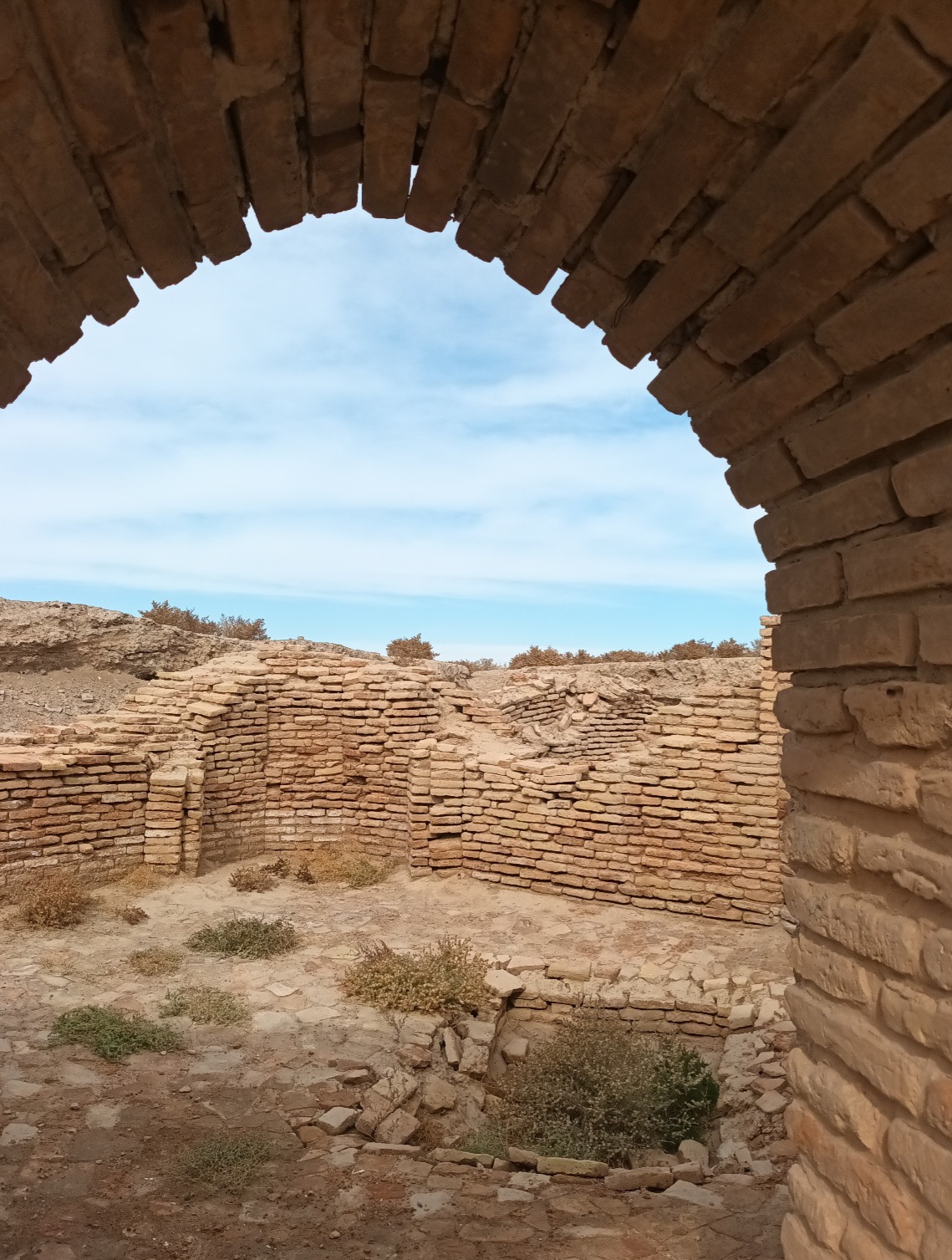
And like on every picture-perfect road trip, there was a little-known but intriguing gem to visit half-way through the day. In this case: The ruins of the old town of Sauran. Does that sound like Lord of the Rings or what? No evil wizards were involved though. In the Middle Ages, Sauran was a thriving city on the northern Silk Road, even acting as the capital of the Mongol White Horde at some point. In its heyday, it was the largest city on the territory of today's Kazakhstan, with an elaborate system of underground freshwater and sewage pipes. By the 17th century, it had declined in importance and was soon after abandoned and forgotten. Luckily for us, parts of it have now been re-excavated and are open to the public.
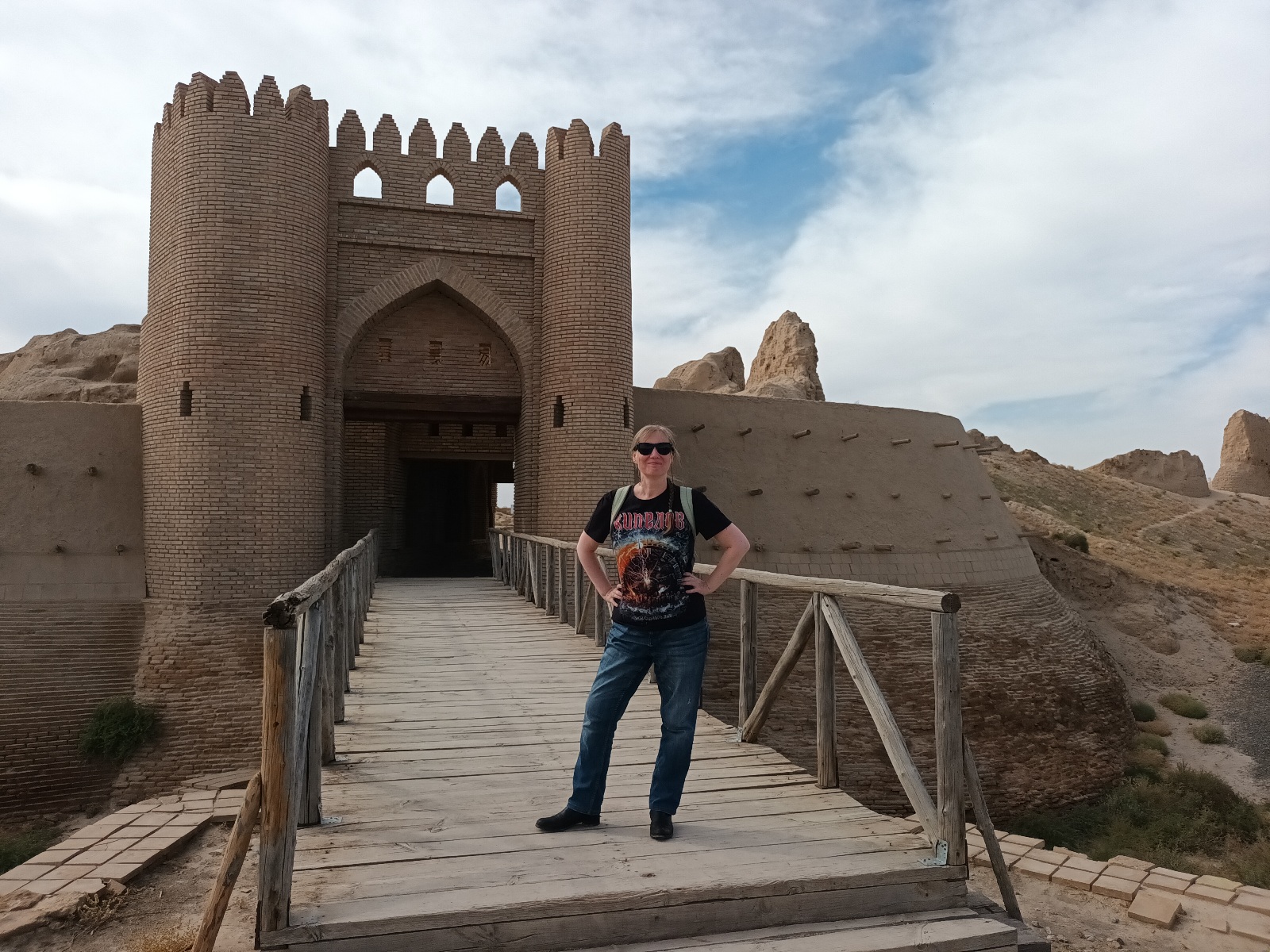
There are as yet no entrance fees to pay, no souvenir stalls or guided tours. Just a photogenic reconstructed gate, an information panel and a
large area to explore at our leisure. We were delighted! As we'd read online that there might be venomous snakes hiding in the shrubs, we put on our knee-high boots and set out on a one-hour hike. There was no designated path to speak off, just a vague beaten track leading to some of the ruins.
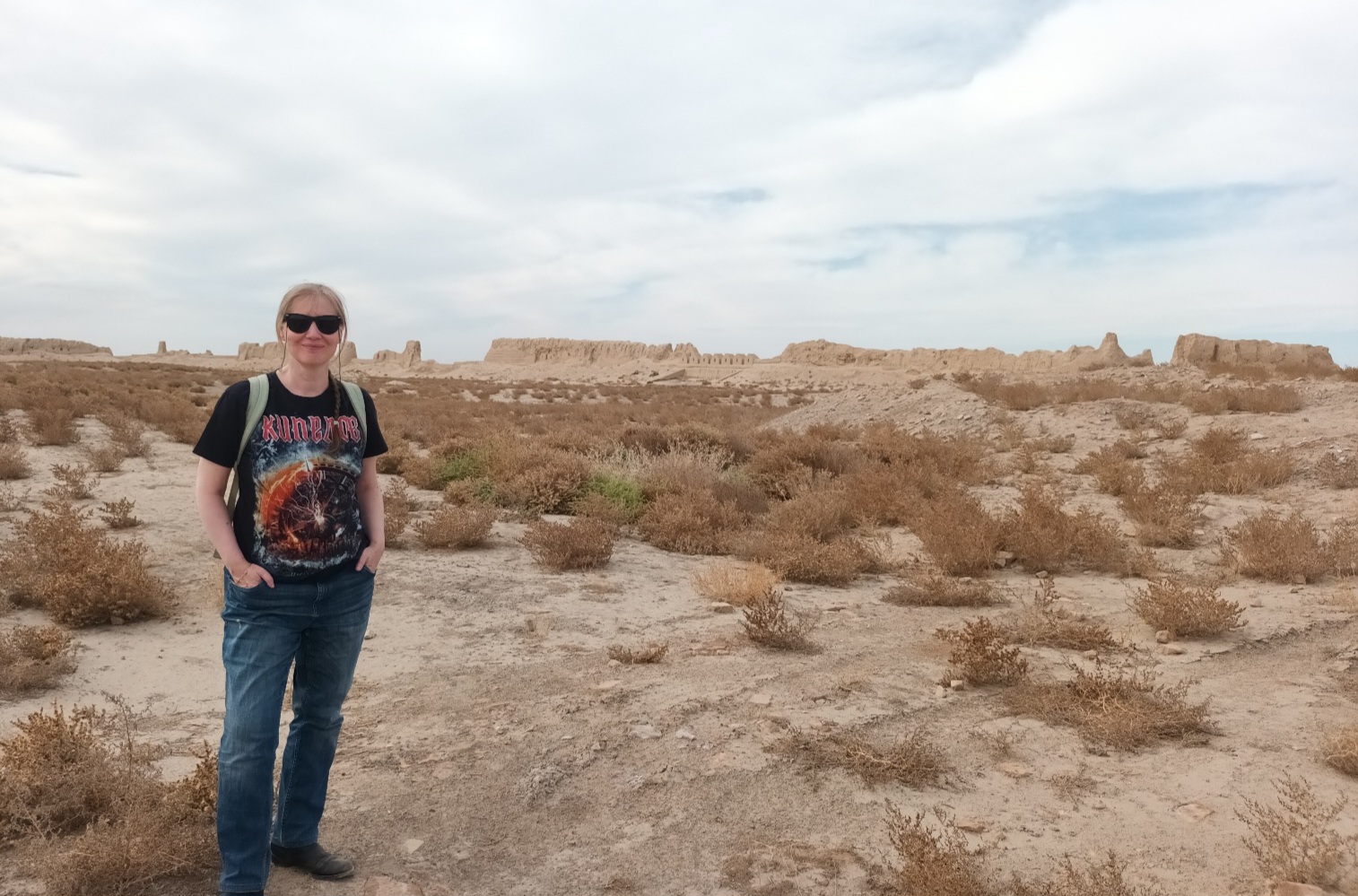
Apart from a family of four, we had the entire place to ourselves. The town walls and excavated houses cover a huge area, making it easy to imagine how large the city must have been just a few centuries back. Now it was mostly covered in sand and hardy spiky shrubs called Camel's thorn. The things are a pain if your clothes get tangled up in it. It's also sometimes tumbling across the road and if you get it under your car, your sister has to get on her knees and try to unhook it. Happened to us on the road to Samarkand. Kudos to Sonia for getting the blasted thing out.
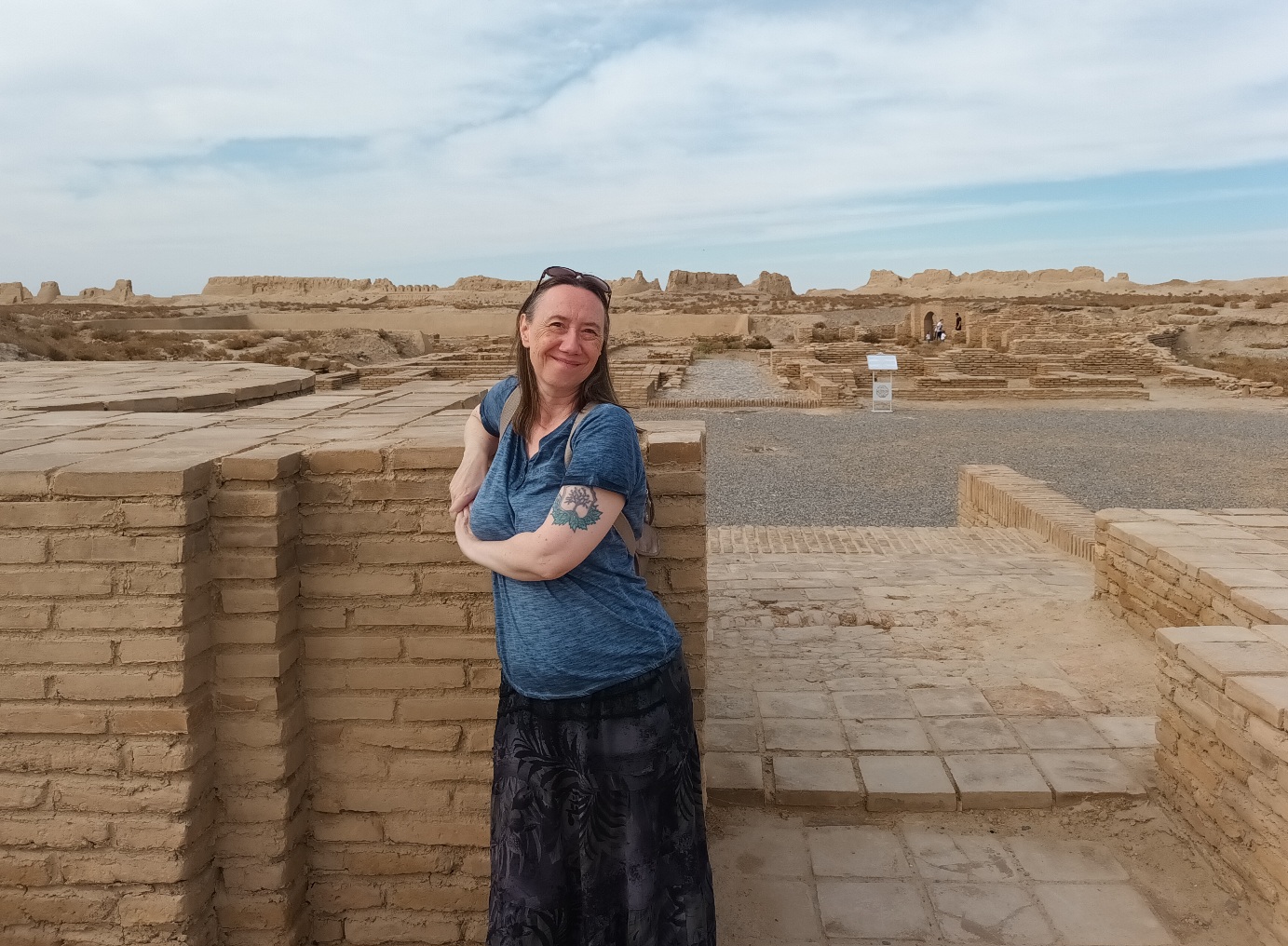
Walking among the ruins was a bit like exploring Pompei. Added bonus: the sky was overcast, so I didn't have to hide behind a layer of cloth. It was maybe 22 degrees - perfect T-shirt weather! The beaten track soon disappeared in a maze of Camel's thorn, so we just walked wherever it seemed safe to set your foot. The ground underneath appeared to be full of holes. Time and again, a meter-deep pit appeared in front of us. The remnants of a caved-in building? A desert fox's lair?
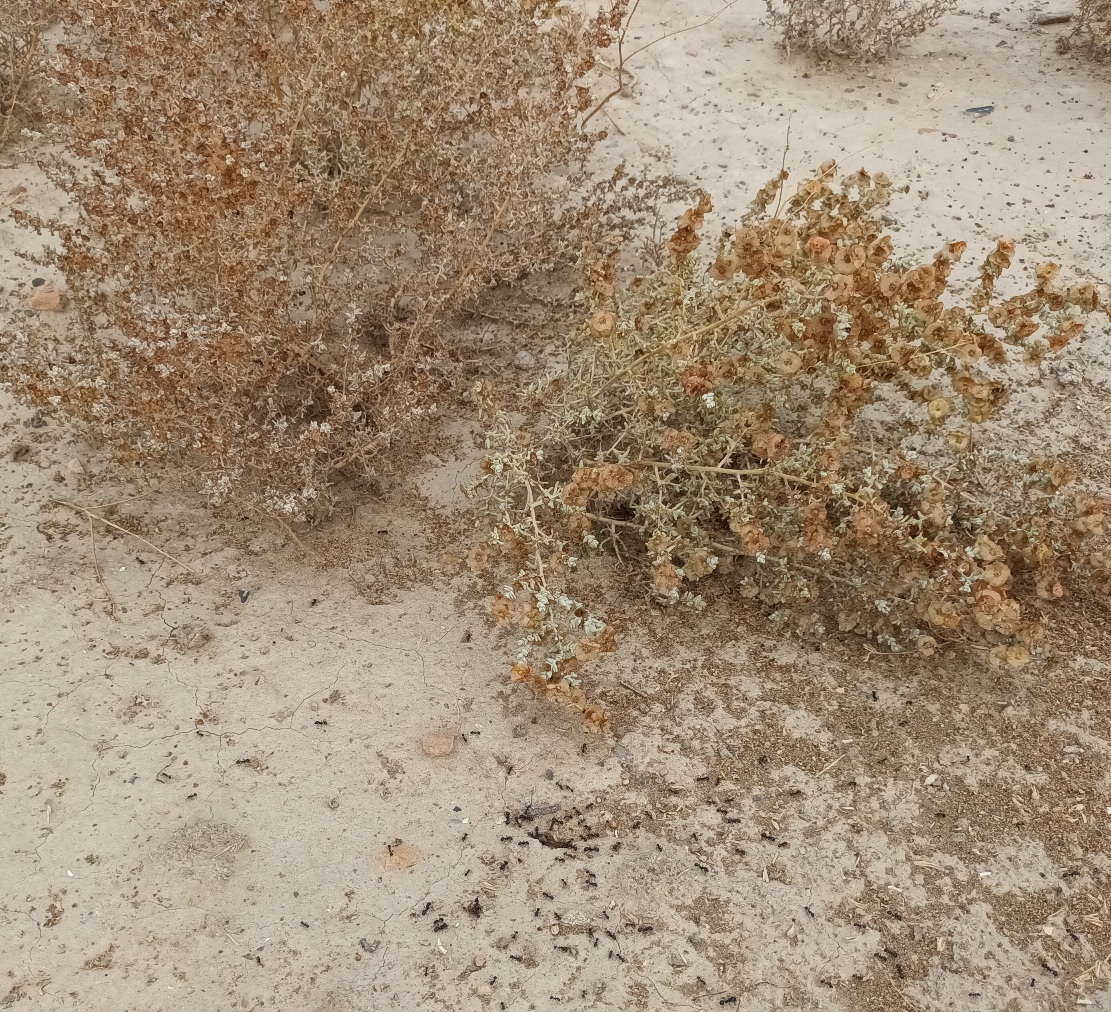
We didn't see any large animals, nor snakes for that matter. Just bugs, lizards and thousands of ants, hurrying along in black lines, then disappearing into small holes in the ground. Had they hollowed out this place, or was a sand-covered city just naturally holey? Probably a bit of both.
The area was littered with pottery shards, just lying there in the sand, waiting to be picked up. I found a tiny bit of blue-glazed ceramic, which we intend to smuggle all the way back to Luxembourg.
Kyzylorda

Back at the car, we drove on to our destination for tonight: the town of Kyzylorda, which means the Red City in Kazakh. In 1925-1927, Kyzylorda was the interim capital of the Kazakh Soviet Republic, until the honours passed to Almaty. We almost instantly fell in love with it. Our family-run hotel was comfy and new, the staff friendly and alert, the stores and cafés along the broad avenues classy and inviting. We threw our suitcase on the bed and hit the town running.
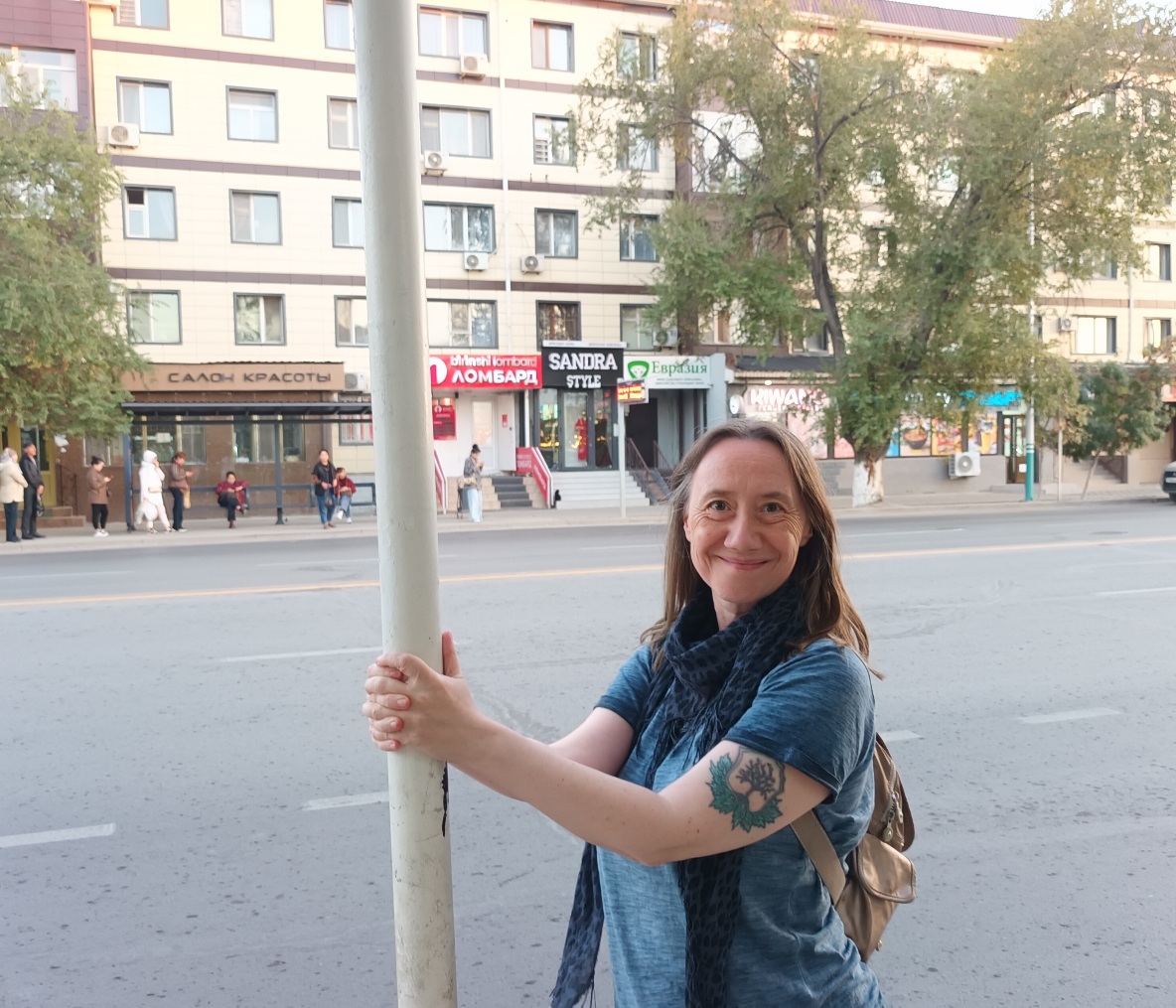
Not far from out hotel, we found a clothing store with a cool name. "Sandra Style", yep, c'est moi. On closer inspection, the store did not really reflect my style though. A bit too formal, verging on the old-fashioned. But definitely a good name.
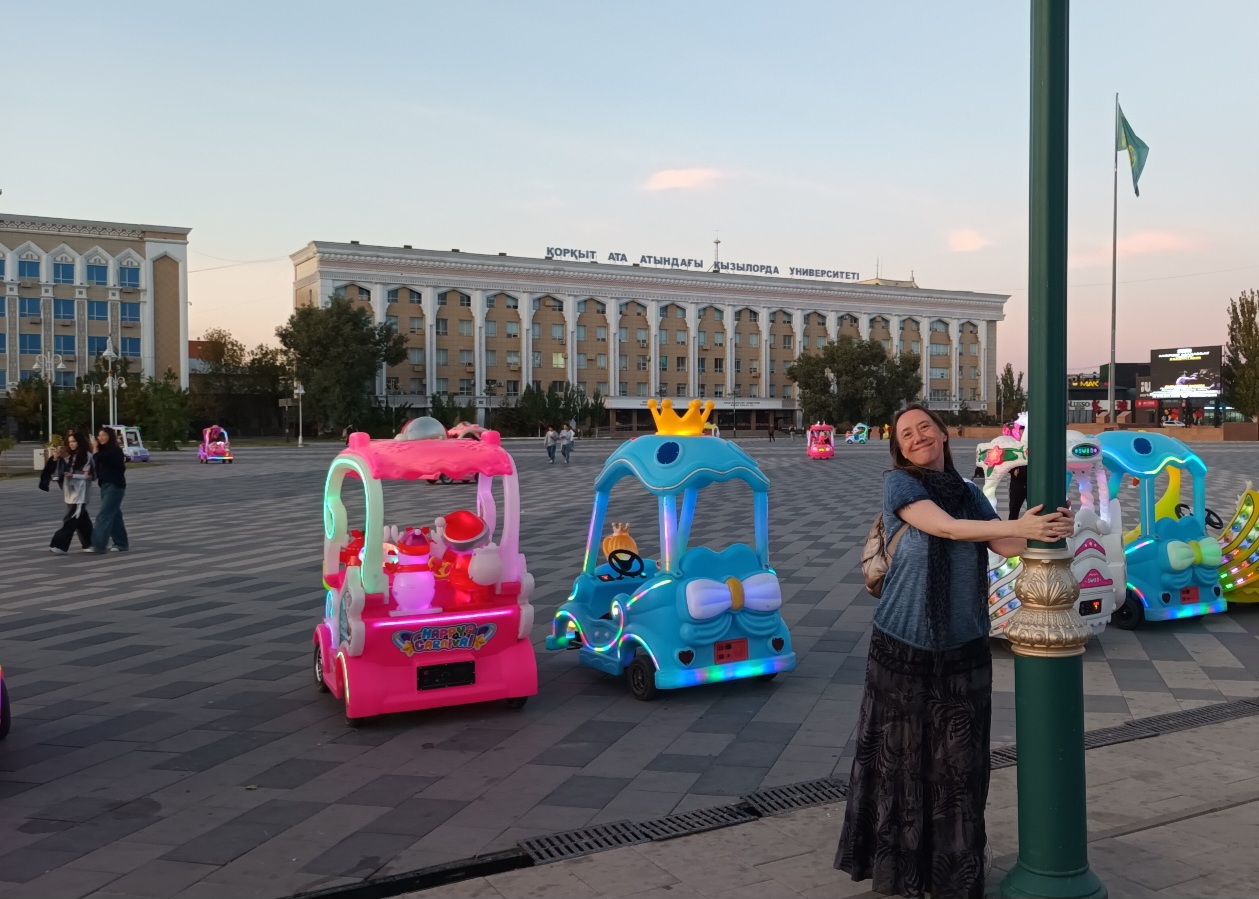
At the main square, we discovered not only the local university and yet another STEM school (Kazakhstan in general, and especially Kyzylorda it seems, is pushing their youth towards maths and tech subjects. Smart move, in my opinion), but also these colourful vehicles you are seeing here. "Don't tell me you want to try them out", Sonia laughed, seeing my eyes light up. "They're for kids." Really? There was a woman driving one. Granted, with a kid riding shotgun. There, another one. Oh, she had a little 'un with her too. I conceded that, probably, the vehicles were meant for the younger generation. So unless I managed a blitz-pregnancy, no shiny princess car for me. A kindergarten-aged girl pushed the pedal down and whooshed past. Attagirl! First step towards STEM school.
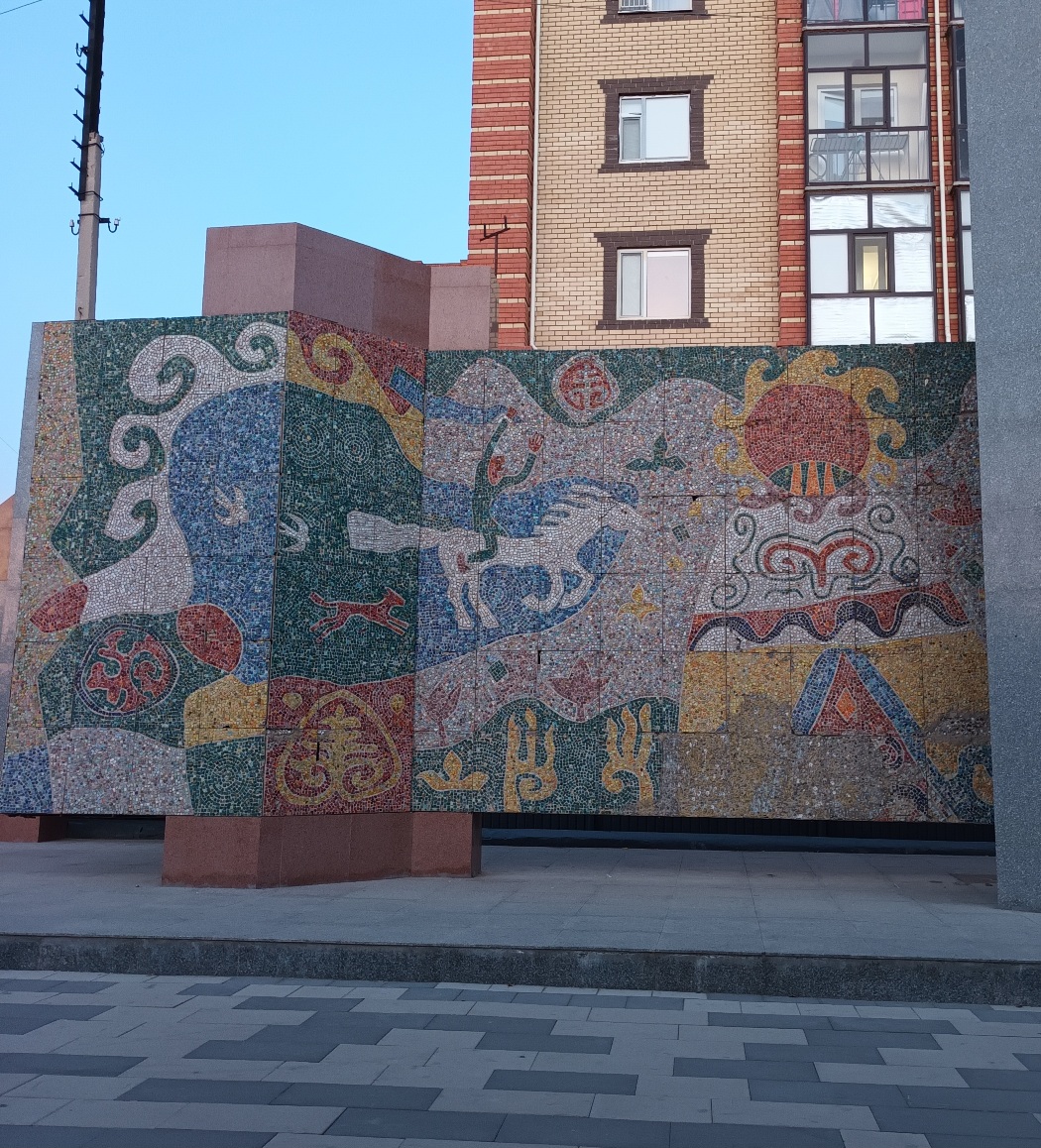
It seemed we had found the
favourite meeting place of the local youth. Boys and girls playing ball together, riding their bikes, holding hands. We definitely raised the average age by more than a few years. But there was an interesting mosaic on display, so we dodged the balls, swerved around the bikes and had a look at the "History of Kyzylorda". Here you see one of the mosaics.
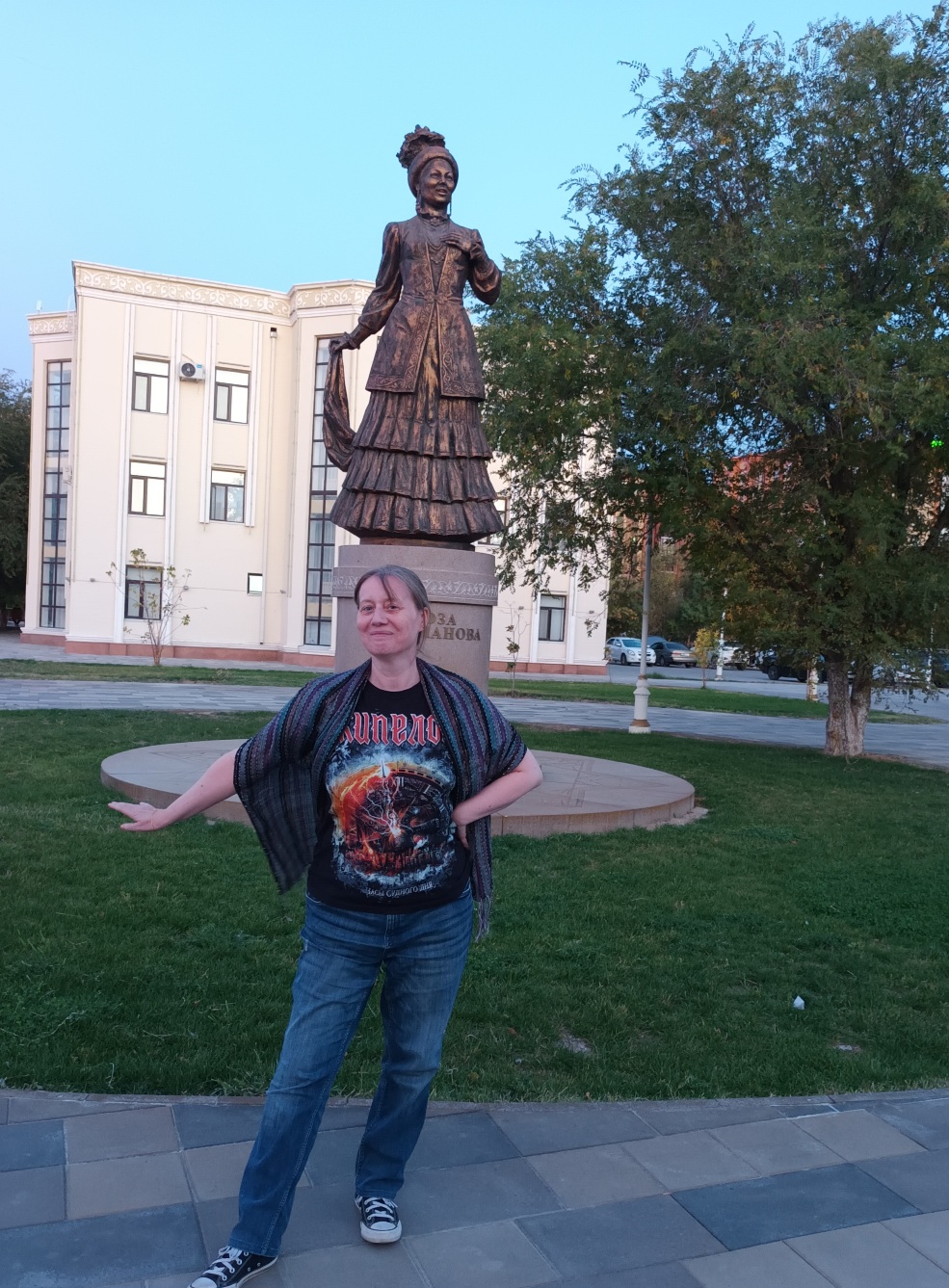
Sonia found a statue of an interesting Kazakh lady: Roza Baglanova, a famous soprano singer. During World War II, she sang in all 20 languages of the Soviet Union soldiers to encourage the people of her country to fight against the invader. Later on, she toured many different countries, often singing in the local language. French and German are documented to have been in her repertoire, but sadly not Luxembourgish. Still, a woman after our own heart. Today, we had sung in at least four languages too!
On the way back to our hotel, we found lots of inviting restaurants and cafés. In the end, we chose to have dinner at the hotel after all, as it was getting rapidly more chilly. The food and service were outstanding. I had a horse steak - so juicy and perfectly grilled and seasoned!
Later, we had a post-prandial stroll around the block. The sidewalks were well lit, a chic café next door open 24/7. "This could be in Eastern Europe", Sonia said, and she was right. The vibe on the main square earlier, the buildings and the entire atmosphere - it felt different from everything we had experienced these last four weeks. More European. Not sure how the Kazakhs would feel about that assessment, but ey, you compare stuff to what you know. Maybe a Kazakh strolling through some street in Luxembourg City might think: this reminds me of Kyzylorda. I for one would be dead chuffed about it.