



Week 11 - From Georgia back home
Day 70 - Mtskheta, Uplistsikhe, Batumi
Monday, 18 October 2026
Start: Mtskheta (GE) 10:15
Arrival: Batumi (GE) 18:00
Total: 375 km
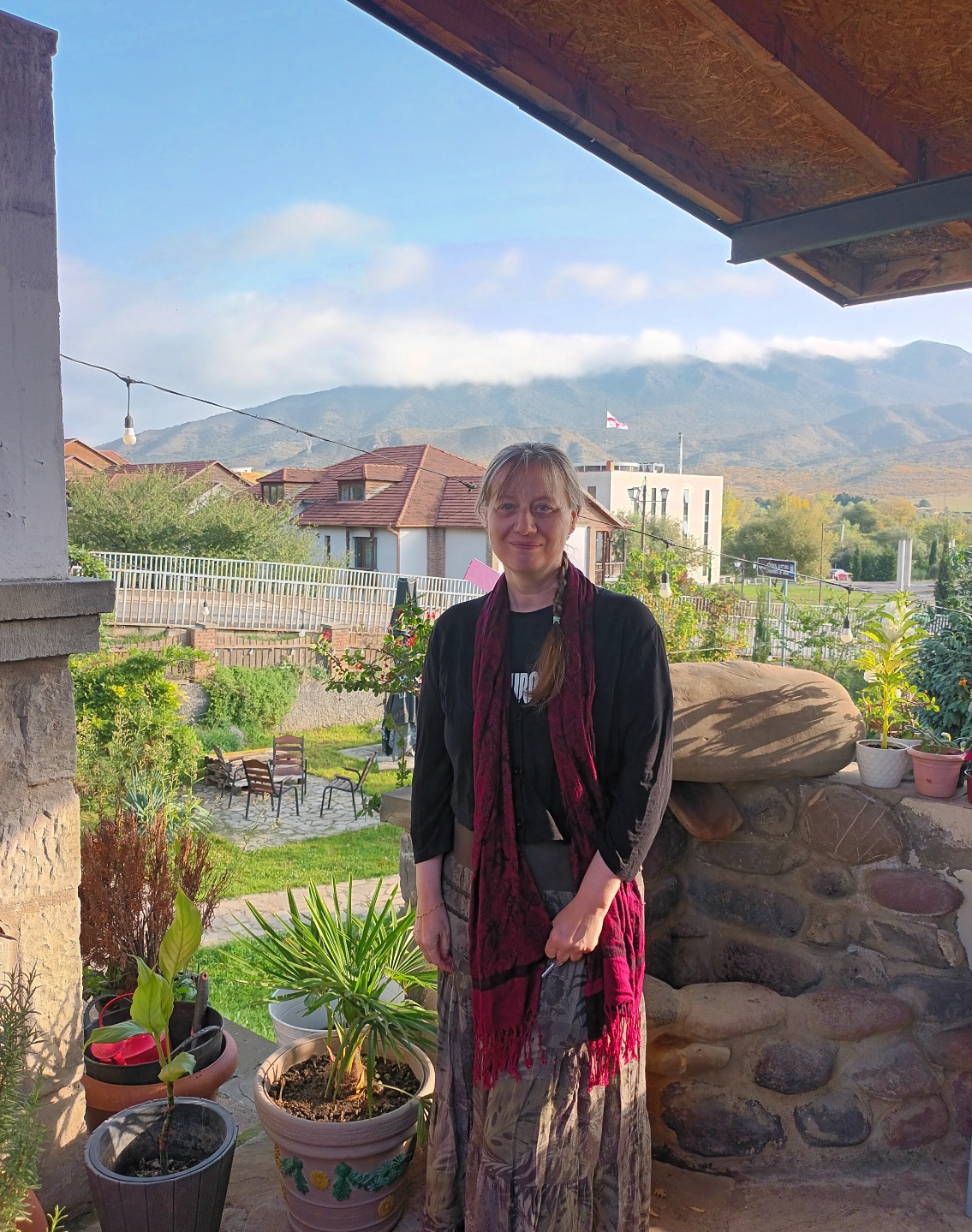
A sunny autumn morning in Georgia! We enjoyed our breakfast while looking out on our hosts' peaceful garden. After ten weeks in hotels, I was getting more than a bit tired of overly lavish breakfast buffets. Who wants lasagne, pasta with meatballs and ten kinds of questionable cold cuts at eight in the morning? Our Georgian hosts had kept it delightfully simple: kasha, warm bread, boiled eggs, crunchy veggies, fresh fruit, cold milk and hot coffee. Just perfect!
Svetitskhoveli Cathedral
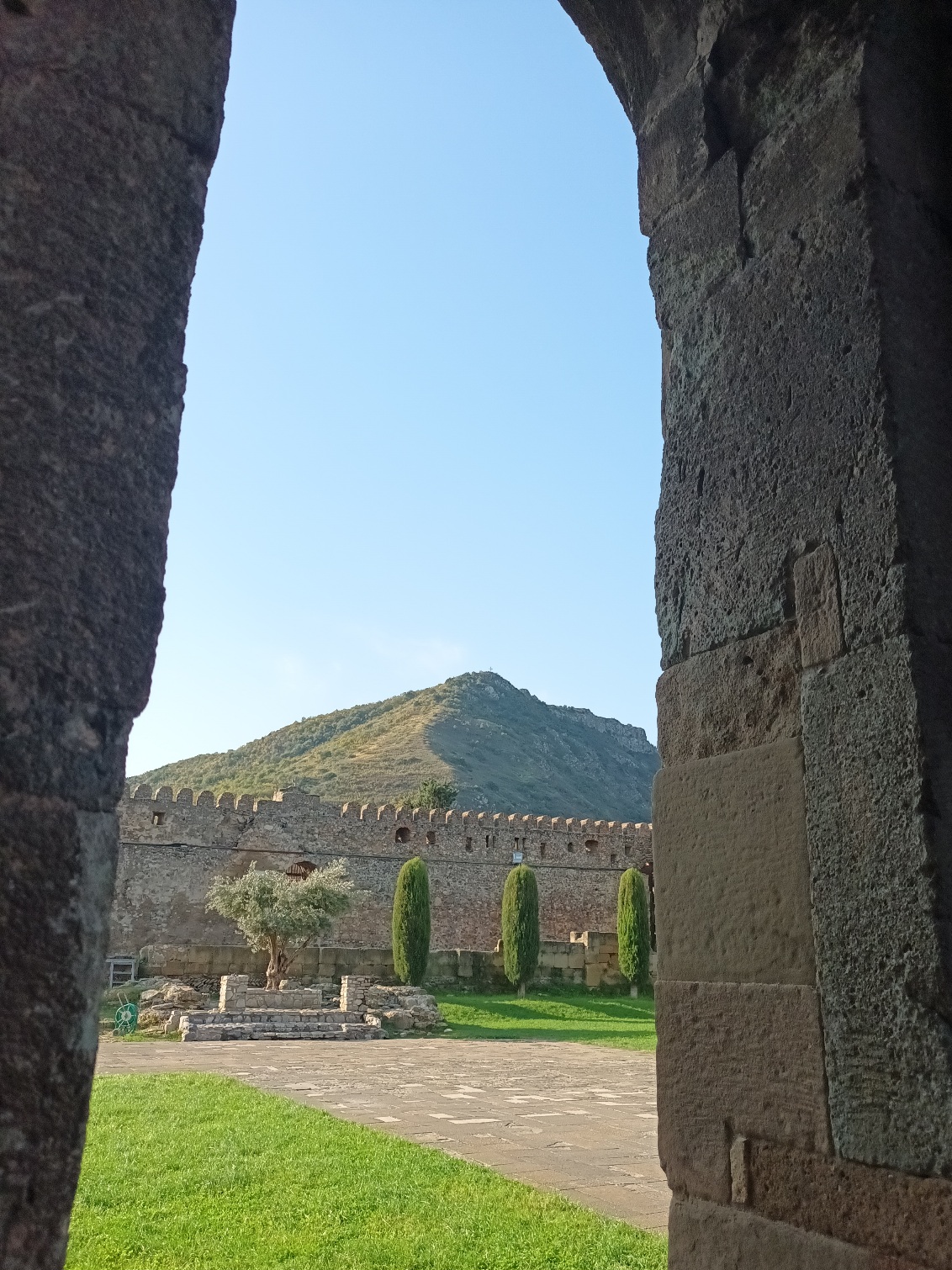
When I had visited Georgia nine years ago, I had ticked off most of the highlights around Tbilisi. But I didn't mind at all seeing some of them again. The country is one of the oldest continuous Christian nations. For 1700 years, churches, fortresses and monasteries have been built in these mountains and Christian learning has produced some rich and interesting works of art and literature.
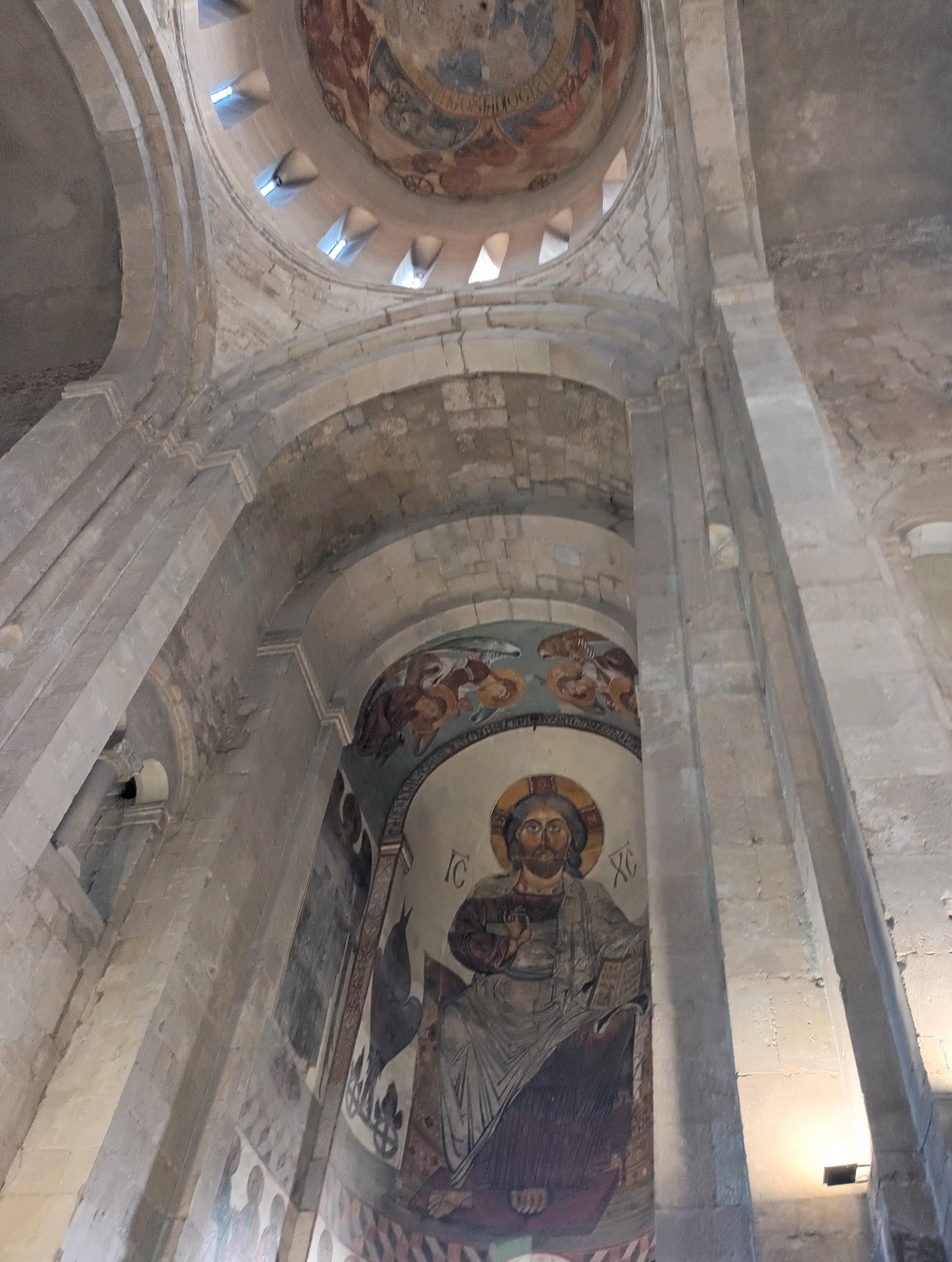
The cathedral of Svetitskhoveli in Mtskheta is a UNESCO heritage site. Its frescoes on the walls and ceiling are so bright and beautiful, I wasn't even sure if I should include the picture here. It simply doesn't do the original justice.
The grounds around the church were blissfully quiet on this Monday morning. We sat down on a bench and enjoyed the view over the mountains. A dog strolled around, minding his own business. Suddenly, a priest (or monk?) in a long beard and habit came running out, clapping his hands together. "Uidi!" he called loudly in Russian at the dog, "out of here, right now." How odd. This was surely a local priest and not a visiting monk from Russia, so why was he talking in Russian to the dog? Why not shoo it away in the local Georgian lingo? Or why not simply leave the animal be, for that matter? The dog seemed to wonder the same thing. It sauntered around the corner, looked back, waited for the man to disappear in the church and then came back strolling along the path like before. Cool dog! No question who we rooted for in this matter.
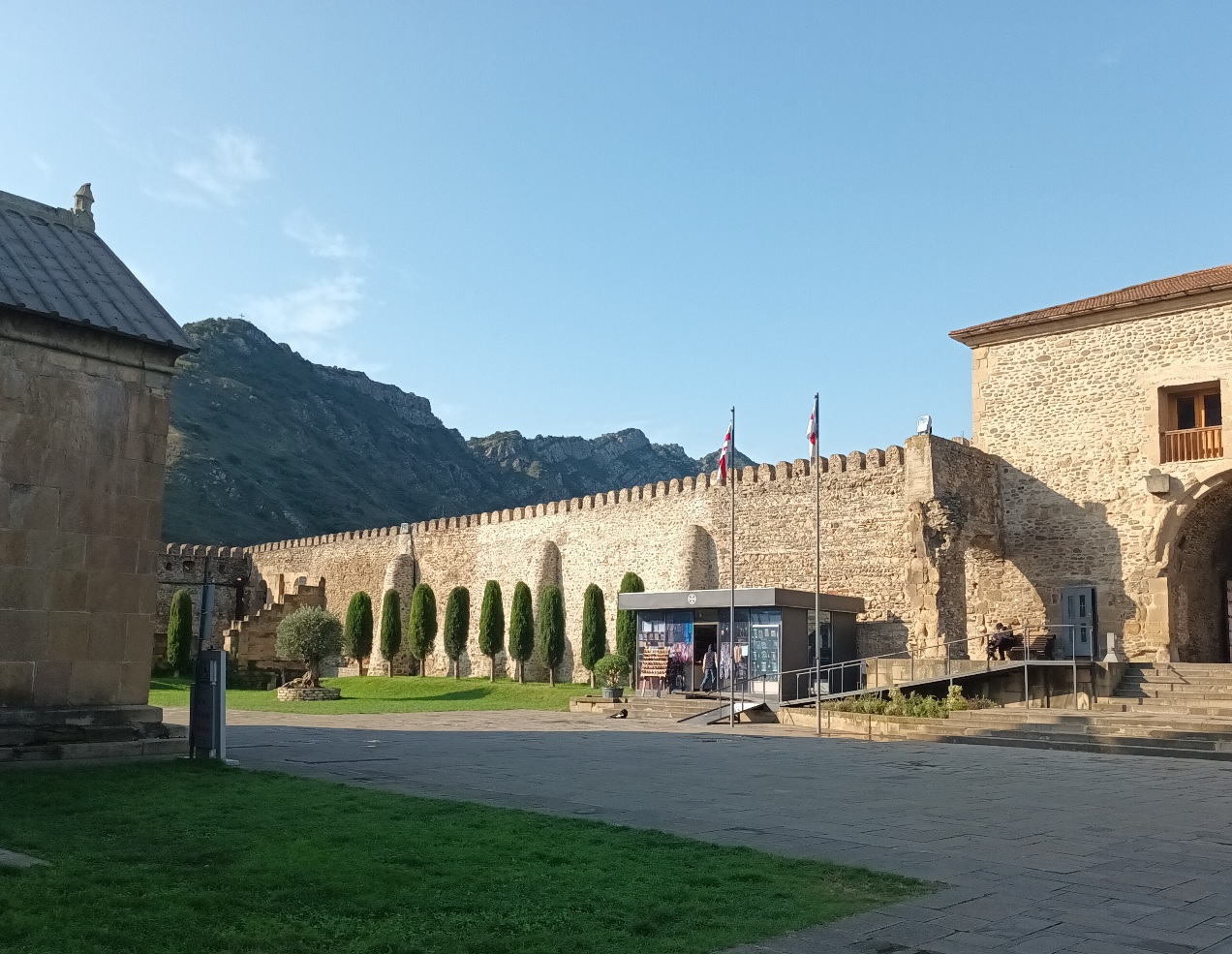
A few minutes later, the dog had wisely retreated to some bushes, the Russian-speaking cleric reappeared. A group of Chinese tourists had climbed up to the belltower. We had wondered whether that was even allowed. It seemed not. Irate, the cleric clapped his hands at the Chinese explorers too. Just now, they tried to make the bell swing. How irreverent. The poor cleric clapped his hands, evidently exasperated with his lack of authority. He didn't even try shouting at them, though. The dog might have understood Russian, these tourists certainly didn't. We grinned and strolled toward the exit.
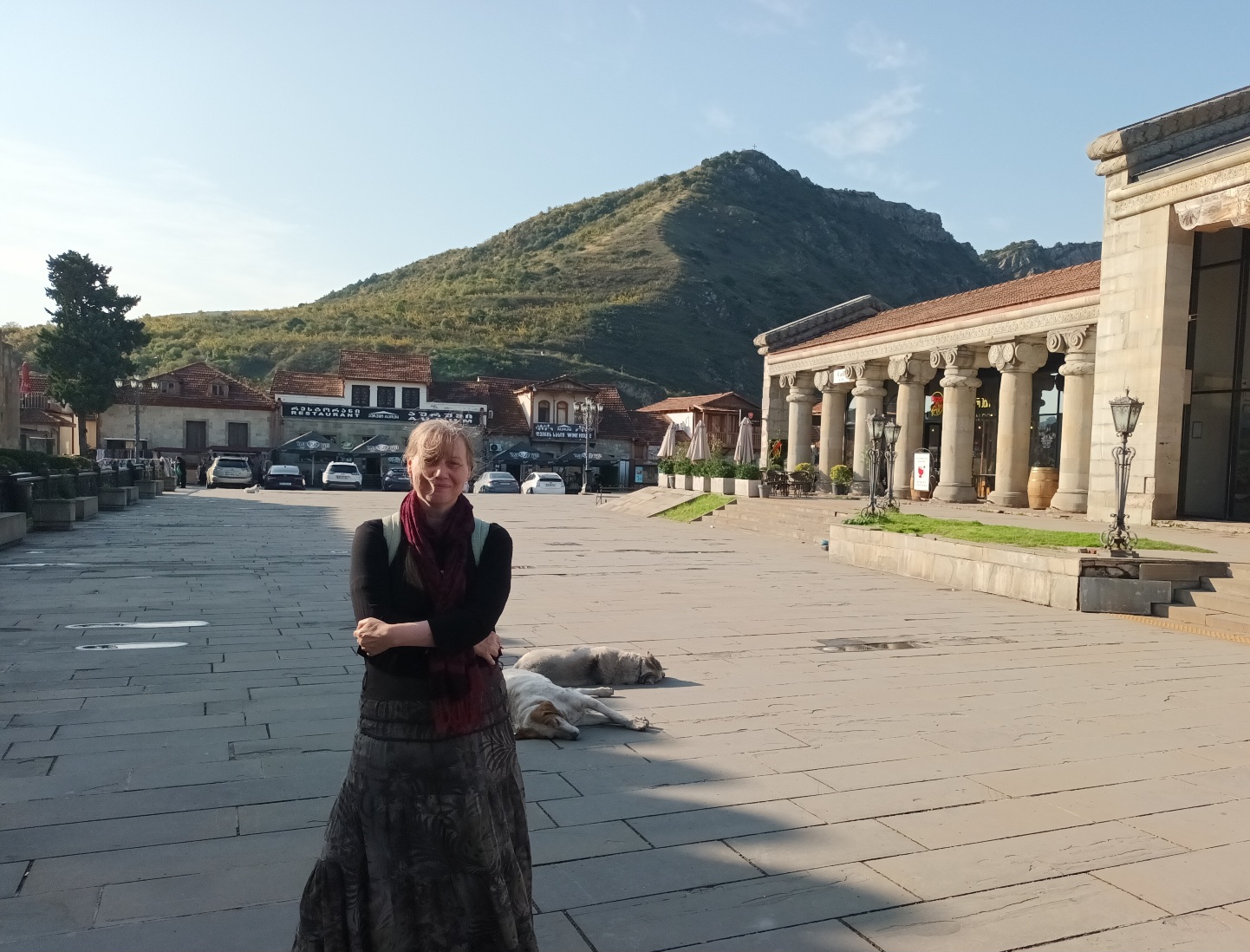
In front of the cathedral, more dogs were lazing in the morning sun. I remember when I had first seen such carefree dogs in Turkey, years ago. I had been worried that they were dead, lying to the side like this. I have never seen a dog do that outside at home. Happy dogs, I've never heard one of them growl or bark. Sheep dogs, yes, they can be a mean and dangerous bunch. But these street dogs are like humans: they only bark and growl if they feel that they are on a tight leash.
Uplistsikhe
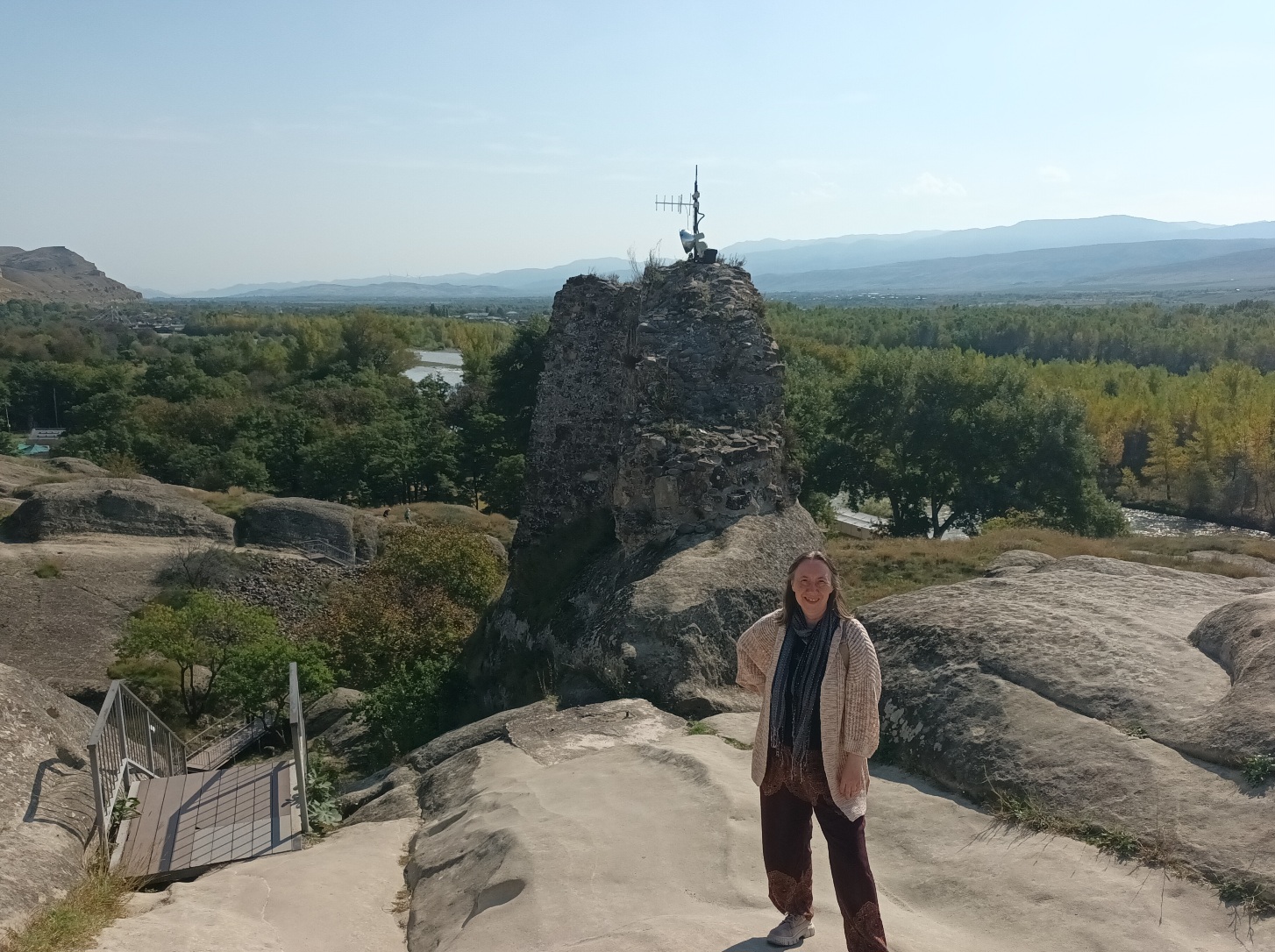
Next stop for the day: Uplistsikhe, the old cave town in the hills near Gori. I had seen both Gori and Uplistsikhe in 2017 and both were well worth a second visit. Sonia wasn't overly keen on a museum about Stalin's life, clambering around in the hills sounded a lot more fun. I agreed. "It's not too far, but the road is narrow and winding, and there is way too much traffic on it", I said when we got into the car. We set off... and soon found ourselves on a brand new highway! What an unexpected boon!
We reached the entrance to the cave village in no time, paid our five euro entrance fee each, and got ready for the climb.
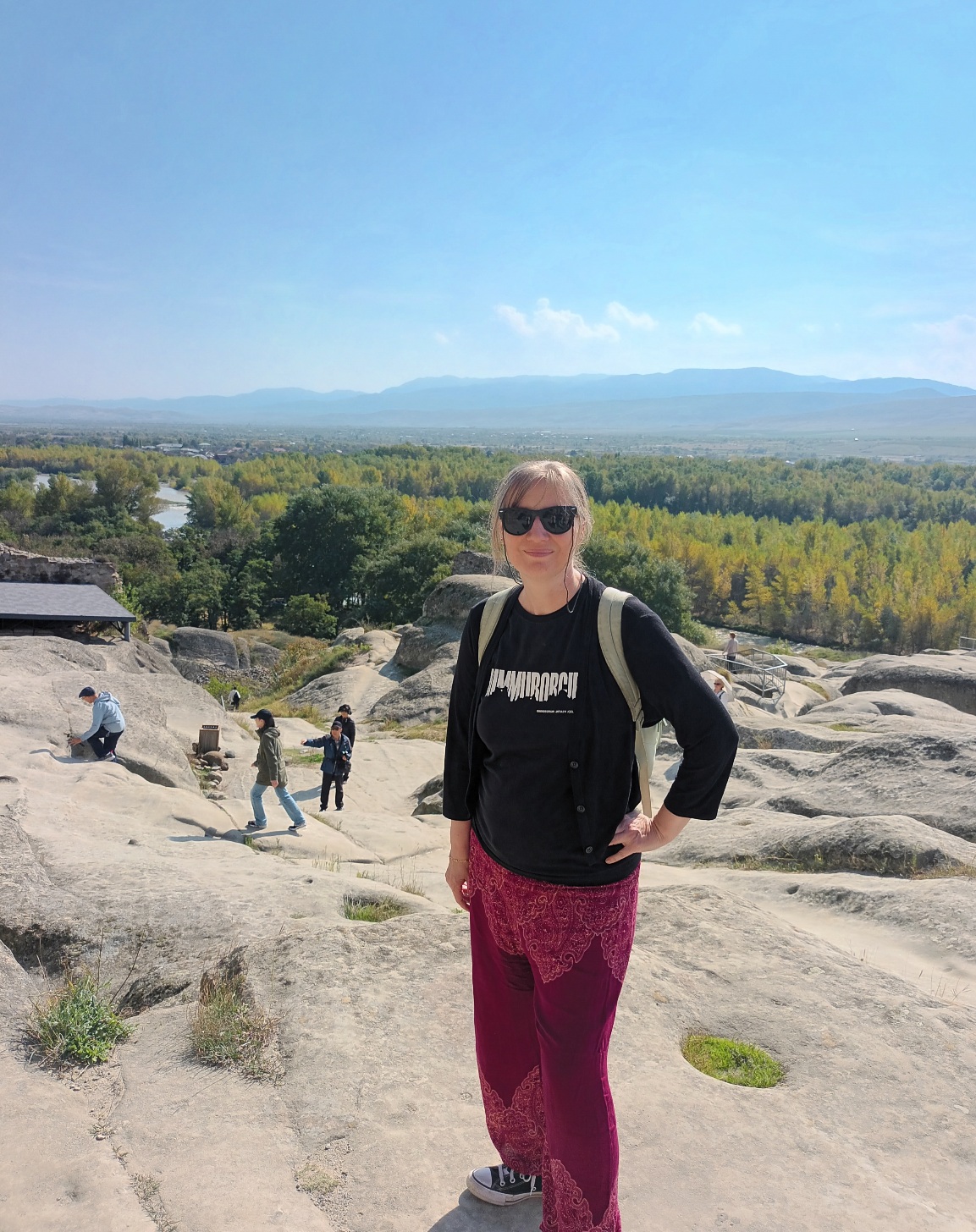
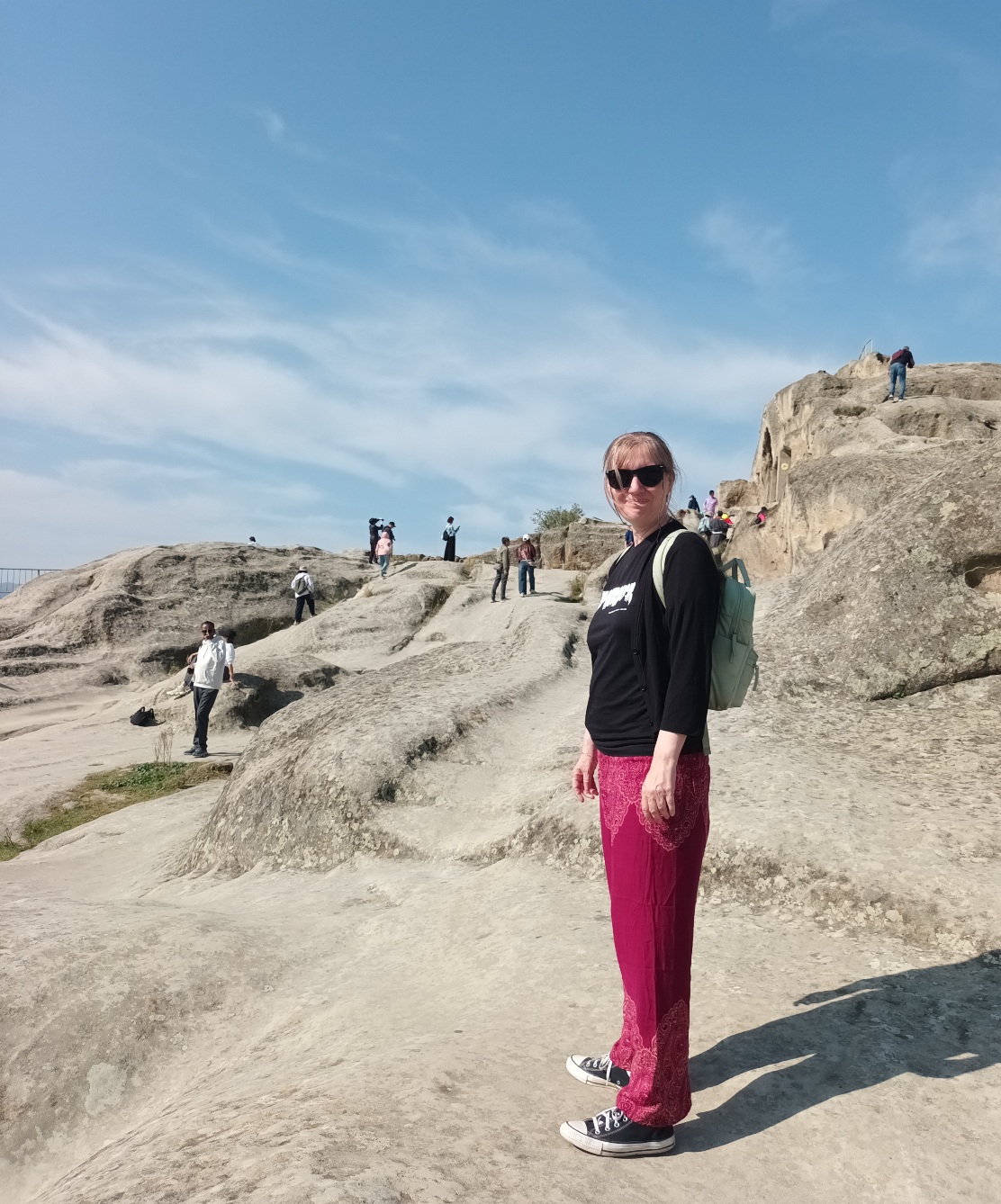
The way up was steep, but the large stones were surprisingly unslippery. At first there was a steel stairway, but then you had to figure out a way - any way - up. We were not the only tourists enjoying the site. Several busloads of Chinese tourists (maybe even this morning's illicit bell ringers?) were trying to conquer the hills. A woman caused a minor traffic jam when she didn't manage to get up a particularly steep and narrow passage. My sister, ever the hands-on type, stepped forward and gave her buttocks the push they needed. The woman squeeked happily and, once safely up the passage, turned around and gave my sister the thumbs up: "Xie xie!"
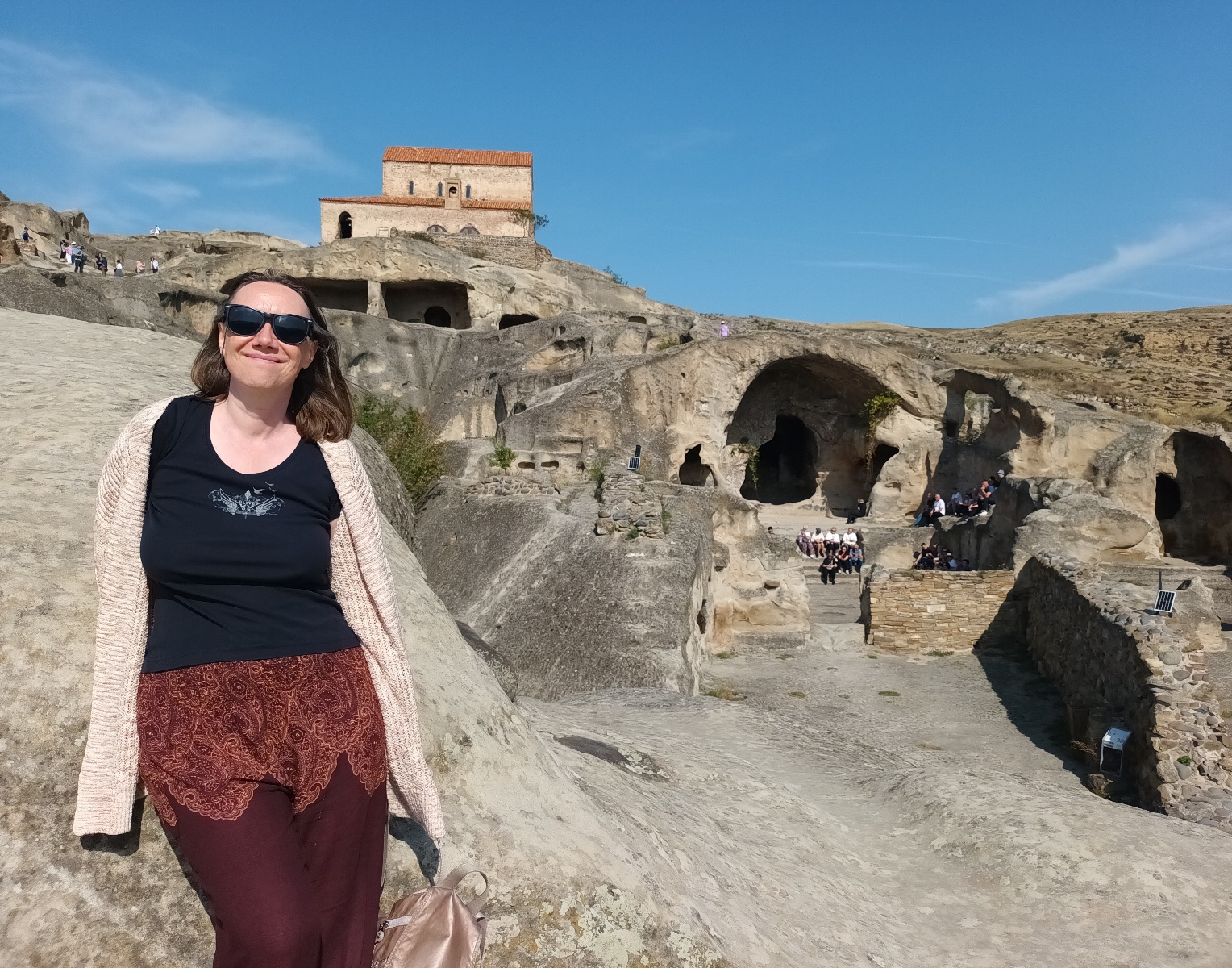
"Now me", I begged Sonia. With some pushing and pulling, we were soon both standing at the cave entrances.
From up here, the view over the forested hills, the gurgling river in the valley and the distant mountains was exquisite. Definitely worth the effort.
To our right, a rock formation worked like a natural resonance chamber. Nature's very own philharmonic hall. We overheard a guide saying that, given its acoustic advantages, this place was surely used as a temple. "Why not as a popular music hall, with people rocking along to the songs", Sonia concluded. I had to agree, much more likely. Down in the open-roofed auditorium, a six-piece band was singing traditional songs. The acoustics were indeed great. Sonia shot a very
short video of it.
Now, how to get off this mountain? I remembered a tunnel which Irakli and I used nine years ago. But where was it? We found a signpost to it, then, after some more looking around, spotted a slightly overgrown hole in the ground with stairs leading down. Yep, this was it! The "way" to the cave entrance was a lot more difficult than I remembered. At one point, I more or less sat on my butt to get down a steep narrow passage. But we made it, and once inside the tunnel, we reached the river bank in a matter of minutes.
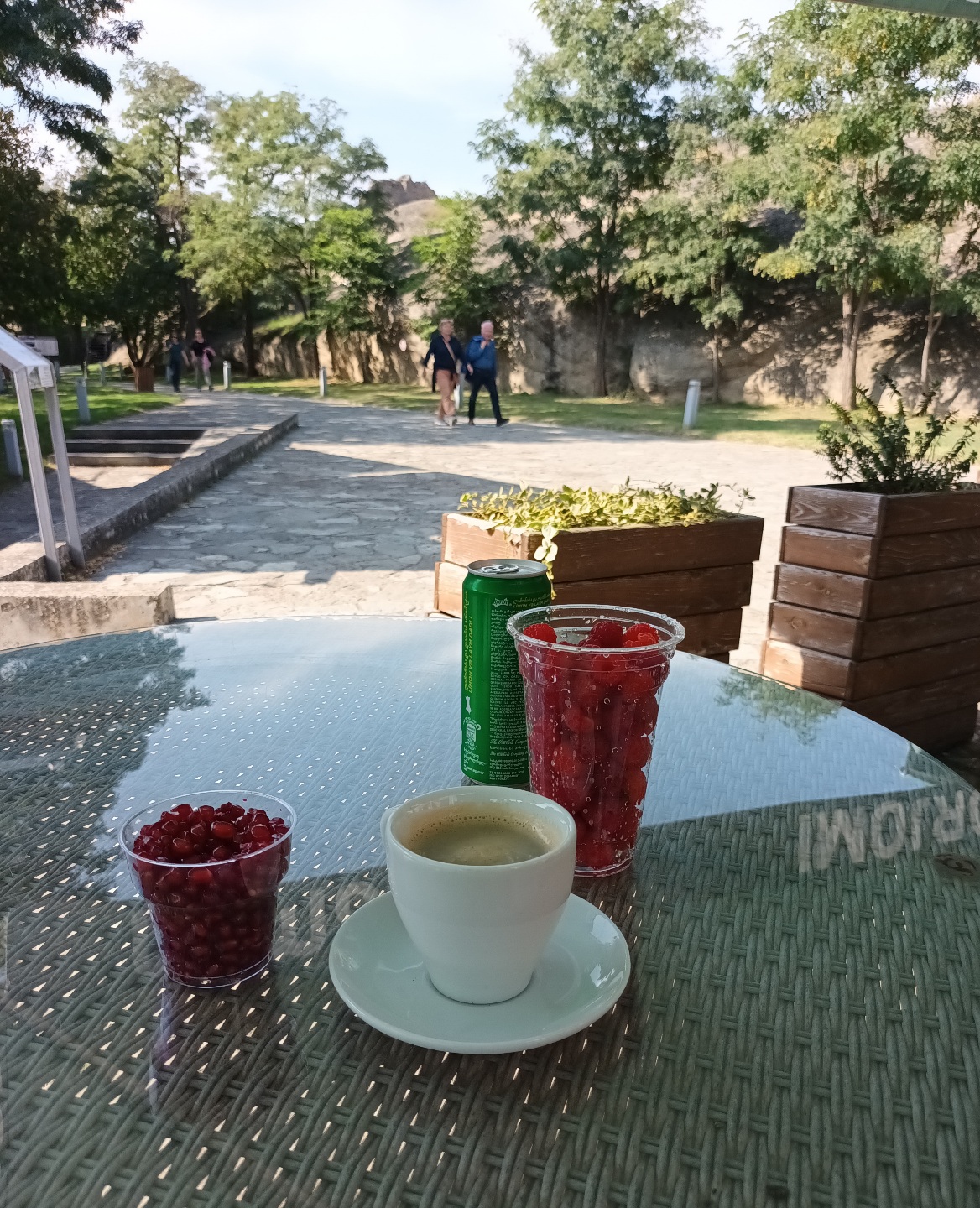
At the park entrance, we stopped for drinks at a little café. This was exactly the kind of cosy tourist spot we had searched for in vain in Central Asia. Here, a single unobtrusive shop offered an opportunity to buy souvenirs, a pleasant coffee shop sold drinks, cakes and fresh fruit and the site itself was left unspoiled by mercantile objectives. "In Uzbekistan, every cave would have been filled with scarf racks", Sonia said, munching a spoonful of pomegranade seeds. I nodded. Sad but true. Instead of the cakes, you'd have the reeking shashlik stand, instead of the gurgling river, the dusty road. In Uzbekistan, I had been wondering whether two months on the road was just too much, but since Astrakhan I'm convinced that it's just a fundamental incompatibility of character: Central Asia and I, we simply did not click the way I had hoped. Georgia on the other hand was a wonderful tourist destination that has a lot to offer for every kind of traveller.
Eating our berries and sipping coffee, we discussed our options for tonight. Borjomi - the Georgian spa town reknowned for its horrible mineral water? Or, let's say, it's an acquired taste. A taste which we certainly will never acquire, but it seems Russians and Georgians swear by it. "If this highway goes all the way to Batumi, we could be on the Black Sea tonight", Sonia said. Batumi - there's one famous Georgian seaside resort I haven't been to yet. It's supposed to be awfully windy and wet in October though. But who cares, a rainy evening can be a fun evening too.
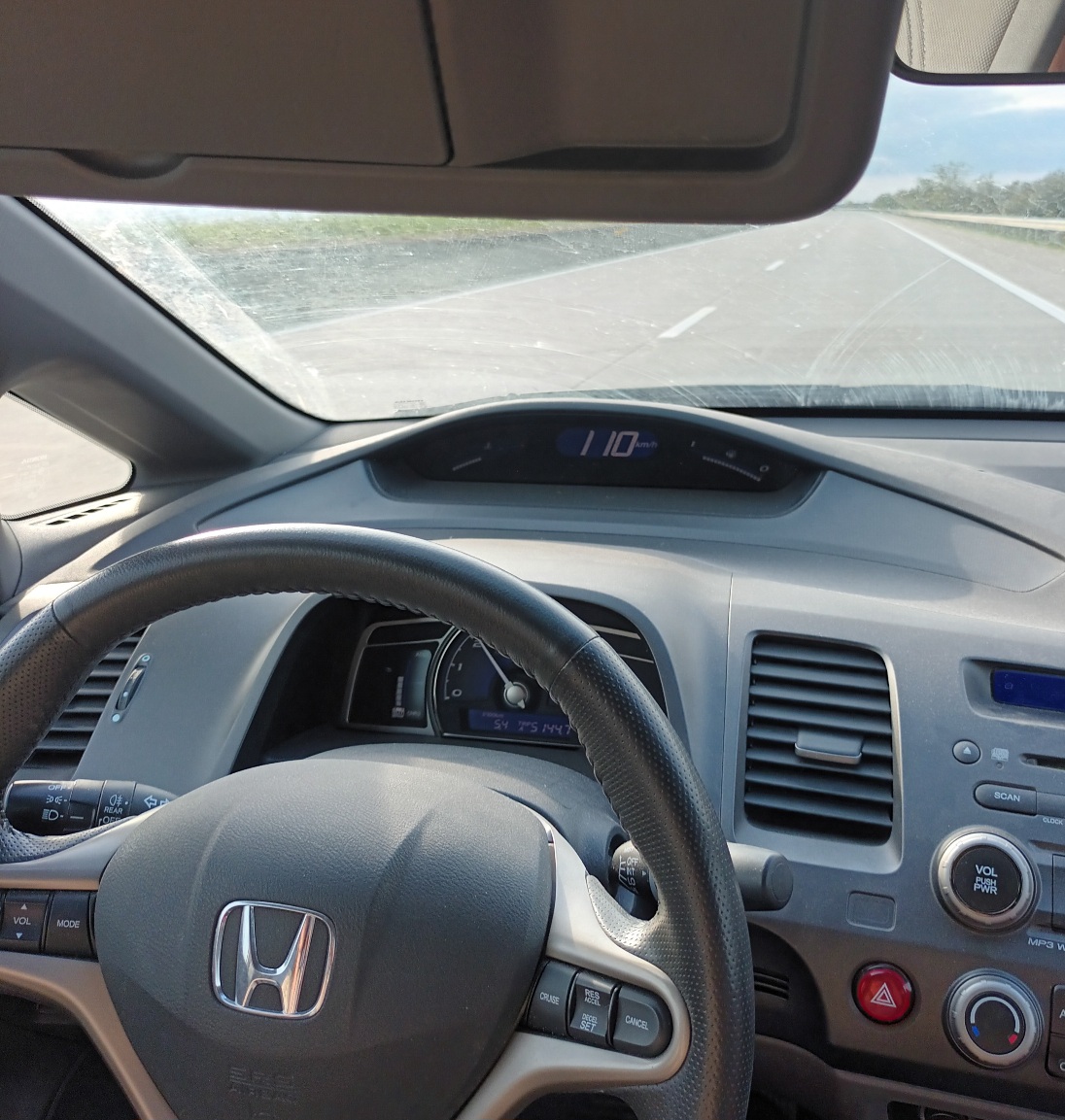
In 2026, the highway does indeed go all the way to Batumi. What a delight! Somewhere along the way, we noticed that we had passed the 15,000-kilometre mark. Sonia took a picture while I kept driving. The scenery outside is a bit nondescript, but it is the Georgian countryside flying by, right there beyond our shamefully grimy windshield.
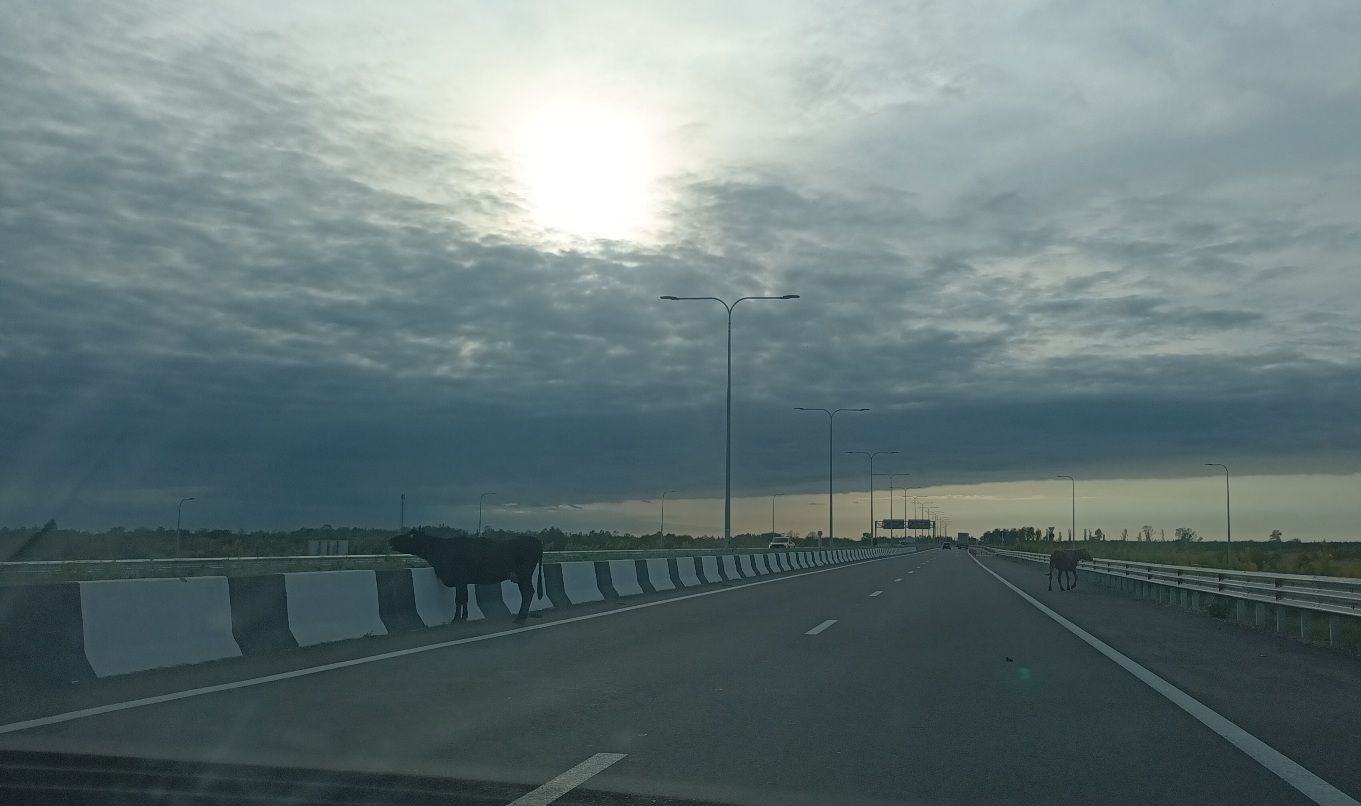
Like many motorways, the dual carriageway Tbilisi-Batumi has an elevated median strip, covered in grass and shrubs. "Is that a cow up there?" I asked. Acow, no. There were THREE cows calmly munching the grass in the middle of the highway! How had they even gotten up there? Cows don't jump, do they?
"Take a pic!" I said. "Don't you think photographing livestock in the middle of the road is getting old?" Sonia replied, "we have so many of these pics by now." I was hoping to spot at least one cow in process of getting up or down the slope, but no: we only saw them up there or down at the side munching, but never how they got from this place to that. Maybe cows can fly? They say pigs can. Sometimes.
Batumi
We had booked a room at a hotel in the centre of Batumi. By now driving into a large chaotic city after a long day's drive was routine. The hotel even had an underground parking garage. Sonia shooed the driver blocking the garage entrance away, we parked the car, checked in and were right back out on the street to explore the town.
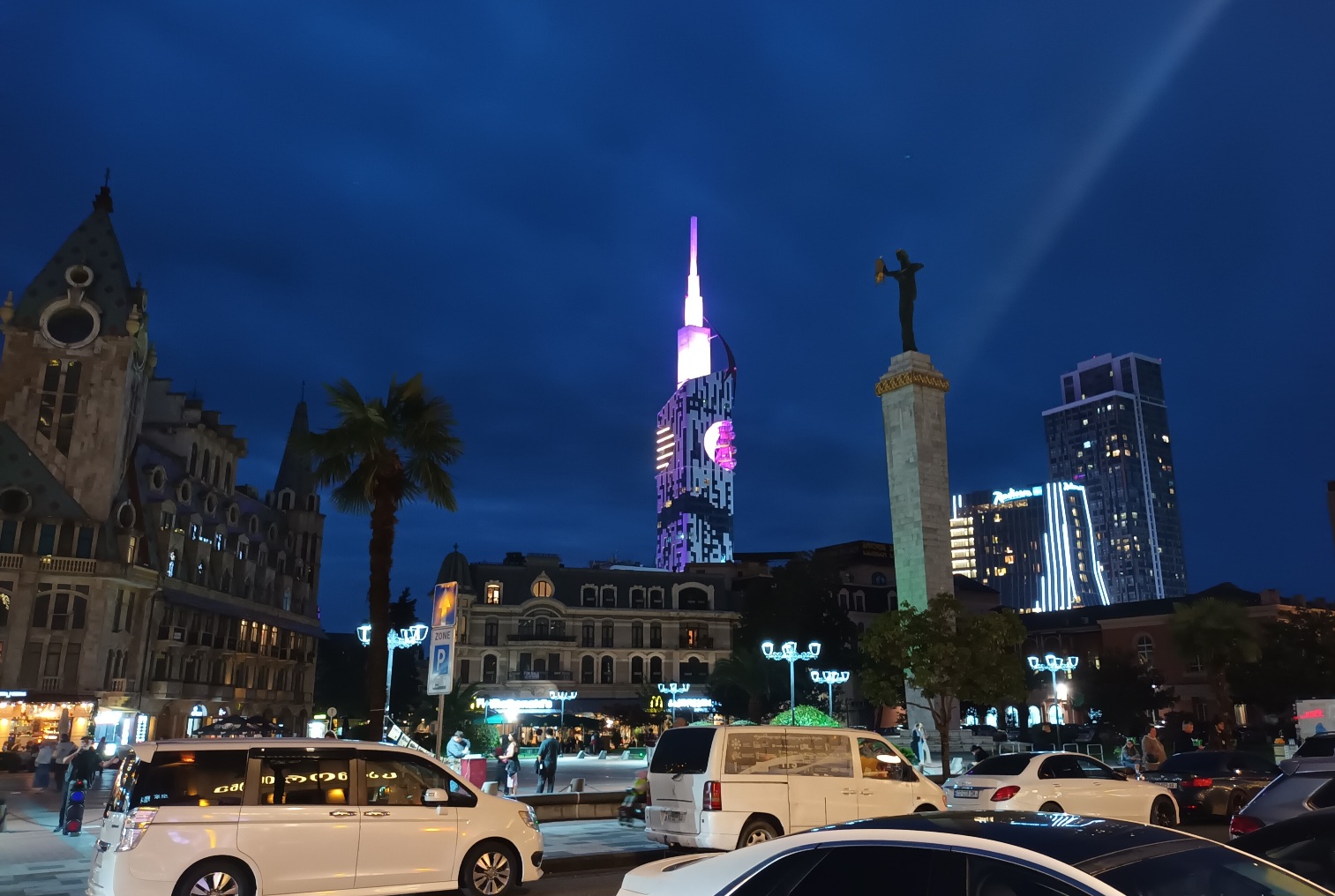
A lot of cities look better - or at least very different - by night than by day. All the lights were on, the casinos (lots of casinos in Batumi) beckoned with promises of easy money, a man stood in the main square shouting his grief into a microphone. Everyone ignored him.
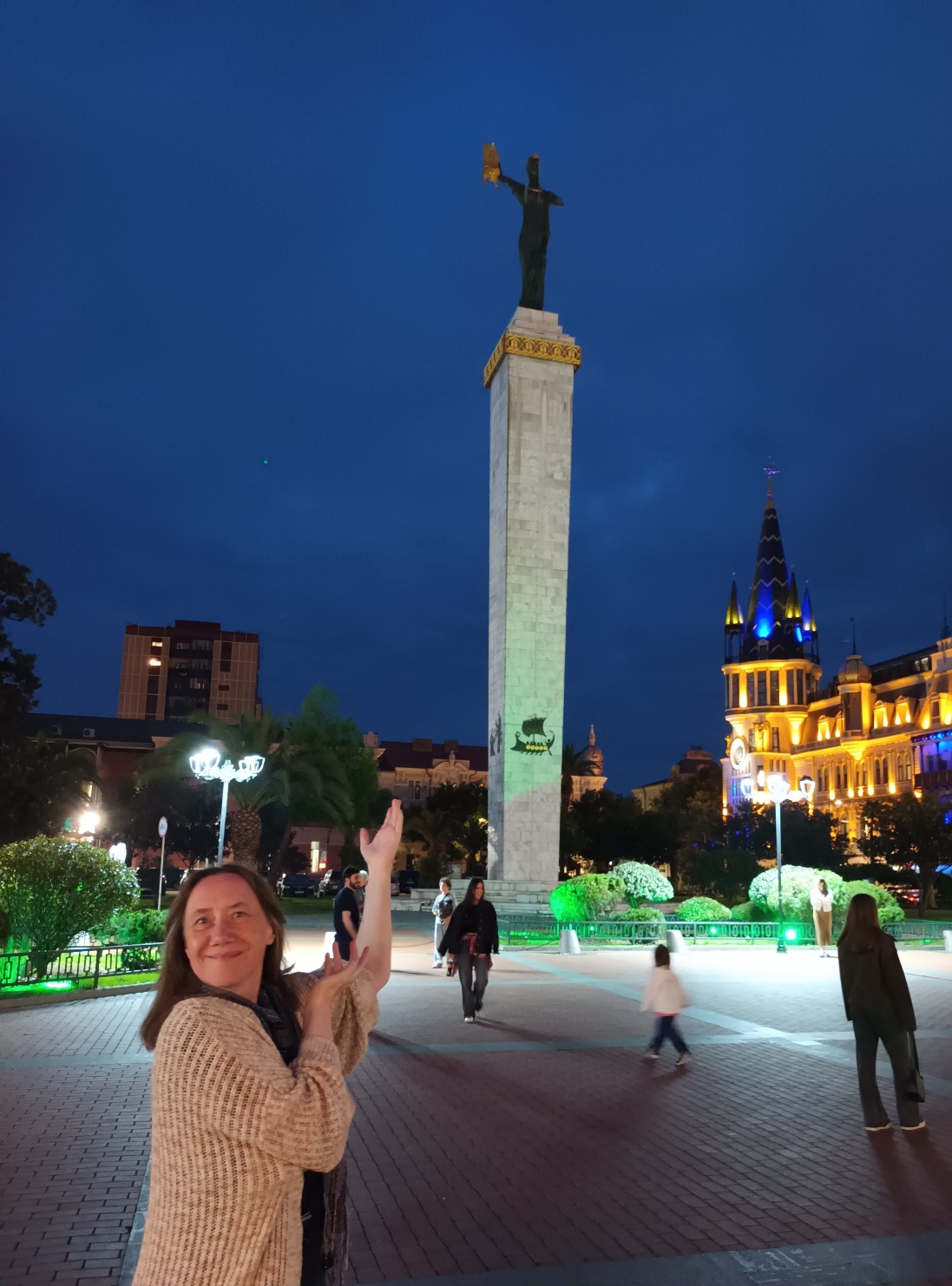
In the middle of the square, a statue of Medea, the lady who had helped Jason get the golden fleece, back when the gods were petty and cruel. Western Georgia - the Colchis of old. An ancient land of trade, fueling the imagination of Greek storytellers.
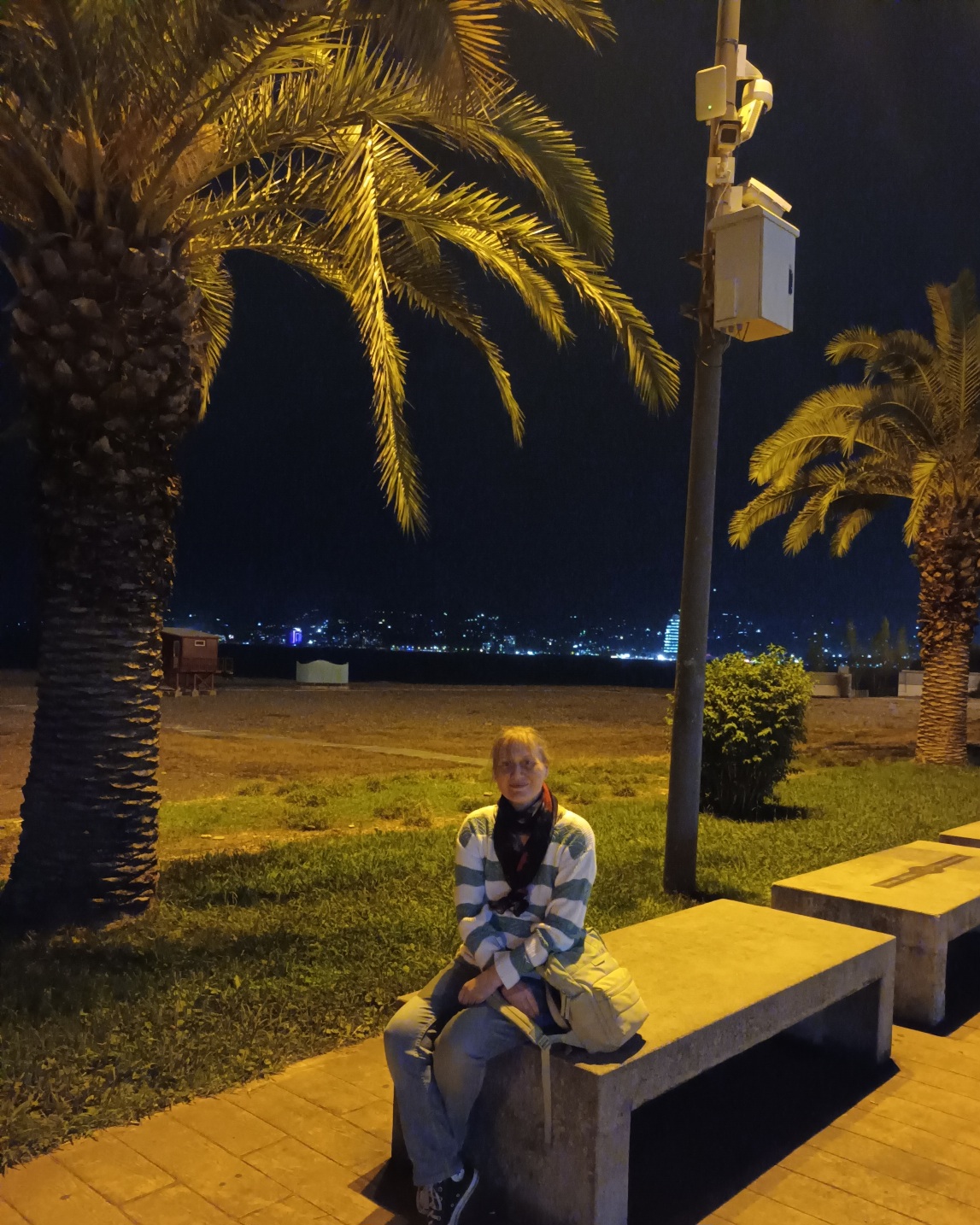
At one of the many exchange booths, we changed most of our remaining lari into lira. Funny, you just nave to switch the vowels around. Tomorrow, we would cross the border into Turkey. But tonight, we walked beneath the palms on the promenade. Not a drop of rain in sight. Hard to believe that only half a year ago, we had been standing at the far end of this vast black sea in Bulgaria, looking east, thinking of the adventures to come. And now we were already headed home. Only six more countries to cross from east to west.